

Global Broker Regulation Inquiry App
About WikiFX
English
简体中文
繁體中文
English
Pусский
日本語
ภาษาไทย
Tiếng Việt
Bahasa Indonesia
Español
हिन्दी
Filippiiniläinen
Français
Deutsch
Português
Türkçe
한국어
العربية
اردو


Malaysia Takes Aim at Online Scams: New Laws and a Unified Task Force on the Horizon

WikiFX
|


Abstract:The Malaysian government is preparing to take a more coordinated and legally reinforced approach to tackling the country's rising tide of online fraud, with Communications Minister Datuk Fahmi Fadzil announcing a comprehensive strategy that combines legislative reform with a dedicated cross agency collaboration effort.
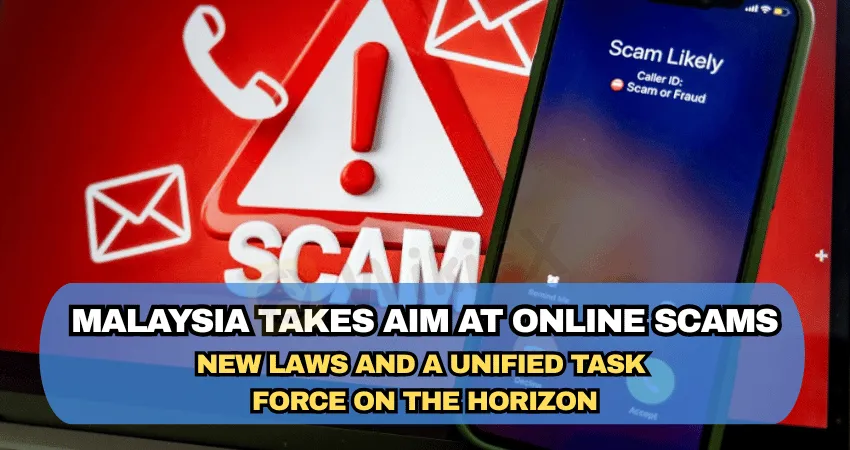
The Malaysian government is preparing to take a more coordinated and legally reinforced approach to tackling the country's rising tide of online fraud, with Communications Minister Datuk Fahmi Fadzil announcing a comprehensive strategy that combines legislative reform with a dedicated cross agency collaboration effort.
Fahmi revealed that a multi agency retreat is being organised in the coming weeks, bringing together key institutions including the Malaysian Communications and Multimedia Commission (MCMC), the Royal Malaysia Police, banking institutions, and other relevant stakeholders. The central purpose of the session is to close the gaps that currently exist between enforcement bodies in terms of legal jurisdiction, shared knowledge, and coordinated response — weaknesses that have long undermined the speed and cohesiveness of Malaysia's reaction to scam activity.
The minister pointed out that different enforcement agencies often operate with varying levels of familiarity regarding how scams function across digital channels. It is important that all parties involved share the same understanding of the problem before any unified action can be taken effectively. A single enforcement session specifically focused on closing this knowledge gap has been confirmed by the MCMC as part of its broader outreach to all relevant stakeholders.
The scope of the challenge is wide and not confined to any single platform. While social media has long been considered a primary conduit for fraud, messaging platforms such as WhatsApp and Telegram are equally prominent vehicles for scam distribution. Investment fraud, romance scams, and various impersonation schemes have all been exploiting these channels, often misusing the names and official branding of real organisations to mislead targets.
The forthcoming legislative changes are intended to address these vulnerabilities at a structural level. Details of the specific amendments are still being developed, but the overarching focus will be on accountability — ensuring that platforms, telecommunications providers, and digital intermediaries bear greater responsibility for what occurs on their networks.
This initiative is part of a broader push by the Malaysian government that has been building throughout the year. Fahmi has previously emphasised that all social media platforms with over eight million users operating in Malaysia are subject to local laws, and that continued inaction in the face of escalating online crime is no longer an acceptable response. Earlier efforts have already seen more than two billion suspicious phone calls and over 500 million fraudulent messages blocked in partnership with local telecommunications providers.
Malaysia's fraud landscape has grown increasingly sophisticated. Syndicates routinely impersonate ministers, banking institutions, and government bodies, and the financial toll on victims is enormous. Thousands lose life savings each year, with the emotional and psychological damage compounding the harm.
The upcoming retreat and legislative push signal that the government is moving decisively beyond reactive measures toward a structured and proactive model of prevention. If implemented with the urgency the situation demands, the new framework could represent a genuine turning point in Malaysia's fight against online fraud.
In the meantime, Malaysians are urged to treat unsolicited investment offers and unknown contacts with caution, verify communications with official sources, and report anything suspicious to the relevant authorities.
Disclaimer:
The views in this article only represent the author's personal views, and do not constitute investment advice on this platform. This platform does not guarantee the accuracy, completeness and timeliness of the information in the article, and will not be liable for any loss caused by the use of or reliance on the information in the article.
WikiFX Broker
Latest News
BX Trade Review: Is This Unregulated Broker Worth the Risk?
WikiFXSTMARKET Review: Withdrawal Complaints Cloud a Low-Rated Broker, What to Know Before You Deposit
WikiFXWhy the Dollar Moves Almost Every Forex Pair
WikiFXCONSOB Orders Blocking of 24 Unauthorized Investment Websites
WikiFXBitDelta Receives UAE Category 5 Licence for Introducing Activities
WikiFXRinggit Gains on Majors but Slips vs US Dollar Ahead of Fed
WikiFXtrading.com Review: FCA-Regulated, But Withdrawal Complaints Persist
WikiFXDeriv Review: What Traders Should Know Before Depositing
WikiFXDollar Steadies as Rupee Finds Market Support
WikiFXPRIME VEST SAFE Review: Is Your Deposit Safe?
WikiFX