Abstract:HTFX’s withdrawal from the United Kingdom comes amid a broader wave of brokerage firms reassessing the value of maintaining FCA licences.

HTFX is preparing to withdraw from the UK regulatory regime, becoming one of several brokers that have recently moved to cancel or give up Financial Conduct Authority authorisations.
Public records show that the firm has applied to cancel the FCA licence of its UK entity, a step that came shortly after the broker also gave up its Cyprus licence. Taken together, the two developments point to a broader retreat from its previously regulated European structure.
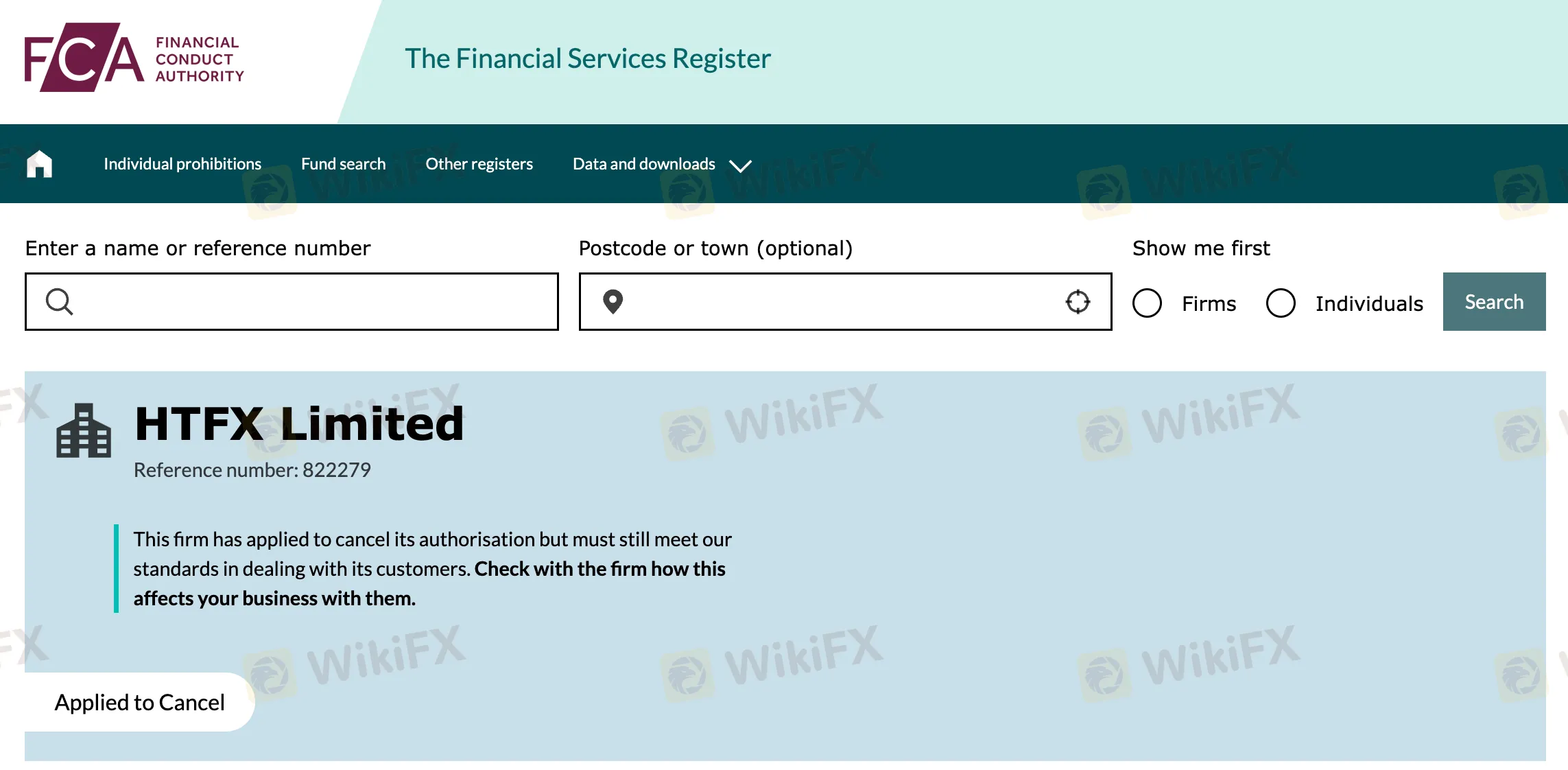
The UK filing does not, by itself, explain why the company is leaving. But the timing is notable. The application to cancel the FCA authorisation followed the renouncement of HTFXs CySEC licence earlier this month, suggesting that the broker is not simply streamlining one part of its structure, but pulling back from two key regulatory jurisdictions in Europe.
 Contents
A Broader Withdrawal From Europe
HTFX had operated through regulated entities in both Cyprus and the UK for years. Its departure from both frameworks in quick succession marks a significant change in direction.
Corporate filings also indicate that the ownership structure behind the firm has changed over time. Earlier control arrangements linked the company to different shareholders than those now associated with the UK entity. More recent records show new management figures occupying leading positions, adding another layer to what appears to be an ongoing restructuring process.
The company must still complete its remaining legal obligations before any cancellation becomes fully effective. That includes handling client-related matters properly and winding down regulated activity in an orderly manner.
HTFX Is Not the Only One
The move comes amid a noticeable pattern in the brokerage sector.
In recent weeks, several firms have either cancelled FCA licences or applied to do so. Trives authorisation has already been cancelled. GMI gave up its licence after deciding to shut down its CFD brokerage business. CMC Markets, by contrast, applied to cancel a subsidiary licence while keeping its main UK-regulated entity intact, suggesting an internal restructuring rather than a withdrawal from the market.
These cases are not identical, and that distinction matters. Some firms are exiting a business line altogether, some are consolidating group structures, and others may simply be reassessing where regulatory capital is best deployed.
Is FCA Becoming Less Attractive?
It would be too simplistic to say that brokers are abandoning the UK because FCA regulation no longer matters. The FCA remains one of the most respected financial regulators globally, and its licence still carries substantial credibility.
That said, maintaining a UK-regulated entity has become more demanding. Compliance obligations remain heavy, and for some brokers the commercial value of keeping multiple regulated entities may no longer justify the cost, especially as business focus shifts toward other regions.
HTFXs move may be best understood in that broader context: not as an isolated case, but as part of a wider reshaping of brokerage structures across markets.
About WikiFX
WikiFX is a global broker information platform that provides regulatory data, broker profiles, and risk-related updates across multiple jurisdictions. It helps traders independently review a brokers background before opening an account or depositing funds.