


Dufourbit Warning: FCA Says the Firm Is Unauthorised—7 Checks Before You Pay
The FCA warned about Dufourbit on 19 August 2026. Check the named domain, contact details, missing protections and seven steps before making any payment.
Original

简体中文
繁體中文
English
Pусский
日本語
ภาษาไทย
Tiếng Việt
Bahasa Indonesia
Español
हिन्दी
Filippiiniläinen
Français
Deutsch
Português
Türkçe
한국어
العربية
اردو




Abstract:A 70 year old manager has lost RM1.36 million after falling victim to an online investment scam through a mobile app named ‘BIONM’.

A 70 year old account manager from a private company has lost RM1.36 million after falling victim to an online investment scam in Penangs Barat Daya district.
The report was lodged last Monday with the Commercial Crime Investigation Division at the Barat Daya district police headquarters. According to Penang police chief Datuk Hamzah Ahmad, the victim had been drawn into what appeared to be a legitimate stock trading opportunity promoted through WhatsApp in late December last year.
The advertisement promoted a stock trading scheme that claimed it could generate returns of between eight and 15 per cent on invested capital within two months. The promise of relatively high profits in a short period appears to have convinced the victim to proceed.
After expressing interest, the man was instructed to download a mobile application known as BIONM. He registered as a member and began transferring funds into accounts provided by the operators. Over a period of time, he carried out 14 separate money transfers to four different bank accounts. The total amount transferred reached RM1.365 million.
The structure of the scheme mirrored that of many fraudulent online trading operations. Victims are guided to use an application that displays fabricated profits and account balances, giving the impression of successful trades. As the displayed returns increase, so does the victims confidence in the platform.
In this case, the deception only became clear when the victim attempted to withdraw what the application showed as accumulated profits. He was informed that he needed to pay an additional RM1 million as a commission fee to the platform in order to release alleged earnings of RM11 million.
The demand for a substantial upfront payment to access profits raised alarm. It was at this stage that the victim realised he had likely been deceived. The promised profits existed only within the application interface and had no connection to actual trading activity.
Police have since launched an investigation under Section 420 of the Penal Code for cheating. Authorities are working to trace the network behind the fraud, including identifying the individuals linked to the bank accounts that received the funds. Efforts are ongoing to determine whether the case is connected to a broader syndicate operating across districts or states.
The incident adds to a growing list of cases involving fraudulent investment apps that circulate through messaging platforms and social media channels. WhatsApp in particular has become a common entry point for such schemes, as it allows direct and personalised communication with potential victims.
The tactics used in this case are consistent with patterns observed across Southeast Asia. Fraudsters often promote attractive but unrealistic returns, encourage the use of proprietary applications, and require multiple staged payments. Early transactions may appear to generate profits within the app, but withdrawals are blocked unless further payments are made. Once victims either refuse or are unable to transfer more funds, communication typically ceases.
For investors, the warning signs are clear. Promises of fixed or unusually high returns within a short timeframe should prompt immediate caution. Legitimate investment platforms do not require additional commission payments to release profits, nor do they guarantee specific returns in volatile markets.
Disclaimer:
The views in this article only represent the author's personal views, and do not constitute investment advice on this platform. This platform does not guarantee the accuracy, completeness and timeliness of the information in the article, and will not be liable for any loss caused by the use of or reliance on the information in the article.
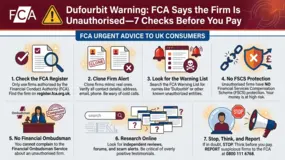
The FCA warned about Dufourbit on 19 August 2026. Check the named domain, contact details, missing protections and seven steps before making any payment.
Was your trading experience with Warren Bowie & Smith, a Mauritius-based brokerage entity, not so fruitful? Did the broker tempt you into trading by giving you assurances of profits that never appeared on the Warren Bowie & Smith login dashboard? Did you struggle to withdraw profits from the trading platform? Upon your withdrawal request, did the broker official make you invest further? This Warren Bowie & Smith review examines serious trading allegations against the broker. Additionally, we have provided the broker’s regulatory status.
Angel One, an India-based brokerage entity, constantly receives allegations from users online. Users are complaining about withheld funds, poor customer support service, undesired trade execution orders, etc. In this Angel One review, let’s quickly go through these complaints, understand its regulatory framework and pay attention to the product portfolio.
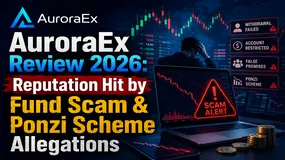
AuroraEx, a United States-based multi-asset brokerage entity, is facing serious user allegations over how it handles deposited funds. Many users have accused the broker of failing to meet its payment obligations. Some have questioned the broker over possible trade-related foul play, while others have alleged that it scammed them through a Ponzi operation. This AuroraEx review examines these user-reported allegations and provides an overview of the broker’s regulatory status.
WikiFXWikiFXWikiFXWikiFXWikiFXWikiFXWikiFXWikiFXWikiFXWikiFX