


India Q1 FY27 GDP Growth Hits 7.8%: 3 Scenarios for INR and Gold
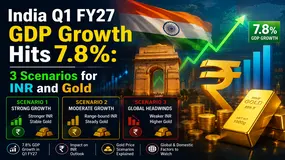
India's Q1 FY27 GDP grew 7.8%, beating a 7.4% poll and RBI's 7.0% projection. See three conditional scenarios for INR, rates and gold.
Original

简体中文
繁體中文
English
Pусский
日本語
ภาษาไทย
Tiếng Việt
Bahasa Indonesia
Español
हिन्दी
Filippiiniläinen
Français
Deutsch
Português
Türkçe
한국어
العربية
اردو




Abstract:Understanding retracement is essential for strategic trading. In today’s article, we will focus on the retracement is a temporary, short-lived pullback in the price of a financial instrument, like a stock or an index, that occurs within a larger, established trend. Think of it as a brief pause or a correction before the market continues its original movement. Unlike a trend reversal, which signals a fundamental shift in direction, a retracement represents a temporary deviation that doesn't jeopardize the long-term trend.
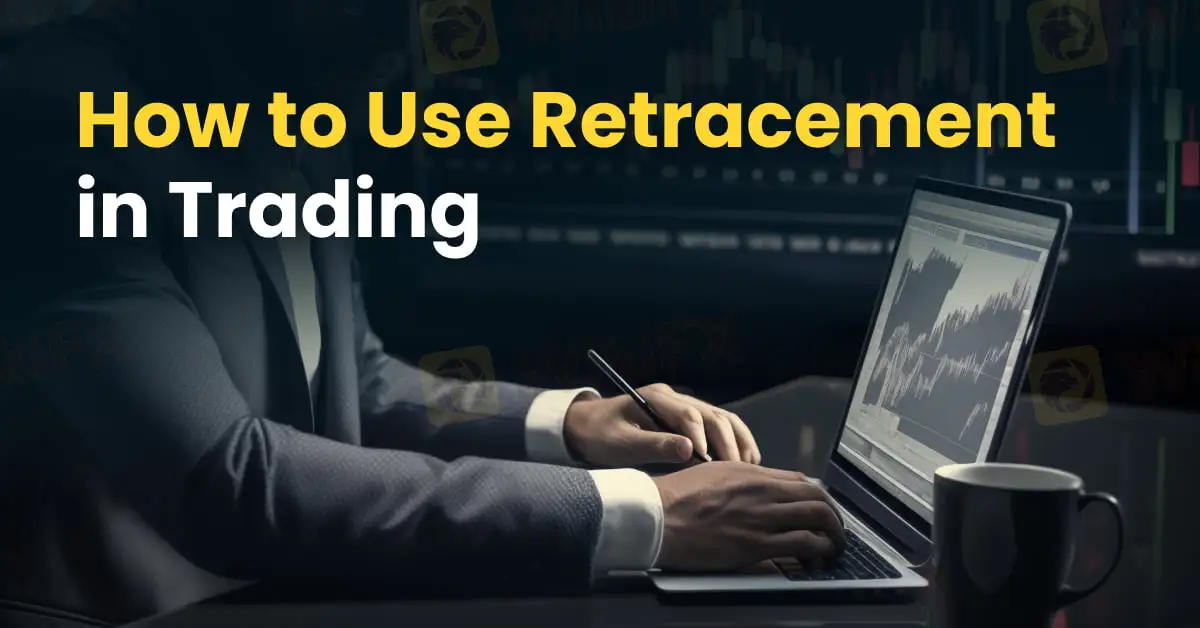
Understanding retracement is essential for strategic trading. In todays article, we will focus on the retracement is a temporary, short-lived pullback in the price of a financial instrument, like a stock or an index, that occurs within a larger, established trend. Think of it as a brief pause or a correction before the market continues its original movement. Unlike a trend reversal, which signals a fundamental shift in direction, a retracement represents a temporary deviation that doesn't jeopardize the long-term trend.
Key Characteristics of Retracements
The temporary nature of retracements is their defining feature. They are short-lived price reversals that have a limited impact on the broader market trend. Their primary characteristic is their inability to alter the long-term trend. For example, in a strong uptrend, periodic downward corrections or retracements may occur, but they don't disrupt the overall upward trajectory. Recognizing this distinction is crucial for traders.
Strategies for Trading Retracements
Trading retracements requires a nuanced approach, combining a comprehensive understanding of technical analysis with the application of various indicators.
Identifying Retracements as Corrections
The primary rule is to recognize retracements as corrections within the primary trend. This understanding is crucial for distinguishing between temporary deviations and true trend-reversing movements. Traders often use tools like Fibonacci retracement levels to pinpoint potential areas where a pullback might end and the original trend might resume. These levels act as potential support and resistance zones.
Using Confluence
Effective retracement trading involves confluence, which is the use of multiple indicators to confirm a trading signal. Retracements should not be traded in isolation. Traders often look for retracements to occur at key technical levels, such as:
By combining these indicators, traders can increase the likelihood of a successful trade entry. For example, a trader might look for a stock in an uptrend that retraces to its 50-day moving average, which also aligns with the 61.8% Fibonacci retracement level. This confluence of signals provides a stronger basis for a strategic long entry.

Disclaimer:
The views in this article only represent the author's personal views, and do not constitute investment advice on this platform. This platform does not guarantee the accuracy, completeness and timeliness of the information in the article, and will not be liable for any loss caused by the use of or reliance on the information in the article.
India's Q1 FY27 GDP grew 7.8%, beating a 7.4% poll and RBI's 7.0% projection. See three conditional scenarios for INR, rates and gold.
Choosing a forex liquidity provider is not a search for the lowest displayed spread or the longest provider list. It is a broker decision about pricing integrity, depth, routing, credit, reporting, incident response, and client communication. This 2026 guide explains how a forex LP, FX liquidity provider, or liquidity provider forex arrangement fits into a broker’s execution chain; what to test before onboarding; why a “best forex liquidity provider” claim cannot replace due diligence; and how to compare cost beyond commission. Use the execution-quality scorecard, provider questions, routing scenarios, and 90-day onboarding plan to assess whether a liquidity relationship can support your actual client mix, instruments, risk model, and jurisdiction. The goal is not to make a universal ranking. It is to build evidence that your broker can explain, supervise, reconcile, and recover its execution service when market conditions are difficult.
The visible fee in an MT4 white label proposal is rarely the real cost of operating it. For an existing broker, the decision is not simply whether an MT4 white label platform is “cheap” or “expensive.” The real question is whether the commercial model remains viable after integration, support, data, client migration, compliance, and exit costs are included. That is why an MT4 white label cost review should be built as a 24- to 36-month operating case. It should compare three credible choices: 1. Keep the present MT4 setup and improve its weakest controls. 2. Replace the MT4 white label provider but retain the client proposition. 3. Migrate selected clients or products to another platform while running MT4 in parallel. This guide explains how to build that case without relying on headline prices or generic vendor claims.

Artificial Intelligence (AI) has grown remarkably recently. However, it has also amplified the scope for financial fraud. One such is the rapid use of deepfake technology involving AI-generated videos, images and audio clips imitating real people. Fraudsters are leveraging these technologies to impersonate financial advisers, celebrities, business leaders and government officials to lure victims into fake investment schemes. Understanding the emerging implications, the Australian Securities and Investments Commission (ASIC) has cautioned investors of investment avenues promoted through convincing AI-generated content. Seemingly authentic, deepfakes are designed to manipulate trust and make people transfer funds before authenticating the investment’s legitimacy.
WikiFXWikiFXWikiFXWikiFXWikiFXWikiFXWikiFXWikiFXWikiFXWikiFX