Abstract:Artificial Intelligence (AI) has grown remarkably recently. However, it has also amplified the scope for financial fraud. One such is the rapid use of deepfake technology involving AI-generated videos, images and audio clips imitating real people. Fraudsters are leveraging these technologies to impersonate financial advisers, celebrities, business leaders and government officials to lure victims into fake investment schemes.
Understanding the emerging implications, the Australian Securities and Investments Commission (ASIC) has cautioned investors of investment avenues promoted through convincing AI-generated content. Seemingly authentic, deepfakes are designed to manipulate trust and make people transfer funds before authenticating the investment’s legitimacy.
Artificial Intelligence (AI) has grown remarkably recently. However, it has also amplified the scope for financial fraud. One such is the rapid use of deepfake technology involving AI-generated videos, images and audio clips imitating real people. Fraudsters are leveraging these technologies to impersonate financial advisers, celebrities, business leaders and government officials to lure victims into fake investment schemes.
Understanding the emerging implications, the Australian Securities and Investments Commission (ASIC) has cautioned investors of investment avenues promoted through convincing AI-generated content. Seemingly authentic, deepfakes are designed to manipulate trust and make people transfer funds before authenticating the investments legitimacy.
 Contents
An Overview of Deepfake Investment Scams
Deepfake investment scams use artificial intelligence to produce realistic yet fabricated content using well-known personalities who appear to endorse an investment platform or generate cloned voices. These voices sound like financial advisors or company executives.
These scams are usually propagated through messaging applications, social media advertisements, email campaigns, or fake news websites. Falling to the lure, victims are encouraged to visit fraudulent investment platforms, create accounts, and deposit funds with promises of exclusive trading opportunities or mammoth returns.
Why are Deepfakes Becoming Increasingly Alarming?
With AI tools becoming increasingly affordable and accessible, criminals are using them to generate convincing fake videos and voice recordings with relatively little effort. Scammers can integrate publicly available photographs, speeches and interviews to create seemingly genuine content.
At the same time, as online investment activity continues to grow, many investors use social media, digital platforms and online advertisements to explore trading opportunities. This gives an opportunity to utilize this user trend to place fake advertisements on such platforms.
As deepfakes induce emotion and genuineness, many people fail to conduct independent verification.
ASICs Key Warning Signs
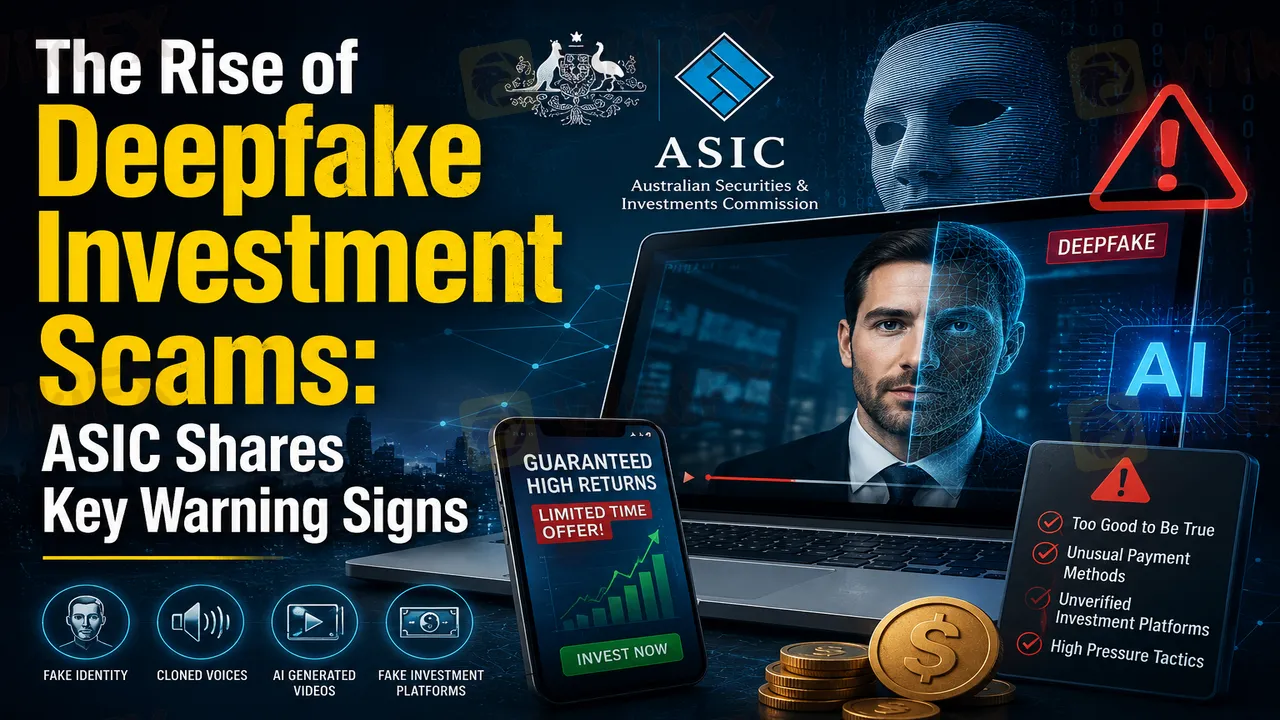
ASIC advocates for skepticism among investors as they see unusually attractive investment schemes blended with emotional appeals. Here are some common warning signs:
- Celebrity or public figure endorsements that sound too good to be true. Scammers constantly leverage AI-generated videos of renowned personalities to establish credibility.
- Guaranteed or unusually exceptional returns. Legitimate investments are not free from risks; returns fluctuate and there is no guarantee of profits.
- Fraudsters usually create false urgency by claiming limited period opportunities.
- They can request investors to transfer funds through unusual payment methods. As an investor, you should be cautious to use options such as cryptocurrency, payment methods or overseas bank accounts.
- Before investing, check whether the financial services provider is licensed to operate in your jurisdiction.
The Precautionary Measure for Investors
As an investor, you must adopt protection measures by verifying information before committing to a financial decision. If you find a video featuring a public figure encouraging investments, dont believe themselves to be outright true. Visit the official website of the company or the referred organization instead of clicking links provided in messages or advertisements. Search for announcements, press releases or regulatory information confirming the investment opportunity.
Equally important is to research the investment provider. Check whether the business holds the appropriate financial services licence in the relevant jurisdiction and review regulatory warnings that may have been issued against it.
Taking time to verify information can significantly reduce the risk of becoming a victim. Fraudsters rely on urgency and emotional decision-making, while careful verification often exposes inconsistencies.
What to Do If You Suspect a Scam
If you believe an investment opportunity may be fraudulent, avoid sending additional money or sharing personal information. Save screenshots, emails, chat messages, transaction records, and website details that could assist investigators.
If money has already been transferred, contact your bank or payment provider immediately. In some cases, prompt action may improve the chances of limiting further losses, although recovery cannot be guaranteed.
You should also report suspected scams to the appropriate authorities in your country. Reporting helps regulators identify emerging fraud patterns and may prevent others from becoming victims.
Stay Skeptical in the AI Era
Deepfake technology is likely to become even more sophisticated as artificial intelligence continues to evolve. Videos and voice recordings alone can no longer be treated as reliable proof that an investment is genuine.
ASIC's warnings highlight an important principle for every investor: verify before you trust. No matter how convincing an advertisement, video, or endorsement appears, always conduct independent research, confirm the legitimacy of the investment provider, and remember that promises of guaranteed returns are among the oldest warning signs of financial fraud.
In today's AI-driven world, healthy skepticism and careful verification remain some of the most effective tools for protecting your investments.
Conclusion
As AI technology continues to advance, deepfake investment scams are becoming increasingly sophisticated and harder to detect. While these tools can create highly convincing videos and voice recordings, they should never replace independent verification when making financial decisions. ASIC's guidance serves as a timely reminder that vigilance is one of an investor's strongest defenses against fraud. Before committing funds, always verify the identity of the investment provider, confirm its regulatory status, and be wary of promises that seem too good to be true. By combining healthy skepticism with thorough research, investors can significantly reduce their exposure to AI-driven scams and make more informed, secure investment decisions.
Download the WikiFX app for the latest forex updates, including in-depth broker investigation reports.

Interesting Articles for You