Abstract:The Malaysia Securities Commission (SC) has issued a formal alert, warning the public about a newly identified investment scam that uses fraudulent Information Memorandums (IM) to deceive potential investors. This scheme falsely claims that the companies involved have either submitted their IMs to the SC or received approval from the Commission, thereby creating a false sense of legitimacy around their investment offerings.
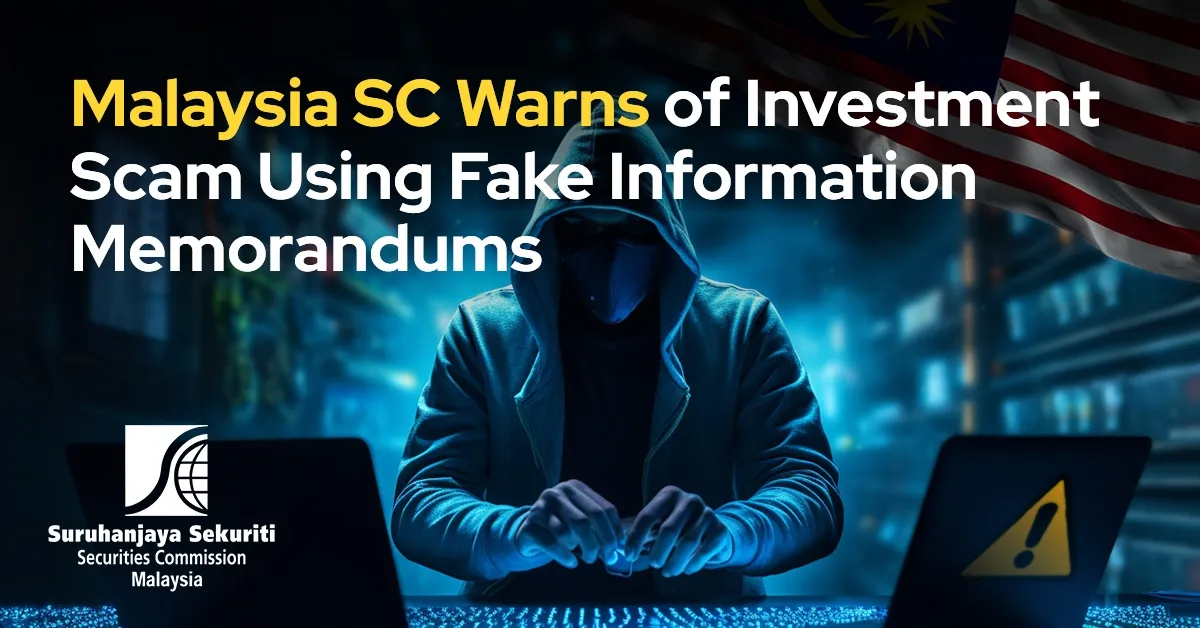
The Malaysia Securities Commission (SC) has issued a formal alert, warning the public about a newly identified investment scam that uses fraudulent Information Memorandums (IM) to deceive potential investors. This scheme falsely claims that the companies involved have either submitted their IMs to the SC or received approval from the Commission, thereby creating a false sense of legitimacy around their investment offerings.
In accordance with the Capital Markets and Services Act 2007 (CMSA), unlisted companies are required to submit their Information Memorandums to the SC within seven days of presenting them to potential investors. The purpose of this process is to ensure transparency and compliance with regulations, safeguarding the interests of investors. However, the SC emphasized that merely creating or submitting an IM does not imply the Commissions endorsement, as companies must still undergo rigorous scrutiny before any approval is granted.
In a recent case, the SC uncovered that a company had deliberately misled investors by claiming it had submitted an IM to the Commission, hoping to bolster the credibility of its investment scheme. The company had not, in fact, submitted any such documentation, raising suspicions of fraud. The SC believes this could be part of a wider, coordinated scam designed to exploit investors' trust.
As soon as this fraudulent activity was discovered, the Securities Commission took swift action by reporting the company to law enforcement and adding it to the SCs Investor Alert List. This list is designed to inform the public about companies and individuals involved in dubious or illegal investment schemes. The SC considers such behaviour particularly dangerous, as it misleads investors into believing that the investment product is legitimate and has been reviewed or approved by the authorities.
The Securities Commission strongly urges the public to remain vigilant when evaluating any investment opportunities, especially those that claim to be associated with the SC or its officials. Investors are advised to carefully verify the legitimacy of any investment offer by consulting official sources or contacting the Commission directly.
Additionally, the SC encourages anyone who encounters suspicious investment activities or misleading information to report such cases promptly. By doing so, the public can help prevent others from falling victim to these potentially harmful scams, thus contributing to the overall protection of investors.