

Global Broker Regulation Inquiry App
About WikiFX
English
简体中文
繁體中文
English
Pусский
日本語
ภาษาไทย
Tiếng Việt
Bahasa Indonesia
Español
हिन्दी
Filippiiniläinen
Français
Deutsch
Português
Türkçe
한국어
العربية
FXTRADING Financial Focus (Asia-Pacific 04/20)US Clean Energy Accelerates
Abstract:Time is becoming the scarcest resource across the entire US clean energy sector. As the critical deadline of July 4, 2026 approaches, a large number of solar, wind, and energy storage projects are ent
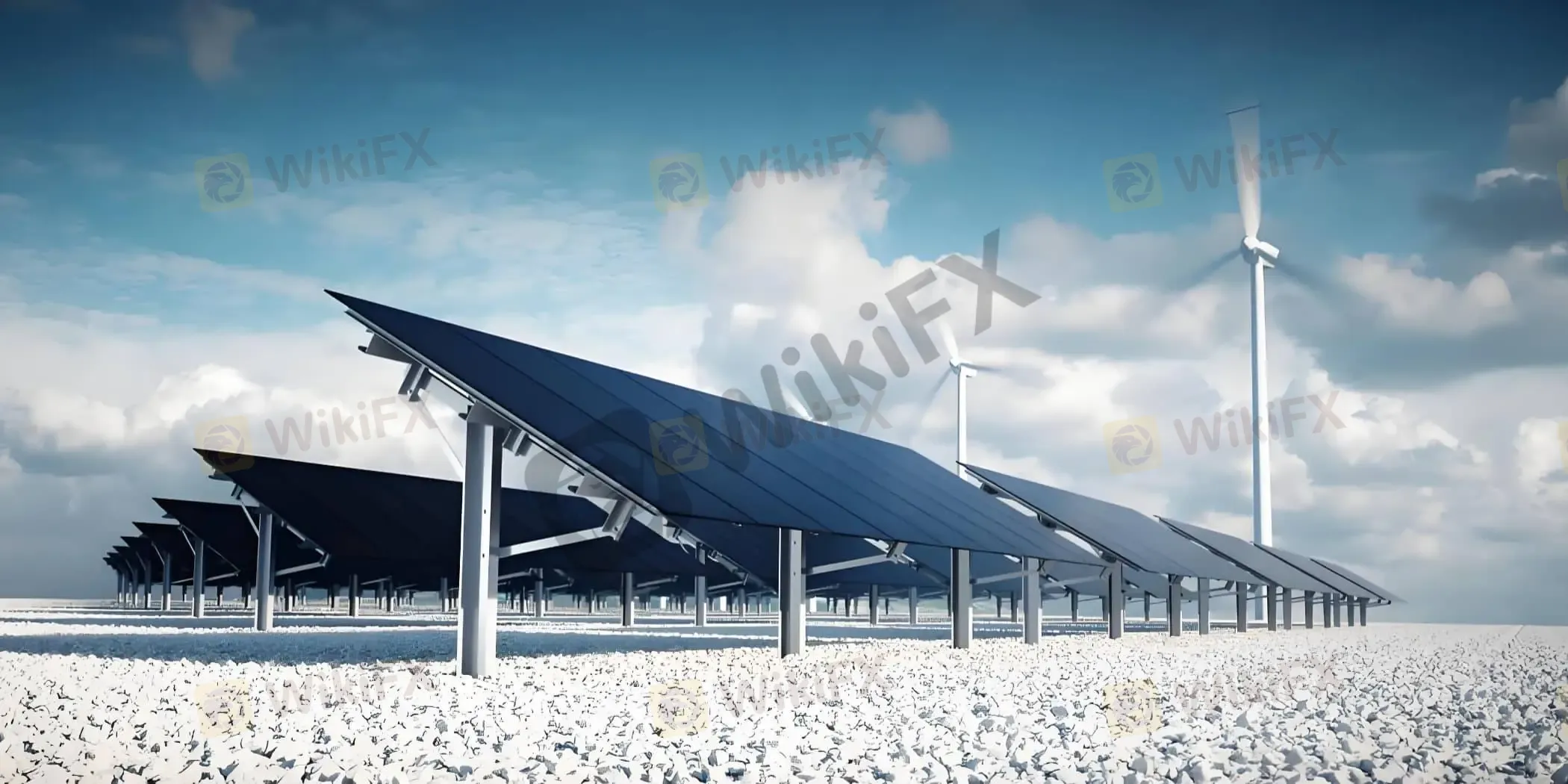
Time is becoming the scarcest resource across the entire US clean energy sector. As the critical deadline of July 4, 2026 approaches, a large number of solar, wind, and energy storage projects are entering an intensive development phase. Developers are clearly speeding up their pace, compressing timelines at every stage from project initiation to equipment procurement, with a straightforward goal: to secure eligibility for federal tax incentives before the policy window closes.
This wave of concentrated activity stems from a sudden tightening of policy rules. Under the latest US legislation, projects must either begin construction before early July 2026 or be connected to the grid by the end of 2027 to qualify for Investment Tax Credits and Production Tax Credits. Compared to the previous timeline that extended into the mid-2030s, this represents a significant acceleration, fundamentally reshaping the industrys rhythm and forcing projects that once followed a steady pace to move forward much more rapidly.
Under this pressure, state governments have begun to take a more active role, treating approval efficiency as a key variable. Several states on the West Coast and in the Midwest are simultaneously adjusting procedures, using executive orders or legislation to streamline permitting timelines. Some states are requiring regulators to prioritize projects that are close to construction readiness, minimizing redundant reviews in the process. Others are expanding community solar programs or reducing development costs through tax arrangements, all essentially aimed at buying time for project execution.
From a broader perspective, this collective acceleration is not driven by policy alone. Uncertainty in energy prices is also amplifying the sense of urgency. Recent volatility in global energy markets has pushed up input costs, which are gradually feeding into electricity prices. For individual states, increasing the share of local renewable energy is not just a structural adjustment, but also a way to hedge against external shocks, especially as pressure on household electricity bills has already begun to emerge.
Another longer-term force comes from structural changes in electricity demand. The rapid expansion of data centers driven by artificial intelligence is causing a sharp increase in power consumption. Compared to traditional demand, this type of load is more concentrated and persistent, placing greater pressure on grid capacity. Some energy companies have already made it clear that without early investment in new power generation, supply-demand gaps could widen quickly in the coming years. The current tax incentive window provides a timely opportunity to accelerate this expansion.
However, the path from project plans to actual power generation still faces multiple uncertainties. Supply chains remain one of the most immediate bottlenecks, with long lead times for critical components such as large transformers and grid equipment. Any delays in these areas can easily disrupt overall project timelines. At the same time, even with simplified approval processes, differences in local execution may still arise, and such details tend to be magnified in an environment where timelines are highly compressed.
As the deadline continues to draw closer, more states are likely to join this acceleration effort. In the short term, this may lead to a surge in project starts and even temporary resource constraints. Over the longer term, however, this wave of rapid deployment could reshape the US energy structure, significantly increasing the share of renewables in the power mix while helping to stabilize electricity prices. From an FXTRADING perspective, this policy-driven acceleration in energy investment is essentially an effort to counterbalance both energy price volatility and rising electricity demand. While short-term congestion in the supply chain and cost fluctuations may introduce some instability, improvements in the power supply structure over the medium to long term could help ease energy-related inflation pressures and potentially reshape corporate cost dynamics, thereby supporting broader economic resilience.
Disclaimer:
The views in this article only represent the author's personal views, and do not constitute investment advice on this platform. This platform does not guarantee the accuracy, completeness and timeliness of the information in the article, and will not be liable for any loss caused by the use of or reliance on the information in the article.
WikiFX Broker

Currency Calculator
USD

CNY
Current Rate:0
Enter amount
USD
Redeemable Amount
CNY
Calculate 