

Global Broker Regulation Inquiry App
About WikiFX
English
简体中文
繁體中文
English
Pусский
日本語
ภาษาไทย
Tiếng Việt
Bahasa Indonesia
Español
हिन्दी
Filippiiniläinen
Français
Deutsch
Português
Türkçe
한국어
العربية
اردو


Japanese Bond Market Fractures; US Treasury Secretary Pivots Blame to Tokyo

WikiFX
|


Abstract:Volatility in the Japanese Government Bond (JGB) market has reached historic levels following proposed tax cuts by PM hopeful Sanae Takaichi, while US Treasury Secretary Scott Bessent strategically leverages Tokyo's turmoil to distract from domestic fiscal concerns.
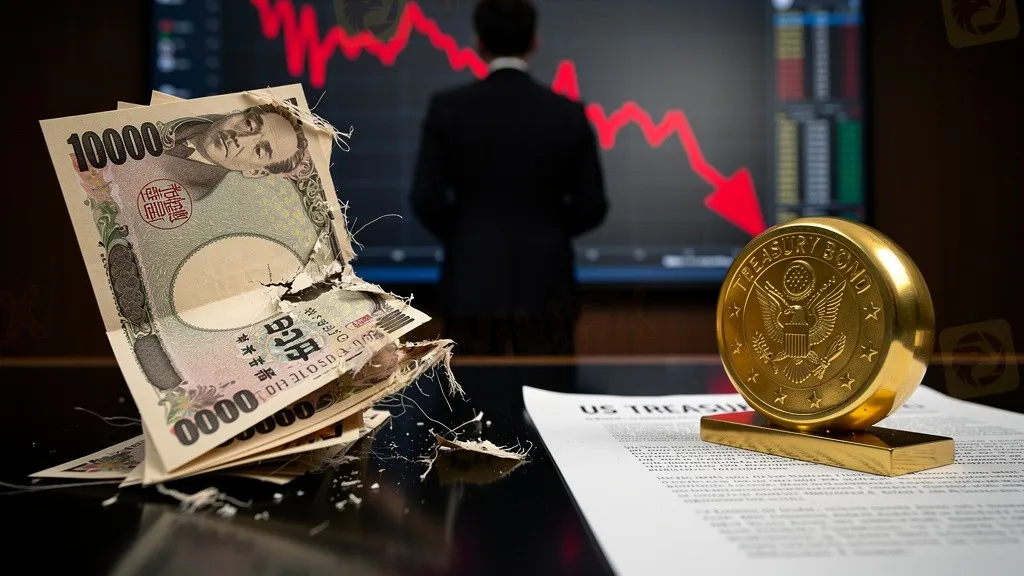
Tokyo/Washington — The global bond market is facing a renewed stress test as political maneuvering in Japan triggers a historic sell-off in Japanese Government Bonds (JGBs). The volatility, sparked by populist tax proposals, has unexpectedly provided political cover for the US Treasury as it navigates its own debt hurdles.
Market Data Snapshot
- 10-year JGB yields: Spiked approximately 15 basis points in two sessions.
- 30-year yields: Surged 30 basis points, signaling a collapse in long-duration trust.
- US debt pace: Increasing at nearly $5 trillion every two years.
- Key Date: February 8 (Election polls).
The 'Takaichi Shock'
The epicenter of the current turbulence is Tokyo, where Prime Minister hopeful Sanae Takaichi has proposed a temporary suspension of the consumption tax on food and beverages. While aimed at election support ahead of the February 8 polls, the proposal has been branded a “Pandora's Box” by major financial institutions.
Analysts at JPMorgan and Nomura warn that the proposal shreds the last vestiges of Japans fiscal discipline. The Japanese Yen weakened alongside equity valuations, signaling a “sell-Japan” correlation.
The market fears that funded by unspecified assets or pension reserves, these fiscal measures will force the Bank of Japan (BOJ) into an impossible corner, potentially necessitating rate hikes into a slowing economy.
Bessents Strategic Deflection
In a move demonstrating his hedge-fund background, US Treasury Secretary Scott Bessent has seized upon Tokyos instability. Facing scrutiny over accelerating US debt—now increasing at a pace of nearly $5 trillion every two years—Bessent linked recent Treasury volatility directly to the JGB sell-off.
By framing the market dislocation as an external “six standard deviation event” originating in Japan, Bessent has effectively created a narrative shield for the Trump administrations controversial attempts to acquire Greenland and the subsequent diplomatic fallout with Europe. This “political hedging” allows the White House to downplay domestic fiscal risks.
Market Implications
The correlation between JGB volatility and US Treasuries remains a critical risk vector. If Japanese institutional investors—historically the largest holders of US debt—unwind foreign positions to cover domestic losses, US yields could face upward pressure regardless of Fed policy. The market is now pricing in a high probability of continued Yen weakness, forcing the BOJ to consider intervention.
Disclaimer:
The views in this article only represent the author's personal views, and do not constitute investment advice on this platform. This platform does not guarantee the accuracy, completeness and timeliness of the information in the article, and will not be liable for any loss caused by the use of or reliance on the information in the article.
WikiFX Broker
Latest News
Couple Faced Over RM1.5 Million Loss After Stock Tip Scheme
WikiFXBritish Pound climbs as USD fades, Hormuz risk keeps Fed in play
WikiFXDo You Know Your Cost of Swinging Gold? Gold CFD Costs Shift From Spreads To Overnight Fees
WikiFXOANDA Is Shutting Down MT4 Trading by 25 September 2026
WikiFXBlackwell Global UK Loss Widens as Revenue Falls 37%
WikiFXSwiss Franc weakens as US Dollar strengthens on Fed rate hike bets
WikiFXAustralian Dollar drifts higher above 0.7200 despite as strong US NFP
WikiFXLiquid Network Suffers from a US$320 Million Bitcoin Hack
WikiFXAustralian Dollar posts fresh three-month high amid hawkish RBA prospects
WikiFXVietnam: Inflation and trade trends shape VND – Commerzbank
WikiFX