


Chinese Yuan makes new highs marking an historic performance.
Performance like this hasn't been seen since 2021
Original

简体中文
繁體中文
English
Pусский
日本語
ภาษาไทย
Tiếng Việt
Bahasa Indonesia
Español
हिन्दी
Filippiiniläinen
Français
Deutsch
Português
Türkçe
한국어
العربية
اردو




Abstract:BEIJING — The People's Bank of China (PBOC) is set to initiate a major overhaul of its central bank digital currency (CBDC) framework, with the "New Generation Digital RMB" system scheduled to go live on January 1, 2026.

BEIJING — The People's Bank of China (PBOC) is set to initiate a major overhaul of its central bank digital currency (CBDC) framework, with the “New Generation Digital RMB” system scheduled to go live on January 1, 2026.
According to Deputy Governor Lu Lei, the updated framework marks a theoretical and structural shift from a “Digital Cash” (M0) model to a “Digital Deposit Money” (M1/M2) approach. Key changes include:
The move is seen as a significant step toward the internationalization of the RMB. By integrating the e-CNY into the core banking system, Beijing aims to increase its utility for large-scale cross-border settlements. The mBridge project, which utilizes the digital yuan for cross-border payments, has already processed over 380 billion yuan providing a working proof-of-concept for avoiding traditional SWIFT rails.
Disclaimer:
The views in this article only represent the author's personal views, and do not constitute investment advice on this platform. This platform does not guarantee the accuracy, completeness and timeliness of the information in the article, and will not be liable for any loss caused by the use of or reliance on the information in the article.

Performance like this hasn't been seen since 2021
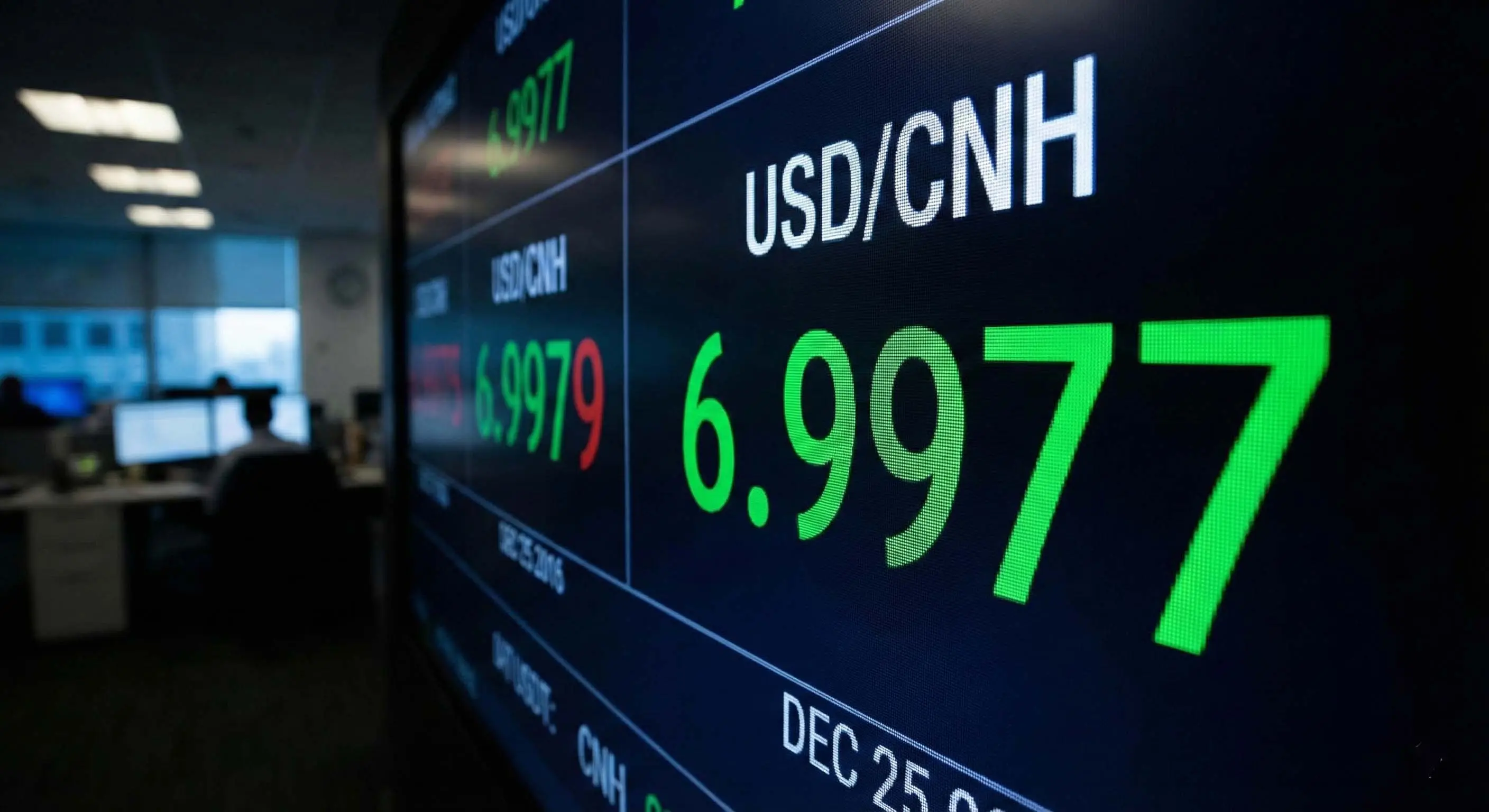
The offshore Renminbi (CNH) has surged past the critical 7.0 per Dollar barrier for the first time in 14 months, trading at 6.9977 as of Dec 25. The move marks a significant shift in sentiment, driven by year-end corporate settlement flows and a broadly softer US Dollar.

Amidst a gloomy global trade outlook, China's equity markets are flashing green, potentially offering support to the Chinese Yuan (CNY) and its liquid proxies, the Australian Dollar (AUD) and New Zealand Dollar (NZD).

Thin holiday liquidity amplified moves in global markets this week, with the Chinese Yuan staging a significant rally against the Dollar, while precious metals retreated from record valuations.
WikiFXWikiFXWikiFXWikiFXWikiFXWikiFXWikiFXWikiFXWikiFXWikiFX