


Why Most Retail Traders Fail: What the Numbers Reveal
Retail trading data shows why so many traders quit or lose money, from short survival periods and high costs to overconfidence, emotional decisions, and poor risk control.
Original

简体中文
繁體中文
English
Pусский
日本語
ภาษาไทย
Tiếng Việt
Bahasa Indonesia
Español
हिन्दी
Filippiiniläinen
Français
Deutsch
Português
Türkçe
한국어
العربية
اردو




Abstract:You’ve probably seen the screenshots on social media. Someone turns $500 into $5,000 in a single morning, and suddenly everyone wants to be a trader. But here is the cold reality: trading isn’t a single game. It’s a collection of different battlefields, and if you bring a knife to a gunfight, you’re going to lose your capital.
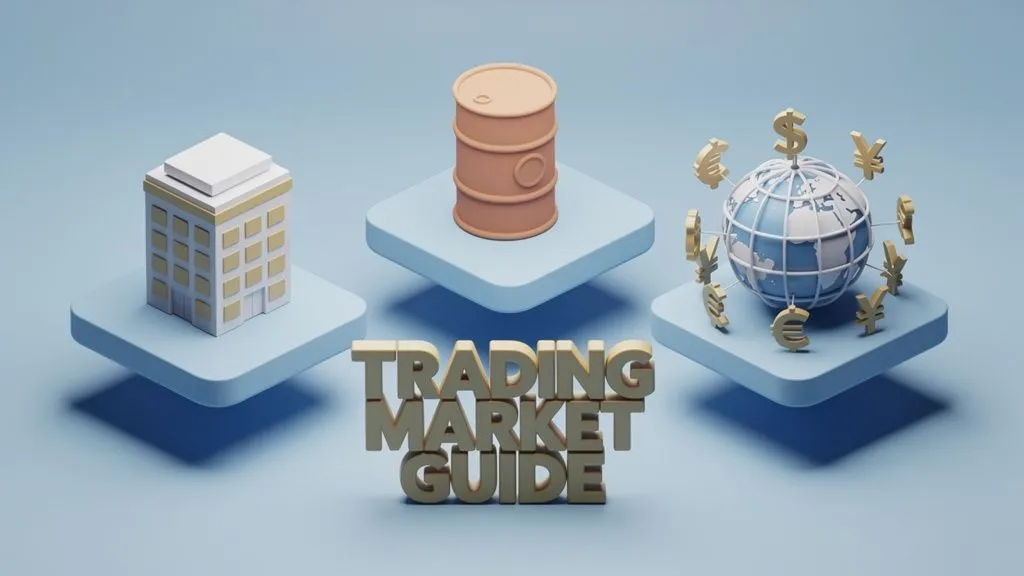
You‘ve probably seen the screenshots on social media. Someone turns $500 into $5,000 in a single morning, and suddenly everyone wants to be a trader. But here is the cold reality: trading isn’t a single game. It‘s a collection of different battlefields, and if you bring a knife to a gunfight, you’re going to lose your capital.
Beginners often lump Stocks, Futures, and Forex into one bucket called “trading.” That is a massive mistake. While the charts might look the same—green candles go up, red candles go down—the mechanics, the leverage, and the risks are completely different.
Ive traded all three. Here is the breakdown of what really separates them, so you can decide where you belong.
When you buy a Stock, you are buying a tiny piece of a business. If you buy Apple, you own equity. If the price drops to zero (rare, but possible), you still held a share until the end. Stocks are generally slower. They depend on earnings reports, CEO scandals, and product launches.
Futures are different. You are agreeing to buy or sell something at a specific date. You aren't buying the S&P 500 or a barrel of Oil directly; you are trading a contract that expires. If you are holding a losing position when the contract expires, you can‘t just “wait for it to come back.” You’re out.
Forex is the purest form of speculation. You are trading one currency against another. You dont own the Euro. You are betting that the Euro will get stronger than the Dollar. There is no physical product, no earnings report from a CEO (though central bank governors essentially act like CEOs of a country). It is just cash fighting cash.
This is the question I get asked nearly every day. The answer lies in one word: Leverage.
In the stock market, if you have $1,000, you can usually buy about $1,000 worth of stock. If you have a margin account, maybe you can buy $2,000. It‘s 2:1 leverage. It’s manageable.
In Futures, the leverage is higher. You control a large contract value with a relatively small “margin” deposit. It moves fast.
In Forex, the leverage is insane. Standard accounts often offer 1:100 or even 1:500 leverage. That means your $1,000 can control $500,000 worth of currency.
Forex gets a reputation for being risky not because the market is volatile (currency pairs actually move less than stocks on a percentage basis), but because traders abuse leverage. They drive a Ferrari at 200mph without learning to brake.
Here is a critical structural difference that impacts your safety.
Stocks and Futures trade on centralized exchanges like the NYSE, NASDAQ, or the CME. There is a central building (or server) where all orders go. Everyone sees the same price. It is highly regulated.
Forex is OTC (Over-The-Counter). There is no central exchange. Its a decentralized network of banks and brokers. The price you see on your screen comes from your broker's liquidity providers.
Because there is no central police station for Forex, the industry attracts a lot of bad actors. Anyone can set up a server, call themselves a broker, and take your money.
This is where you have to do your own security work. Since there is no “New York Stock Exchange” vetting every participant, you need to vet your broker personally. I always tell my students to check a broker‘s regulatory status on WikiFX before depositing a single cent. It’s a simple database that tells you if a broker has a valid license or if they are just a clone website looking to steal your deposit. In a decentralized market, a tool like WikiFX is your only real shield against scams.
Lifestyle plays a huge role in which market you choose.
If you are a night owl or have a 9-to-5 job, Forex is often the default choice because you can trade the London session before work or the Tokyo session late at night. The liquidity is always there. You can enter and exit a trade instantly, anytime, without worrying about “market open” gaps as much as stock traders do.
If you want to invest for the long term and sleep well at night, look at Stocks.
If you like commodities and understand how macroeconomics affects oil and gold, look at Futures.
But, if you have a smaller capital base and want the ability to trade anytime, Forex is the most accessible. Just remember the rules of the jungle:
Pick your battlefield carefully. The market will take your money if you don't know the rules.
Disclaimer: This article is for educational purposes only and does not constitute financial advice. Trading Forex, Stocks, and Futures involves significant risk and is not suitable for all investors. You could lose more than your initial deposit.
Disclaimer:
The views in this article only represent the author's personal views, and do not constitute investment advice on this platform. This platform does not guarantee the accuracy, completeness and timeliness of the information in the article, and will not be liable for any loss caused by the use of or reliance on the information in the article.
Retail trading data shows why so many traders quit or lose money, from short survival periods and high costs to overconfidence, emotional decisions, and poor risk control.

The market is a game of psychology, not just economics. Trade what the chart is doing, not what the news anchor is saying.
I see it every single day. A student sends me a screenshot of their trading setup, asking why they got stopped out.
You’ve been there. You are staring at the EUR/USD chart. Your technical analysis is perfect. Support is holding, the RSI looks good, and you are 20 pips in profit.
WikiFXWikiFXWikiFXWikiFXWikiFXWikiFXWikiFXWikiFXWikiFXWikiFX