


Why Most Retail Traders Fail: What the Numbers Reveal
Retail trading data shows why so many traders quit or lose money, from short survival periods and high costs to overconfidence, emotional decisions, and poor risk control.
Original

简体中文
繁體中文
English
Pусский
日本語
ภาษาไทย
Tiếng Việt
Bahasa Indonesia
Español
हिन्दी
Filippiiniläinen
Français
Deutsch
Português
Türkçe
한국어
العربية
اردو




Abstract:Trading is not about who has the most complicated screen. It is about who can identify the flow of money the fastest.
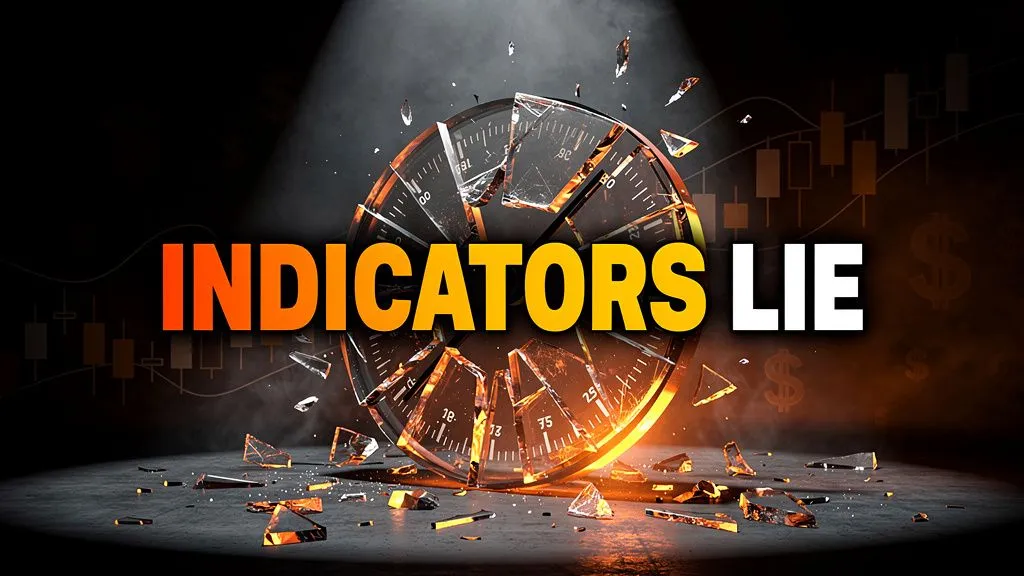
Lets be honest for a second. Open your trading app. What does your chart look like?
If you are new to this game, I‘m willing to bet it looks like a Christmas tree. You’ve got the RSI at the bottom, the MACD crossing over, three different Moving Averages, and maybe some Bollinger Bands squeezing the price. It looks professional. It feels scientific.
But let me guess: You are still losing money.
I see this every day. You buy because the lines crossed, but the price drops anyway. You sell because the RSI said “overbought,” but the price rockets another 10% higher and blows your account.
Why is this happening? Because you are staring at the decorations and ignoring the house. You are prioritizing indicators over the trend.
We don't need a dictionary definition here. In the market, a trend is simply the flow of money. It is the collective mind of millions of market participants voting for a direction.
Think of the market like a rushing river.
If you try to swim upstream because you saw a small ripple move backward, the river will crush you. That is what happens when you trade against the trend.
In an Uptrend, price makes higher highs and higher lows. Its like climbing stairs.
In a Downtrend, price makes lower lows and lower highs. Its like falling down the stairs.
It sounds stupidly simple, but 90% of losses come from traders thinking they can outsmart the stairs.
This is the big question. Why did your favorite oscillator tell you to sell right before Bitcoin or Gold hit an all-time high?
Mathematical Lag.
Most indicators are just math formulas based on past price data. They are rearview mirrors. They can tell you exactly what happened five minutes ago or five days ago, but they cannot see the road ahead.
When a trend is strong—let's say massive institutional money is buying the USD—indicators will scream at you that the price is “extreme.” They will say it is “Overbought.”
But the market can stay overbought longer than you can stay solvent.
If the trend is up, “overbought” doesn't mean “sell.” It usually means the momentum is incredibly strong. If you sell into a strong uptrend just because a squiggly line at the bottom of your screen reached the number 70, you are standing in front of a freight train.
This obsession with indicators is also where many new traders get scammed. Youve seen the ads on social media: “99% Accuracy Trend Predictor! Buy this software for $500!”
They show you a chart with perfect arrows pointing up and down.
Listen to me: There is no magic indicator.
Scammers prey on your desire for an easy win. They sell you repainted indicators that look perfect in hindsight but fail in live trading. Even worse, some sketchy brokers manipulate their data feeds to trigger your indicator-based stop losses.
Before you deposit money with any broker promising “exclusive AI tools” or “guaranteed signals,” do your homework. Use the WikiFX app to check their regulatory license. Are they regulated? Have other traders reported them for withdrawal issues?
WikiFX is your shield here. If the broker has a low score or a history of complaints, it doesn't matter how good their charts look. Walk away. Protect your capital first; worry about profits second.
So, if we aren't relying on 15 different lines on the screen, what do we do?
1. Clean Your Chart
Delete everything. I mean it. Go to a naked chart with just red and green candles. This clears the noise.
2. Zoom Out
Stop looking at the 1-minute chart. The noise there will kill you. Go to the 4-hour or Daily timeframe. Where is price going? Is it moving from the bottom left to the top right? Thats an uptrend. Only look for buys.
3. Draw One Line
Find the last two major low points and connect them. That is your trendline. As long as the price stays above that line, the trend is your friend.
4. Use Indicators as Confirmation, Not Triggers
This is the secret sauce. Identify the trend first.
The trend dictates the direction. The indicator only helps with the timing. Never let the indicator tell you to change direction.
Trading is not about who has the most complicated screen. It is about who can identify the flow of money the fastest.
Indicators explain the past. Trends dictate the future.
Next time you sit down to trade, ask yourself: “Am I swimming with the river, or am I fighting the current?”
Stay disciplined. Check your broker on WikiFX. Follow the trend.
Disclaimer: This article is for educational purposes only and does not constitute financial advice. Trading involves risk, and you should only trade with risk capital you are prepared to lose.
Disclaimer:
The views in this article only represent the author's personal views, and do not constitute investment advice on this platform. This platform does not guarantee the accuracy, completeness and timeliness of the information in the article, and will not be liable for any loss caused by the use of or reliance on the information in the article.
Retail trading data shows why so many traders quit or lose money, from short survival periods and high costs to overconfidence, emotional decisions, and poor risk control.

The market is a game of psychology, not just economics. Trade what the chart is doing, not what the news anchor is saying.
I see it every single day. A student sends me a screenshot of their trading setup, asking why they got stopped out.
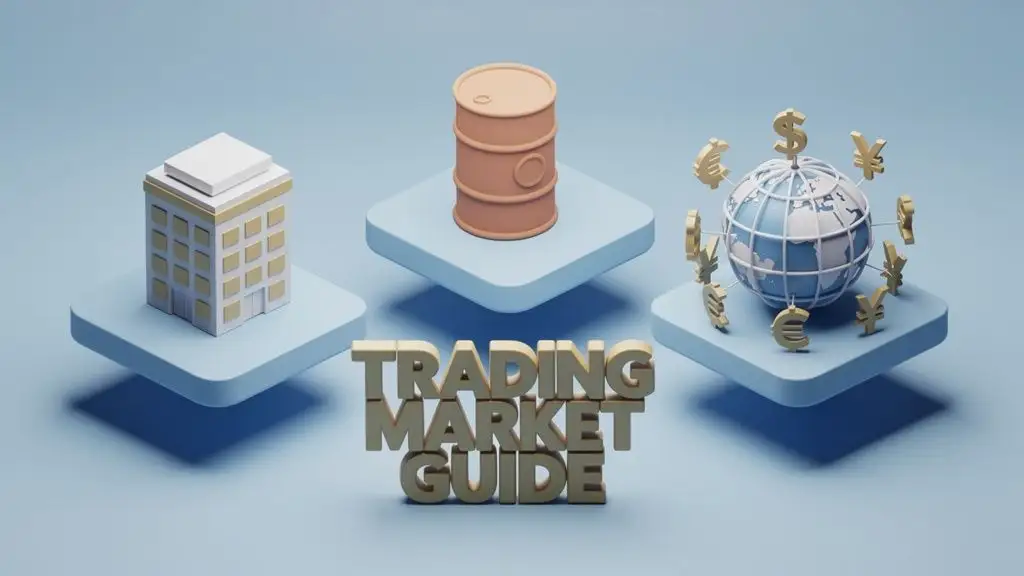
You’ve probably seen the screenshots on social media. Someone turns $500 into $5,000 in a single morning, and suddenly everyone wants to be a trader. But here is the cold reality: trading isn’t a single game. It’s a collection of different battlefields, and if you bring a knife to a gunfight, you’re going to lose your capital.
WikiFXWikiFXWikiFXWikiFXWikiFXWikiFXWikiFXWikiFXWikiFXWikiFX