


Why Most Retail Traders Fail: What the Numbers Reveal
Retail trading data shows why so many traders quit or lose money, from short survival periods and high costs to overconfidence, emotional decisions, and poor risk control.
Original

简体中文
繁體中文
English
Pусский
日本語
ภาษาไทย
Tiếng Việt
Bahasa Indonesia
Español
हिन्दी
Filippiiniläinen
Français
Deutsch
Português
Türkçe
한국어
العربية
اردو




Abstract:Let’s be real for a second. We’ve all been there. You spend hours drawing perfect trendlines. You check the RSI, the MACD, and maybe even the moving averages. Your setup looks clean. You execute the trade.
Let‘s be real for a second. We’ve all been there. You spend hours drawing perfect trendlines. You check the RSI, the MACD, and maybe even the moving averages. Your setup looks clean. You execute the trade.
Then, out of nowhere, a massive red candle smashes through your stop loss. You lose money instantly.
You sit there wondering, “What just happened? My chart was perfect.”
Here is the hard truth: Technical analysis tells you where price has been, but Fundamental Analysis tells you why price is moving right now. If you are trading the EURUSD or even looking at the exchange rate for the Rand or Naira against the Dollar, you cannot ignore the engine that drives these moves.
That engine is built on three things: Interest Rates, Inflation (CPI), and Jobs (NFP).
Think of interest rates as the gravity of the financial world.
When a country‘s Central Bank (like the Federal Reserve in the US) raises interest rates, their currency becomes a magnet. Why? Because big investors—the banks, the hedge funds—want a return on their cash. If the US offers 5% interest and Europe only offers 3%, where would you park your billion dollars? You’d move it to the US.
To do that, you have to sell Euros and buy Dollars. This buying pressure sends the Dollar flying up.
For us in Africa, when the US raises rates, it usually means pain for local currencies. Money leaves emerging markets and flows back to the safety and high yield of the Dollar. If you are holding a “Buy” position on Gold (XAUUSD) or EURUSD when the Fed hikes rates unexpectedly, the market will punish you.
You know exactly what inflation feels like. You go to the market, and the price of bread, rice, or fuel has gone up since last week. That is CPI.
In the trading world, the CPI report is the alarm clock that wakes up the Central Bank.
Here is the simple logic chain you need to memorize:
So, when you see a news alert that US CPI came in “hotter” (higher) than expected, traders immediately scramble to buy Dollars, anticipating that interest rates will go up soon. If you are on the wrong side of that trade, your account balance will suffer.
If you have been in any trading group chat on WhatsApp or Telegram, you‘ve heard about NFP. It happens on the first Friday of every month. It’s the “Non-Farm Payrolls” report.
This simply measures how many people in the US got jobs last month (excluding farm workers).
Why does this matter to a trader in Nairobi or Accra?
If more people have jobs, they have money. If they have money, they spend it. When they spend money, the economy heats up, and inflation goes up. And what happens when inflation goes up? The Central Bank raises rates.
A strong NFP number usually makes the Dollar spike. A weak number can make it crash.
Here is where I need to give you a serious warning.
Trading during high-impact news like CPI or NFP is dangerous. The volatility is extreme. The price can jump 50 or 100 pips in a single second.
This is exactly when “shady” brokers play games. They might widen their spreads so much that your stop loss gets hit even if the price didn't technically reach it (we call this slippage). Or suddenly, their platform “freezes” so you can't close a losing trade.
You need a shield. Before you deposit your hard-earned capital, check your broker on WikiFX. Look at their regulatory status and read complaints from other traders. If a broker has a history of severe slippage or hunting stop losses during news events, WikiFX will flag it. Do not feed the scammers; check the score first.
So, how do you use this without getting wrecked?
Smart trading isn't about guessing the number. It's about reacting to the market's digestion of that number.
Also, keep an eye on your brokers execution speed. Use WikiFX to find brokers that offer raw spreads and low latency. In news trading, speed is the difference between profit and a blown account.
Stay sharp. Respect the fundamentals. And protect your capital.
Disclaimer: This article is for educational purposes only and does not constitute financial advice. Trading forex and CFDs carries a high level of risk and may not be suitable for all investors. Always do your own research.
Disclaimer:
The views in this article only represent the author's personal views, and do not constitute investment advice on this platform. This platform does not guarantee the accuracy, completeness and timeliness of the information in the article, and will not be liable for any loss caused by the use of or reliance on the information in the article.
Retail trading data shows why so many traders quit or lose money, from short survival periods and high costs to overconfidence, emotional decisions, and poor risk control.

The market is a game of psychology, not just economics. Trade what the chart is doing, not what the news anchor is saying.
I see it every single day. A student sends me a screenshot of their trading setup, asking why they got stopped out.
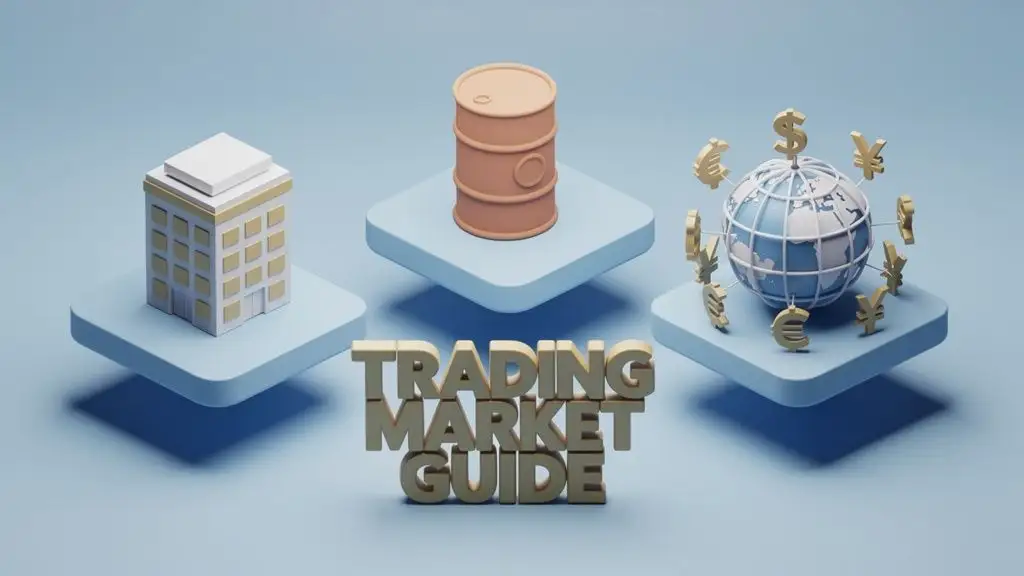
You’ve probably seen the screenshots on social media. Someone turns $500 into $5,000 in a single morning, and suddenly everyone wants to be a trader. But here is the cold reality: trading isn’t a single game. It’s a collection of different battlefields, and if you bring a knife to a gunfight, you’re going to lose your capital.
WikiFXWikiFXWikiFXWikiFXWikiFXWikiFXWikiFXWikiFXWikiFXWikiFX