Abstract:An investigation into IUX (IUX Markets) reveals a disturbing disconnect between their regulatory status and operational reality. While holding valid licenses in South Africa and Australia, a surge in recent complaints suggests a potential liquidity crisis or systemic obstruction. Traders report a specific pattern: withdrawals marked as "successful" that never arrive, support teams citing indefinite "24-hour" delays, and a regulatory warning from Europe that casts a shadow over their global operations.
An investigation into IUX (IUX Markets) reveals a disturbing disconnect between their regulatory status and operational reality. While holding valid licenses in South Africa and Australia, a surge in recent complaints suggests a potential liquidity crisis or systemic obstruction. Traders report a specific pattern: withdrawals marked as “successful” that never arrive, support teams citing indefinite “24-hour” delays, and a regulatory warning from Europe that casts a shadow over their global operations.
The “24-Hour” Loophole
In the world of online trading, speed is currency. Yet, for a growing number of IUX traders, time seems to have frozen. A detailed analysis of complaints lodged with WikiFX throughout 2025 reveals a highly specific, repeatable script being read to traders attempting to access their own capital.
We call it the “24-Hour Loop.”
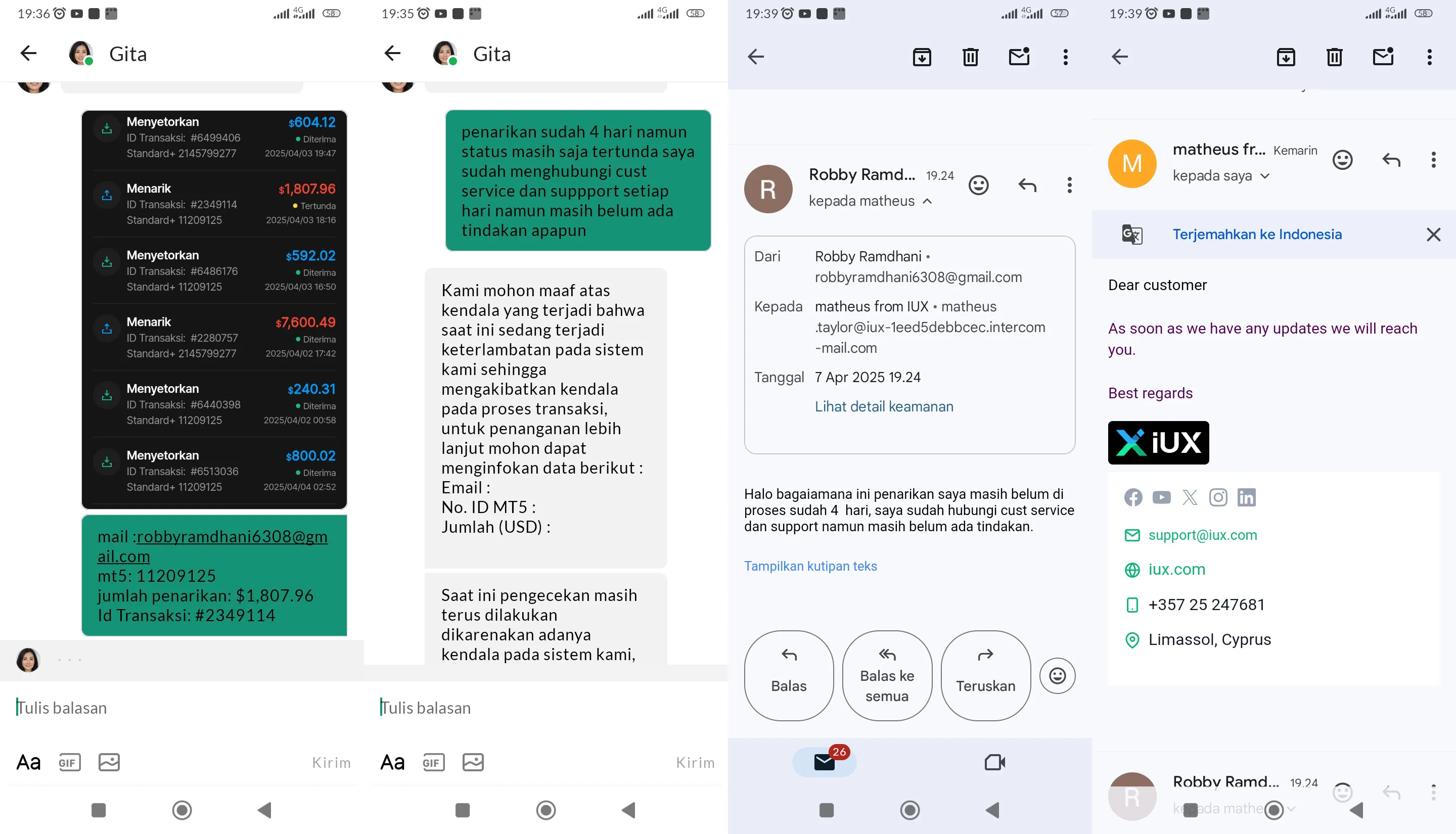
Multiple traders, spanning from Southeast Asia to the broader global market, have reported an identical experience. When a withdrawal request hangs in “pending” status for days—far exceeding the broker's promised processing times—support agents provide a standardized response: “Please wait 24 hours.” When that deadline passes without resolution, the clock is simply reset.
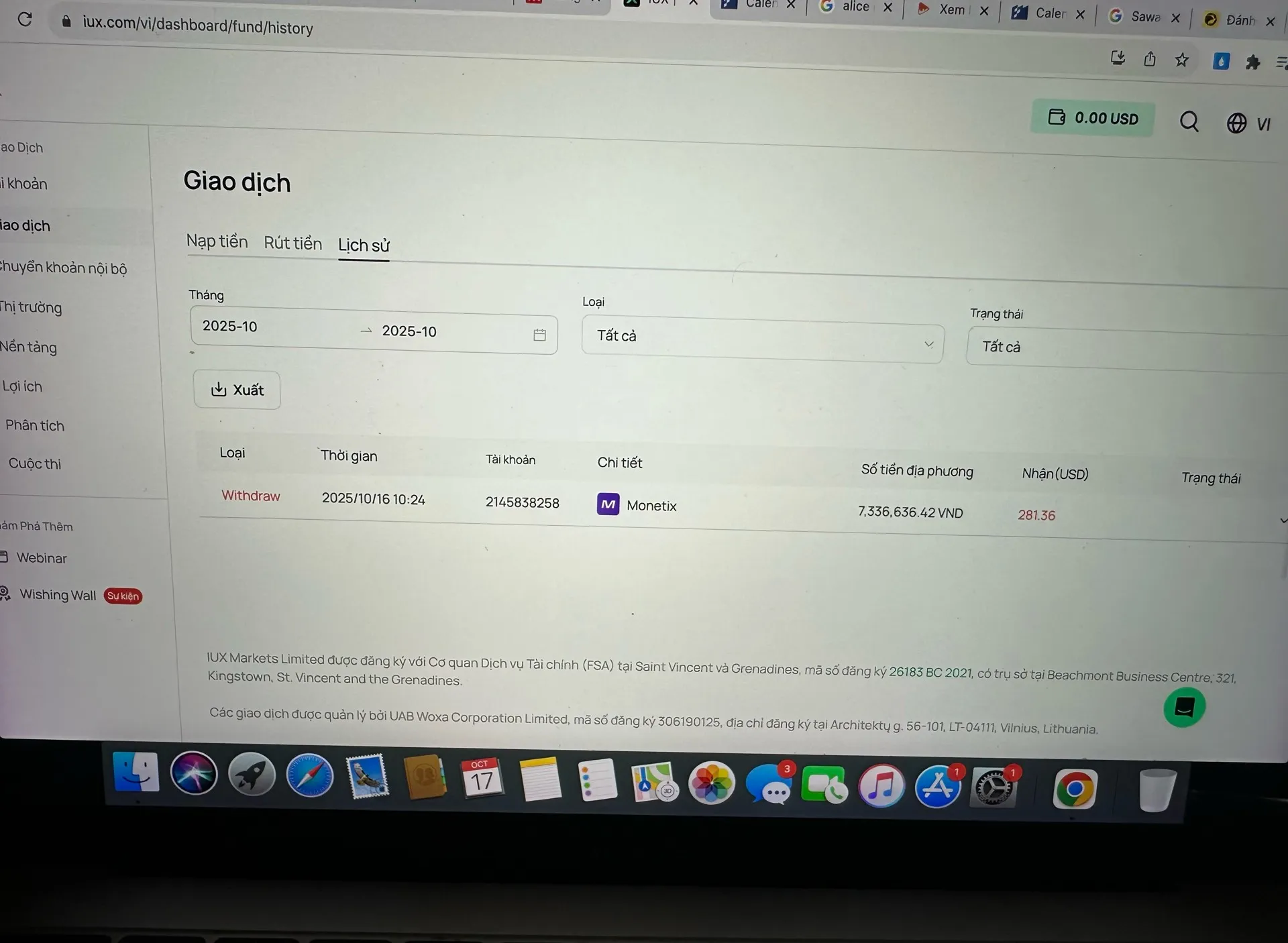
One trader, whose records are dated October 17, 2025, reported initiating a withdrawal on the 16th only to be caught in this support limbo. Despite repeated inquiries, the only response remains “wait.”
Another investor, waiting since June 3, 2025, for a significant sum exceeding $2,600, was still receiving messages to “be patient” nearly a week later.
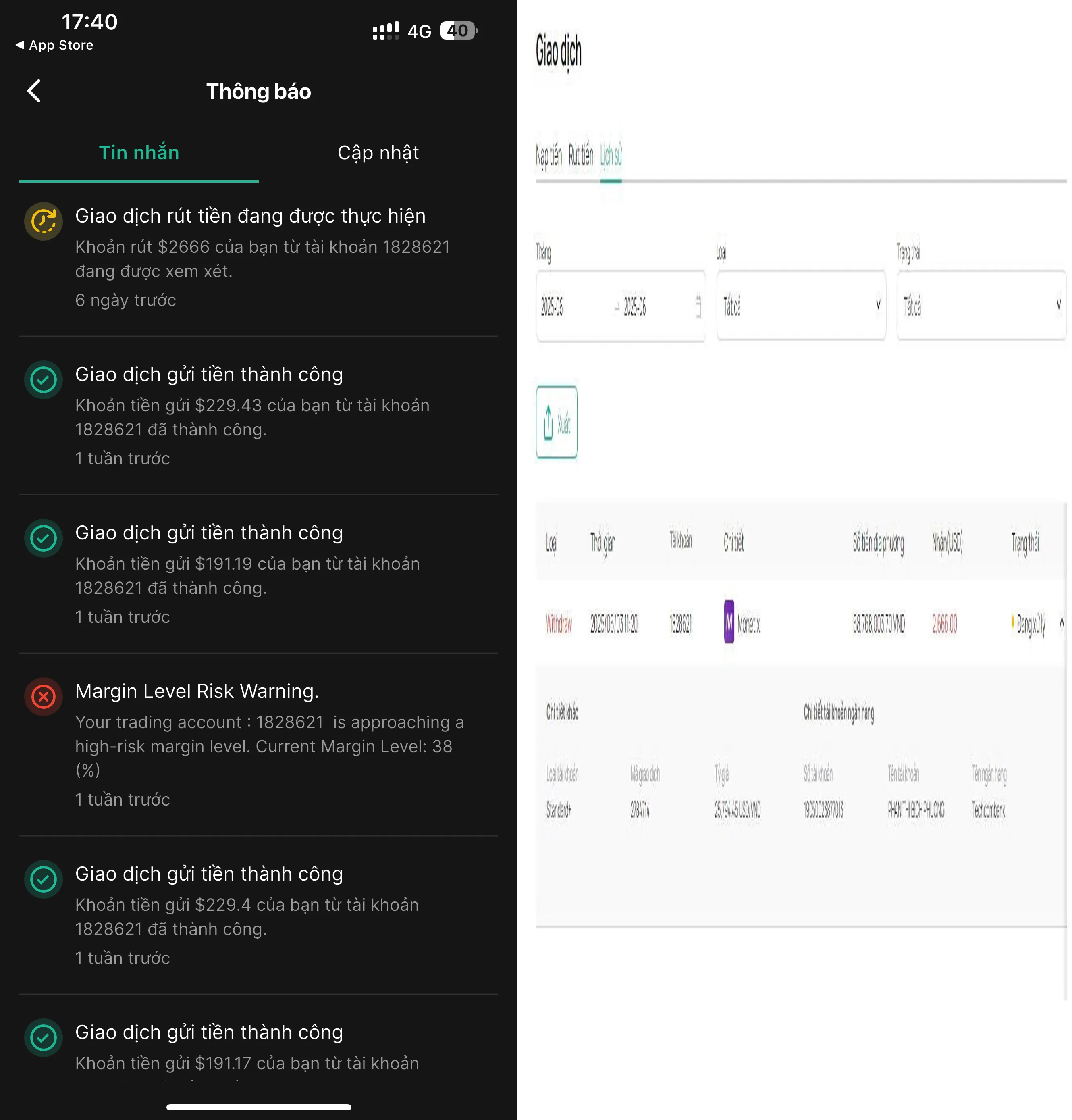
This is not an isolated technical glitch; it appears to be an operational containment strategy designed to stall payouts.
The “Phantom Success” Phenomenon
Perhaps more alarming than a pending withdrawal is a withdrawal that vanishes. Our investigation into trader logs has uncovered a technical anomaly that poses a severe risk to client funds.
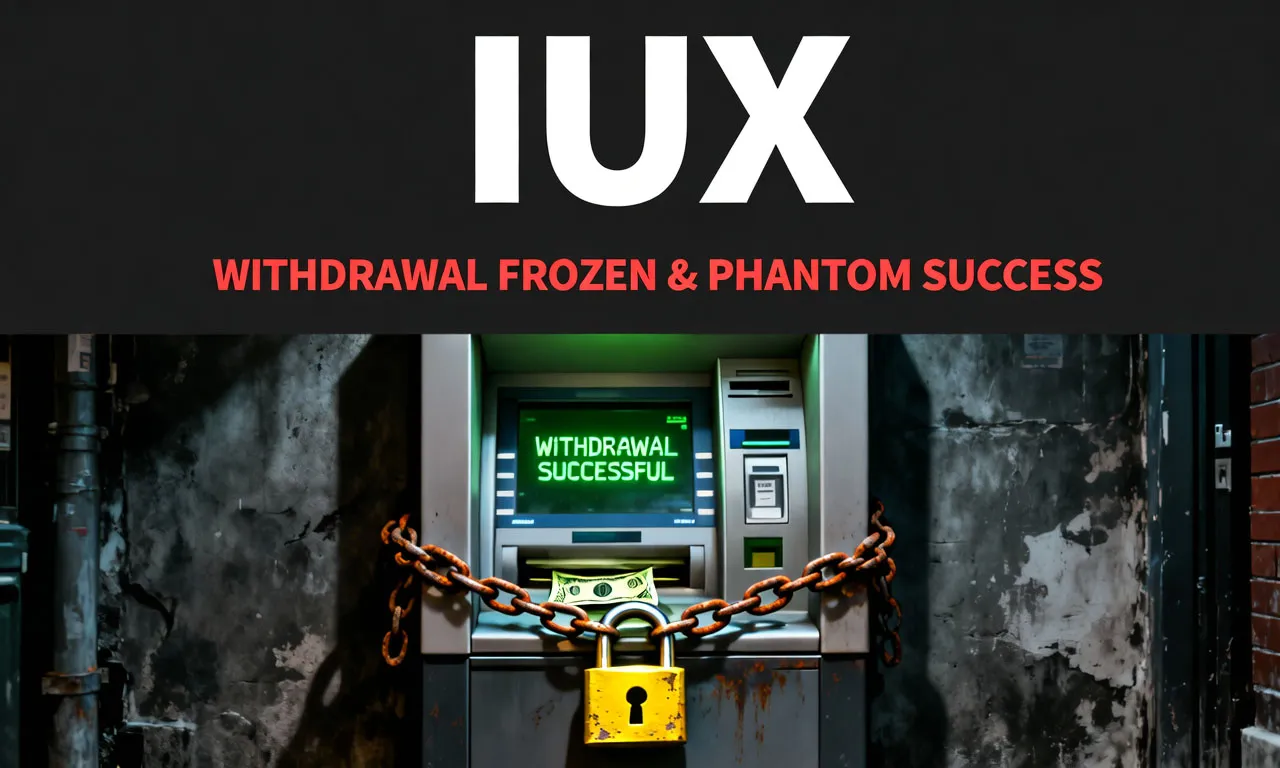
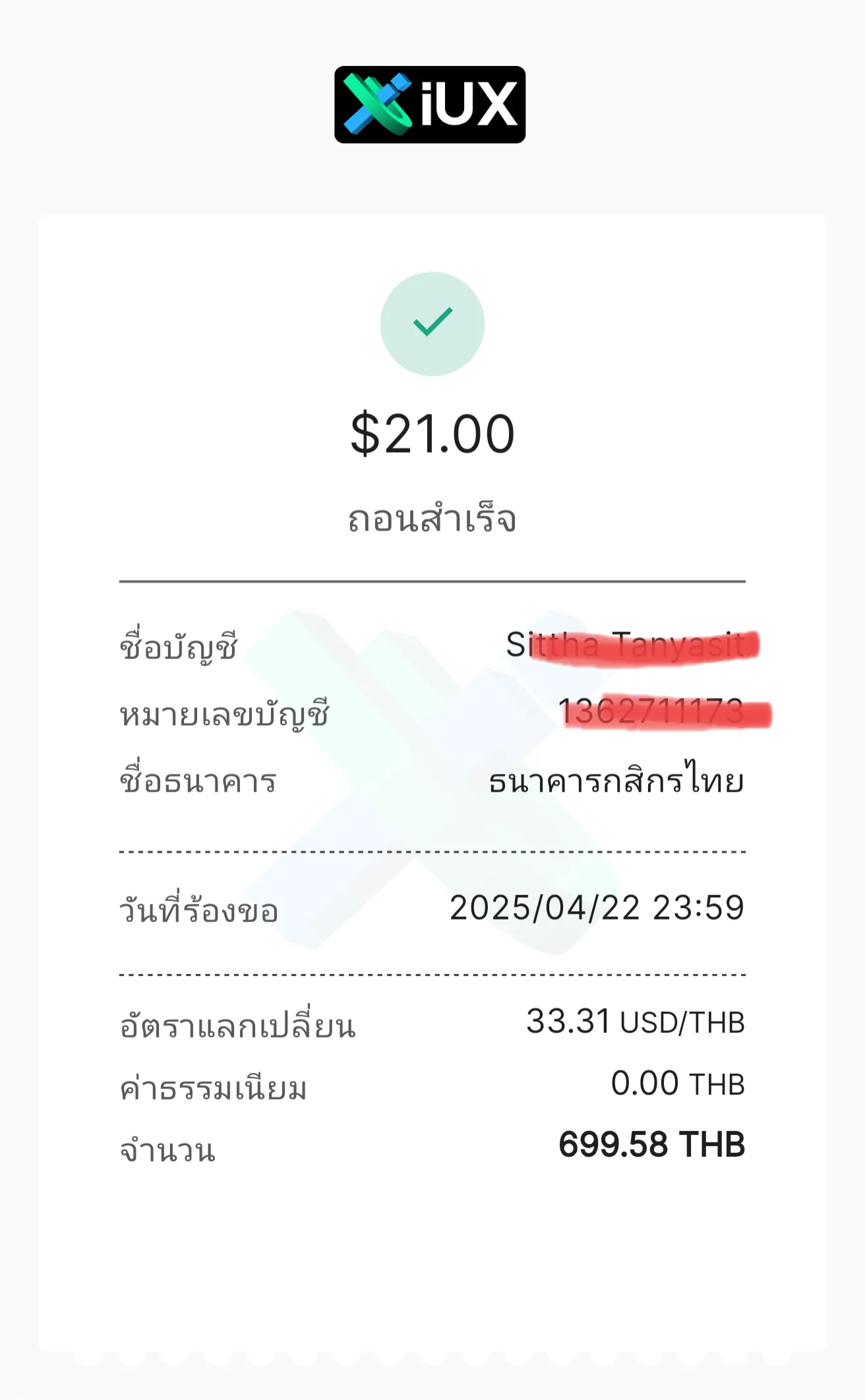
Several users have reported that the IUX system marks their withdrawal requests as “Successful” or “Completed,” deducting the funds from their MT5 trading accounts. However, the money never reaches the destination bank account.
Case ID: #2025-04-23 (Identity Protected)
A trader reported: “The system said the withdrawal was successful, but the money did not enter my account. I notified them, and they told me to wait 24 hours... then told me they sent the matter to headquarters.”
Case ID: #2025-03-26 (Identity Protected)
Another user stated: “They sent success notifications for withdrawal, but it has not arrived into my bank account yet.”
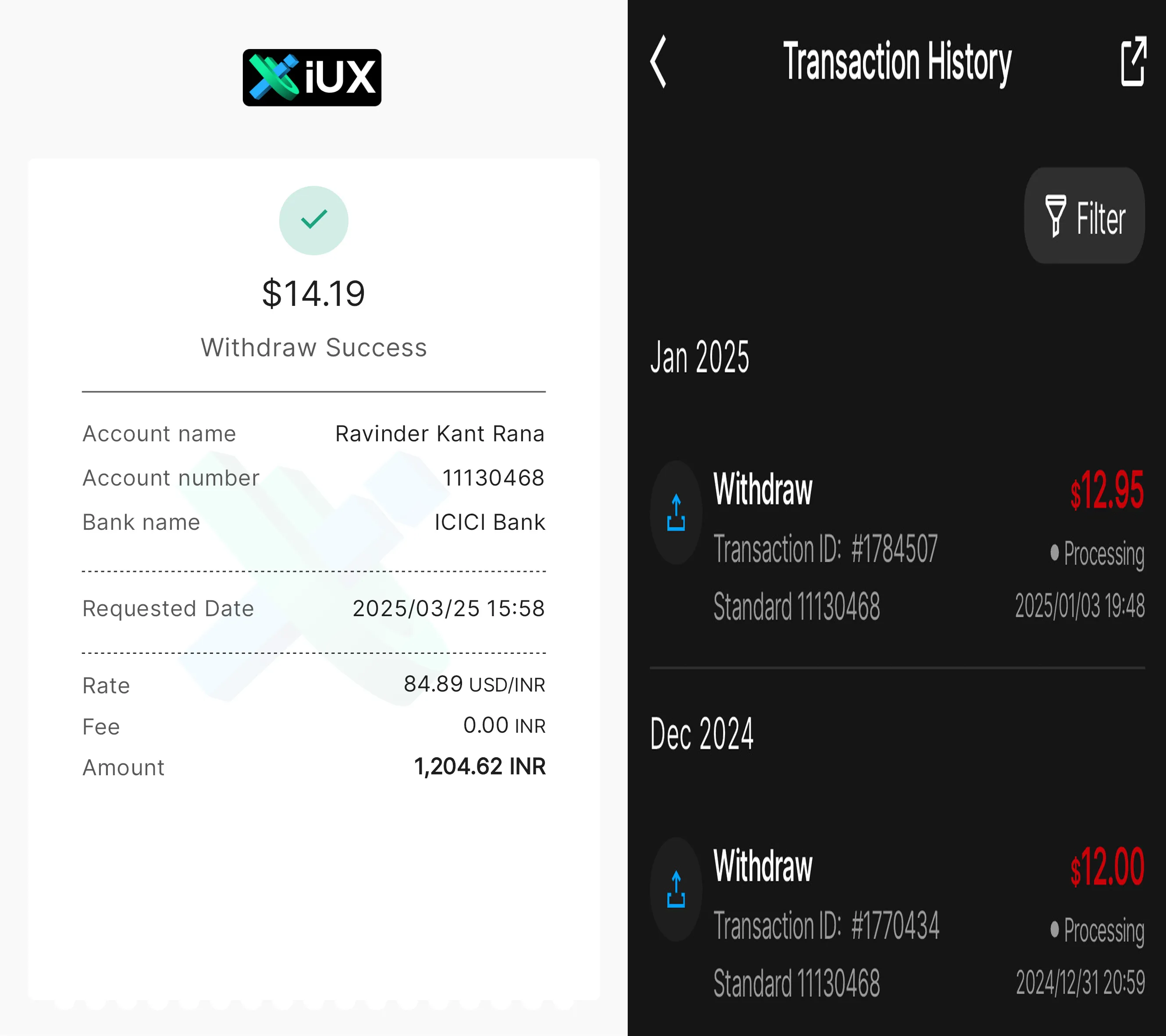
When a broker's backend system and the banking reality no longer align, it often indicates one of two things: severe incompetence in payment processing, or a deliberate “float” of client funds.
Regulatory Dissonance: The License vs. The Warning
IUX presents a complex profile. To the casual observer, they appear legitimate, boasting high-tier regulation. However, a deeper dive into regulatory filings exposes a fractured reality.
The Regulatory Shield:
WikiFX records confirm that IUX holds valid regulatory licenses in two major jurisdictions:
- South Africa: Regulated by the FSCA (Financial Sector Conduct Authority) under license number 53103.
- Australia: Regulated by ASIC (Australian Securities & Investments Commission) under license number 529610.
The “Smoking Gun” Warning:
Despite these licenses, European regulators have flagged the broker's operations as dangerous. In July 2025, the Cyprus Securities and Exchange Commission (CySEC) issued a formal warning against iux.com. The regulator explicitly listed the domain as an entity not authorized to provide investment services.
Why this matters for African Traders:
While the FSCA license offers protection within South Africa, global brokers often onboard clients through offshore entities (like their Mauritius headquarters) rather than the locally regulated branch. If you are trading via the domain flagged by CySEC, you may be operating outside the safety net of the FSCA or ASIC, leaving you vulnerable to the withdrawal issues currently being reported.
The “IP Address” Trap & Profit Wiping
Beyond withdrawal delays, we have uncovered evidence of a more aggressive tactic used to void profits entirely.
In June 2024, a trader reported having their trading account closed and profits confiscated. The justification provided by IUX was that the trader's IP address matched another user's—a violation of terms. The trader vehemently denied this, stating the phone used was brand new and had never connected to public Wi-Fi.
This tactic—blaming “duplicate IPs” to cancel profitable trades—is a common maneuver among high-risk brokers. It effectively allows the broker to uphold losses while invalidating wins under the guise of security protocols.
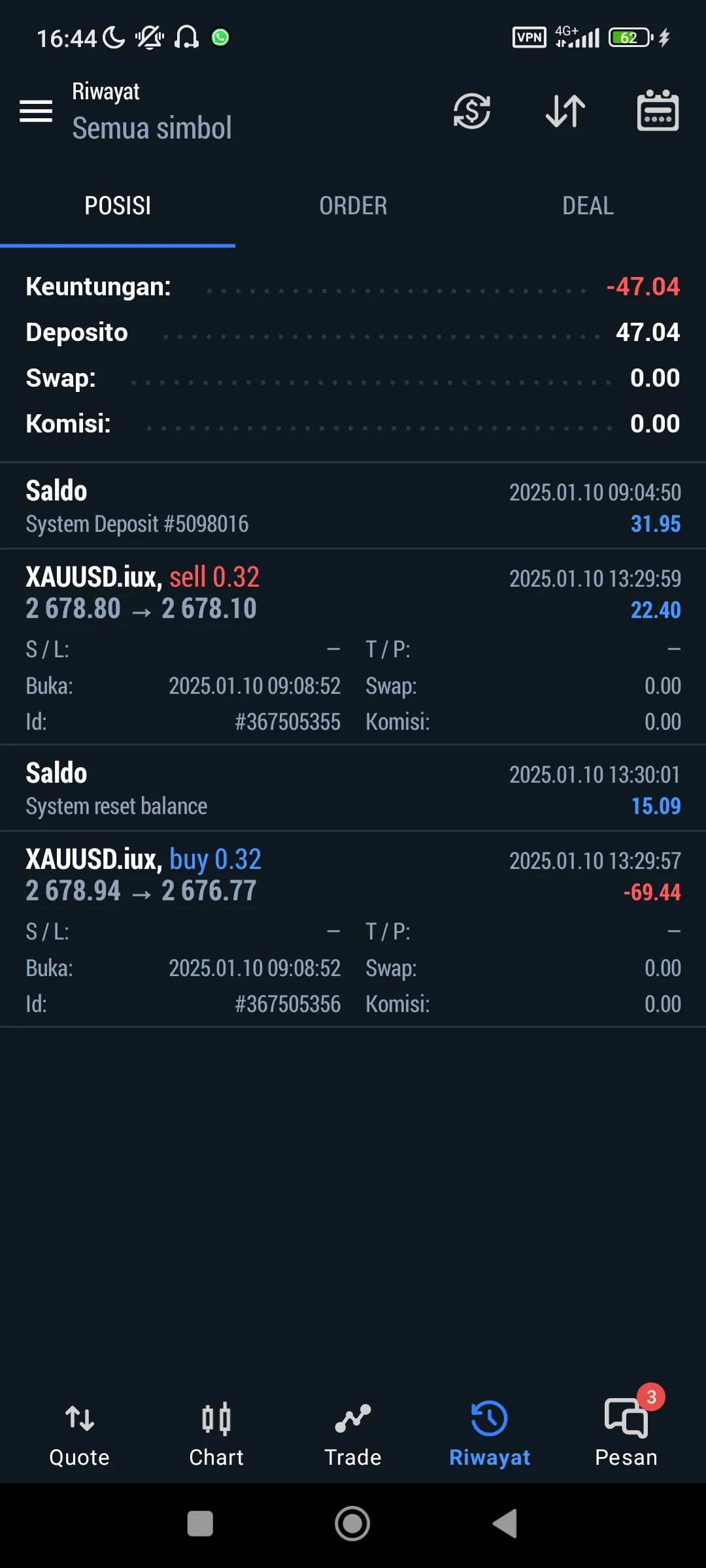
Deposit Failures: The Entrance is Also Blocked
While the exit door seems locked for many, the entrance is remarkably difficult for others. Throughout 2025, reports have surfaced regarding deposits—specifically cryptocurrency (USDT) transfers—that never credited to trading accounts.
- February 2025: A trader deposited via crypto, provided the Transaction Hash (TXID) proving the money was sent, yet the account remained empty.
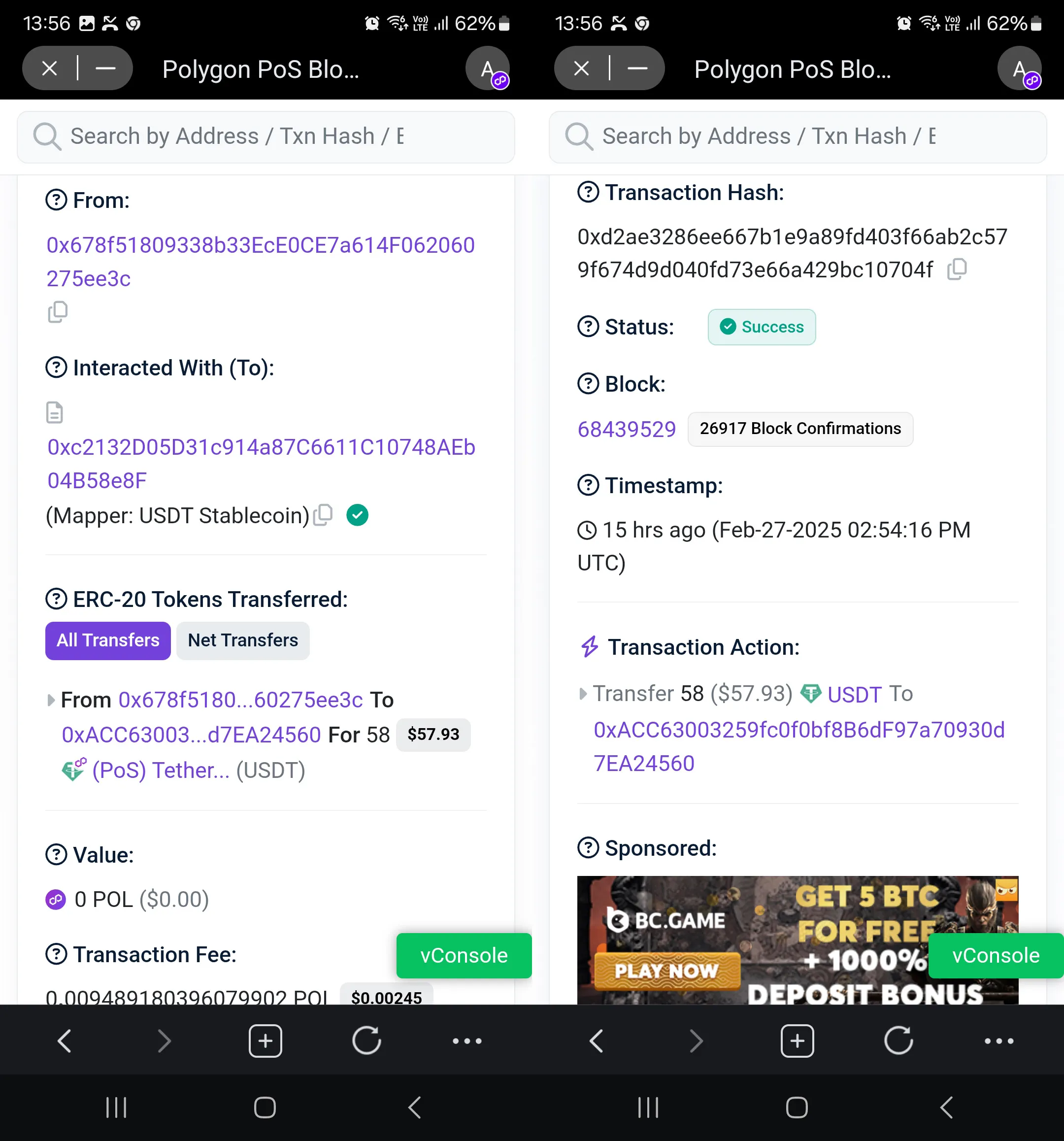
- December 2024: Another user provided blockchain confirmation of a successful transfer, yet 17 hours later, IUX support had failed to locate the funds.
When a broker accepts deposits instantly but requires days or weeks to acknowledge receipt, it suggests manual processing backlogs or a severe lack of automated infrastructure.
Conclusion
The data surrounding IUX paints a picture of a broker with a “Dr. Jekyll and Mr. Hyde” persona. On paper, they are a regulated entity in reputable jurisdictions like South Africa and Australia. In practice, however, the feedback from active traders reveals a platform struggling with the most basic obligation of a financial institution: returning money to its owners.
The precise pattern of “phantom” withdrawals (system success vs. bank failure) and the CySEC warning against their primary domain raise red flags that cannot be ignored.
Risk Warning
Trading involves significant risk. The leverage offered by IUX extends up to 1:3000, which is extremely high and can lead to rapid loss of capital. Given the current volume of withdrawal complaints (19 in the last 3 months), WikiFX urges caution. Traders are advised to verify which specific entity they are onboarding with and to test withdrawal capabilities with small amounts before committing significant capital.
Disclaimer: All cases cited in this article are based on real user records submitted to the WikiFX support center. Identities have been anonymized for user protection.