Abstract:A 47-year-old unemployed man in Muar lost RM310,000 after a YouTube “high-return” investment led him to an app promoted via WhatsApp, showing fake profits of RM2.5 million before demanding an extra RM382,811.60 in “fees” to withdraw.
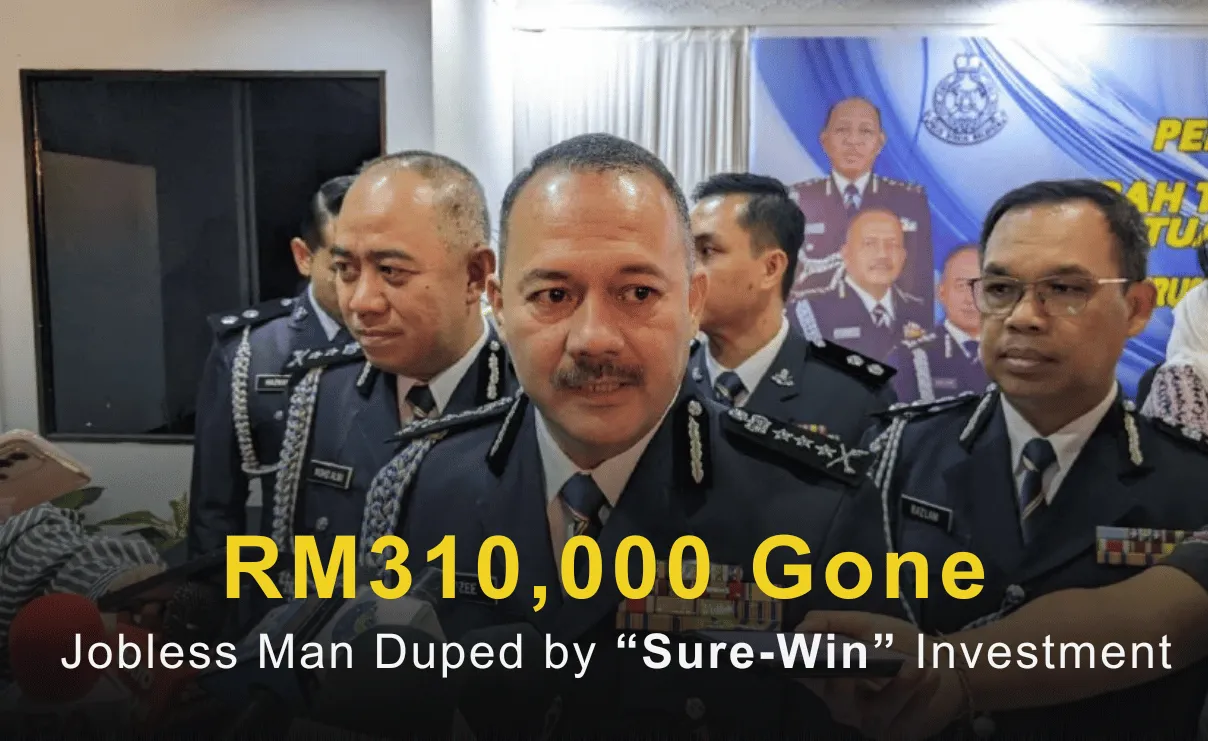
A 47-year-old man in Muar has lost RM310,000—his entire savings—after he was lured by a so-called “high return” investment he saw on YouTube in September. According to district police chief Asst Comm Raiz Mukhliz Azman Aziz, the ad promised quick profits. The victim filled in his details, and soon an unknown “agent” contacted him on WhatsApp, guiding him to download an investment app that supposedly paid 10%–30% depending on how much he put in.
The man, who is currently unemployed and relies only on his savings, made 17 transfers between 10 November and 5 December. Inside the app, his “portfolio” appeared to balloon to more than RM2.5 million—exactly the kind of screen that convinces people to keep topping up. But when he tried to withdraw, the story changed. The scammer demanded an extra RM382,811.60 in “fees” before any payout could be released. That was the moment he realised it was a scam and lodged a report.
Police have opened an investigation under Section 420 of the Penal Code for cheating, which carries a jail term of one to ten years, whipping, and a fine. They‘ve also reminded the public that genuine investment offers don’t start in casual WhatsApp chats, don‘t ask you to transfer money to multiple unrelated accounts, and definitely don’t guarantee double-digit monthly returns.
If youre ever unsure, take five minutes before transferring a single ringgit. Use the Semak Mule portal to check bank accounts that may be tied to scams. Verify licences and warnings on the Securities Commission Malaysia (SC) and Bank Negara Malaysia (BNM) websites. You can also use the WikiFX app to look up brokers, see their regulatory status, read real user reviews, and spot red flags early.
Cases like this often start with hope—a chance to grow savings, clear debts, or help family. Scammers know this. They use slick apps, fake dashboards, and “customer service” chats to keep you depositing more while delaying withdrawals with excuses. If an offer sounds effortless or “too good to be true,” treat it as a warning sign. A quick check now can save a lifetime of savings later.