Abstract:The U.S. will impose an additional 100% tariff on Chinese imports starting Nov. 1, 2025—potentially earlier—alongside new export controls on “critical software,” escalating tensions after Beijing’s rare-earth curbs, new port fees, a Qualcomm probe, and a halt to U.S. soybean purchases. Stocks fell on the news. Key context: some U.S.-China tariffs remain paused until Nov. 10, a Supreme Court case could reshape Trump’s tariff authority, new U.S. duties on cabinets (Oct. 1) and wood products (Oct. 14) are in force, and a pause on Mexico tariffs is set to end next month.
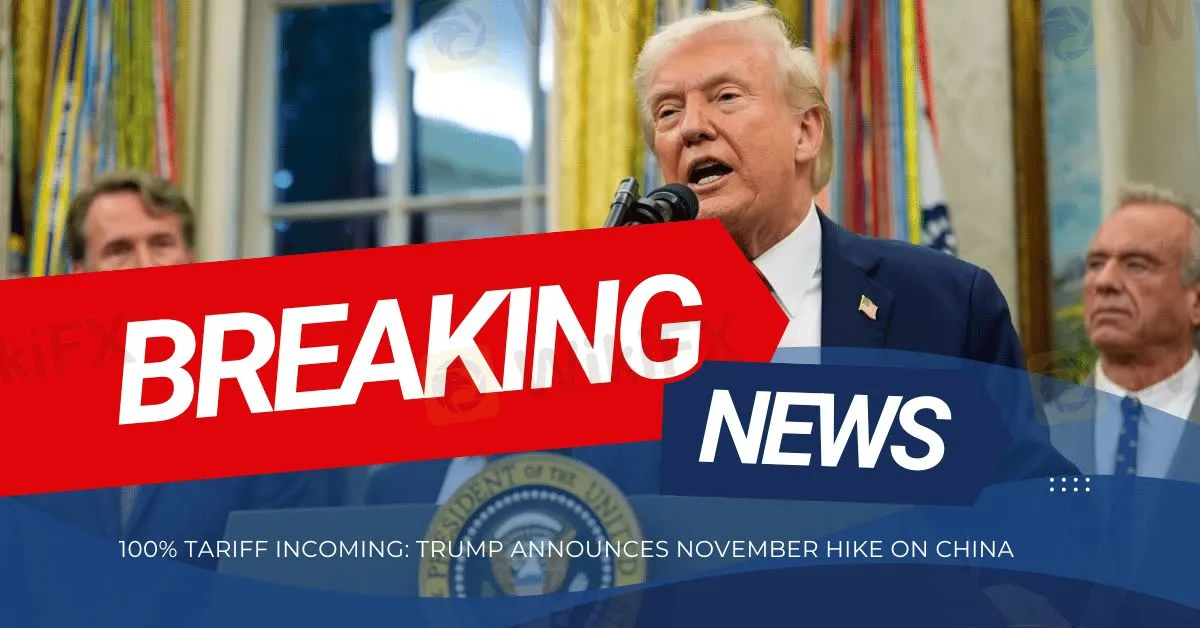
Trump Announces 100% Tariff on Chinese Goods Starting Nov. 1, 2025
President Trump said Friday the U.S. will impose an additional 100% tariff on Chinese imports beginning November 1, 2025, escalating trade tensions with Beijing. In a post on Truth Social, he called Chinas recent trade stance “extraordinarily aggressive,” citing new export controls set to take effect next month that he said impact multiple countries and are a “moral disgrace.”
Trump added the tariff start date could be moved forward depending on China‘s response. He also said new U.S. export controls aimed at restricting China’s access to “critical software” will take effect on the same day in November.
Earlier Friday, Trump warned of a “massive increase” in duties and suggested he may cancel a planned meeting later this month with Chinese leader Xi Jinping.
What prompted the move
- The president pointed to several recent Chinese actions:
- Fresh curbs on exports of rare earth minerals
- New port fees on U.S. ships
- An antitrust probe into Qualcomm (QCOM)
- A halt to purchases of U.S. soybeans
- He described these steps as signs China has become “very hostile.”
Market reaction
- U.S. stocks fell Friday after the tariff threat, reflecting investor concern over renewed trade frictions.
- The broader tariff backdrop
- Some U.S. tariffs on Chinese goods—nearly 145% in certain categories—are paused until Nov. 10 as both sides work on a broader deal.
- Chinese tariffs on U.S. goods rose to 125% before the pause.
Whats next
Supreme Court test: Early next month, the U.S. Supreme Court will hear a case challenging Trump‘s “reciprocal” country-by-country tariffs. Lower courts have ruled against those duties; if the Supreme Court agrees, it could reshape Trump’s tariff strategy and the revenue tied to it.
New U.S. duties in October:
- Kitchen cabinets and vanities: effective Oct. 1
- Timber and certain wood products (including furniture): effective Oct. 14
Mexico pause ending: A U.S. pause on tariffs for Mexican goods is also set to expire early next month.
The administration is signaling a harder line on trade with China—backed by a 100% tariff and new export controls—while legal and diplomatic cross-currents (including a pending Supreme Court case and ongoing negotiations) could still shift the path ahead.