


FCA Warning Capital Zodiac 7 September 2026 and Seven Checks Before Paying
The FCA named Capital Zodiac as an unauthorised clone on 7 September 2026. Check capitalzodiac.com, capitalzodiac.net and FRN 806702 before paying.
Original

简体中文
繁體中文
English
Pусский
日本語
ภาษาไทย
Tiếng Việt
Bahasa Indonesia
Español
हिन्दी
Filippiiniläinen
Français
Deutsch
Português
Türkçe
한국어
العربية
اردو




Abstract:Capital.com seeks a SPK license to expand into Turkey, while MENA traders drive volume growth and blockchain investments shape its next phase.
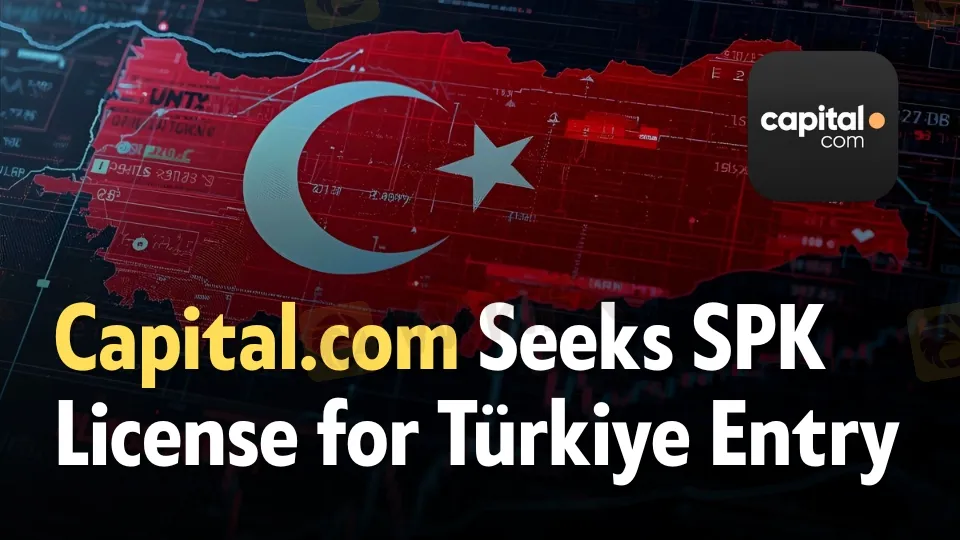
Capital.com has set its sights on Türkiye as part of its global growth strategy, formally beginning the process of obtaining a Capital.com Turkey license under the oversight of the Sermaye Piyasası Kurulu (SPK). The move highlights the brokers intent to deepen its footprint in high-potential markets while strengthening compliance across multiple jurisdictions.
The broker confirmed it is seeking an SPK forex license, which would allow it to operate legally in Türkiye under strict conditions such as a 1:10 leverage cap and mandatory segregation of client funds. As part of its entry strategy, Capital.com is also hiring a Chief Executive Officer to head its Turkish entity. This leadership move mirrors its expansion plans in Brazil and Chile, signaling a broader emerging-market push.
“Turkey is a major financial hub, and securing a license there is a natural next step in our regional expansion,” said Salim Sebbata, Head of Corporate Development at Capital.com. He emphasized that any future services will prioritize compliance, transparency, and client protection in line with SPKs regulations.
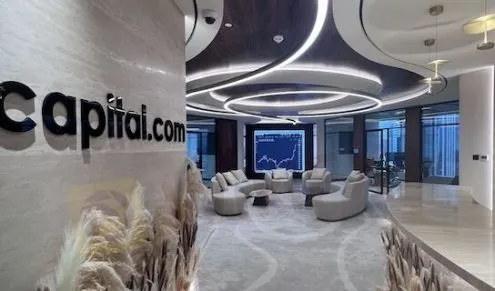
The push into Türkiye comes after impressive growth in the Middle East and North Africa (MENA). In the first half of 2025, 52 percent of Capital.com‘s global trading volume originated from MENA traders, with the UAE alone contributing nearly 72 percent of that regional activity. By comparison, Europe represented only 15 percent of volumes despite a larger trader base. This underscores the region’s growing dominance in global forex and CFD activity.
Beyond market entries, Capital.com has expanded its product roadmap. The broker recently disclosed investments in blockchain infrastructure, a move that could pave the way for future crypto product offerings. While no specific details on Türkiye-focused products were provided, the company confirmed that offerings will evolve alongside demand, subject to regulatory approval.
Founded in 2017 by entrepreneur Viktor Prokopenya, Capital.com currently operates under licenses from the UK, Australia, Cyprus, the UAE, and the Bahamas. It is also pursuing a Japanese forex license, reflecting ambitions to compete in one of the most tightly regulated markets for margin trading.
By targeting Türkiye, strengthening its executive bench, and investing in emerging tech, Capital.com positions itself as a multi-jurisdictional, forward-looking broker. Market observers note that its ability to secure an SPK license could serve as a test of how efficiently foreign brokers can adapt to Türkiyes stringent rules while leveraging its strategic position between Europe and the Middle East.
Capital.com is a global contracts-for-difference (CFD) trading platform launched in 2017. The broker is regulated across multiple jurisdictions and serves clients in Europe, MENA, Asia, and beyond, with a growing focus on blockchain-enabled products and transparent compliance frameworks.

Disclaimer:
The views in this article only represent the author's personal views, and do not constitute investment advice on this platform. This platform does not guarantee the accuracy, completeness and timeliness of the information in the article, and will not be liable for any loss caused by the use of or reliance on the information in the article.
The FCA named Capital Zodiac as an unauthorised clone on 7 September 2026. Check capitalzodiac.com, capitalzodiac.net and FRN 806702 before paying.

This WEALTH-FX review starts with a licensing statement that needs verification. The client agreement on wealth-fx.com says the company is incorporated in St. Vincent and the Grenadines as 88102 LLC 2021 and is authorised and regulated by the SVG FSA. An official SVG FSA notice, however, says forex trading brokerage activities are not licensed in that jurisdiction. The same agreement separately names WealthFX Liquidity Limited, company 180782, and describes a Mauritius International License. For an India-based reader, those website claims do not replace RBI rules for permitted forex transactions or an independently confirmed licence record.
Did ePlanet, a Comoros-based brokerage, allegedly withhold your dollars on the platform? Did the broker prevent you from accessing the ePlanet login dashboard upon a withdrawal request? Did the broker platform execute trade orders slowly? Have you faced losses due to slippage? This ePlanet review 2026 evaluates user claims while also providing a regulatory overview of the broker.

FCA warns EXOTICINVEST in a notice first published and updated on 3 September 2026. The UK regulator identifies EXOTICINVEST TRADING AND INVESTMENT FIRM and the website www.exoticinvest.ltd, stating that the firm is not authorised and may be targeting people in the UK. This is a dated regulatory warning, not a customer review or a confirmed loss report. Anyone approached through the named website should stop before paying, avoid sharing login credentials and verify the exact business independently through the FCA Firm Checker.
WikiFXWikiFXWikiFXWikiFXWikiFXWikiFXWikiFXWikiFXWikiFXWikiFX