


IG Review for India 2026: RBI Alert List, Regulation, Login, and Forex Risk
IG review for India in 2026: see the RBI Alert List entry, overseas regulation, login checks, forex limits, and a clear broker safety checklist.
Original

简体中文
繁體中文
English
Pусский
日本語
ภาษาไทย
Tiếng Việt
Bahasa Indonesia
Español
हिन्दी
Filippiiniläinen
Français
Deutsch
Português
Türkçe
한국어
العربية
اردو




Abstract:JPMorgan Chase-Plaid agreement introduces fees for bank data access, setting new precedent for open banking partnerships in the financial technology sector.

JPMorgan Chase and fintech data broker Plaid have established a groundbreaking fee-based data access agreement that introduces paid partnerships to U.S. open banking, potentially reshaping how financial institutions monetize customer data connections.
The renewed partnership, announced this week, marks the first time JPMorgan will receive payment from Plaid for accessing customer account information used by popular financial applications including Venmo and Robinhood. This fee structure represents a significant shift in the relationship between traditional banks and financial technology companies, establishing a new revenue model that could influence industry-wide practices.
 Contents
The agreement ensures uninterrupted service for millions of Chase customers who rely on Plaid-connected applications while introducing a compensation framework for data access services. Although specific financial terms remain undisclosed, the deal preserves existing pricing structures for fintech partners and includes provisions for joint security and performance investments.
Eric Sager, Plaid's chief operating officer, emphasized the consumer-focused nature of the partnership. The company maintains that customers retain fundamental rights to access and share their financial data, positioning this agreement as supporting rather than restricting those capabilities.
The partnership builds upon a 2018 foundation when JPMorgan became among the first major banks to replace screen-scraping technology with direct API connections. Screen scraping involved using customer login credentials to extract bank data, a method considered less secure and more cumbersome than modern tokenized API systems.

JPMorgan's motivation for implementing fees stems from substantial infrastructure costs associated with constant data requests. The bank reported significant volumes of background API calls, many unrelated to direct consumer activity, creating operational expenses that the new fee structure aims to address.
This development occurs amid ongoing Consumer Financial Protection Bureau rulemaking under Section 1033, which seeks to establish comprehensive open banking standards nationwide. The regulatory process has extended across multiple administrations, leaving financial institutions and data aggregators to negotiate private agreements while awaiting federal guidelines.
Industry standards organization FDX reports that API-based account connections now exceed 110 million in the United States, representing substantial growth from previous years. This expansion demonstrates increasing consumer adoption of financial technology services requiring bank data integration.
Plaid's business model faces continued evolution following previous challenges, including a blocked $5.3 billion Visa acquisition due to antitrust concerns and a $58 million privacy lawsuit settlement. The company has repositioned itself as an advocate for standardized regulations and consumer data rights.
The current agreement covers data aggregation services but excludes payment-related functions such as account verification and transaction initiation, which represent nearly half of Plaid's traffic volume. Future fee structures for these services remain uncertain, potentially affecting peer-to-peer payment platforms and instant transfer capabilities.
End users will experience no immediate changes to their financial applications, as Plaid commits to maintaining current functionality without passing additional costs to consumers. The agreement provides operational stability while regulators complete the open banking framework development.
However, the precedent established by JPMorgan's fee implementation may encourage other major banks to pursue similar revenue strategies. This trend could fundamentally alter the economics of financial data sharing and influence the competitive landscape among data aggregators.
About JPMorgan: JPMorgan Chase & Co. is the largest bank in the United States by assets, providing comprehensive financial services including consumer banking, investment banking, and asset management to individuals, businesses, and institutions worldwide.

Disclaimer:
The views in this article only represent the author's personal views, and do not constitute investment advice on this platform. This platform does not guarantee the accuracy, completeness and timeliness of the information in the article, and will not be liable for any loss caused by the use of or reliance on the information in the article.
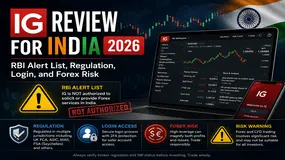
IG review for India in 2026: see the RBI Alert List entry, overseas regulation, login checks, forex limits, and a clear broker safety checklist.
Orbex, a Cyprus-based brokerage entity, has recorded 30 exposure complaints on WikiFX, a leading forex broker regulation inquiry tool, so far. Other review websites have also recorded a healthy number of complaints against the brokerage firm. These complaints largely talk about the alleged profit confiscations by the broker in the name of trading violations, difficulty in accessing fund withdrawals, capital losses due to artificial slippage, etc. In this Orbex review, we have investigated user complaints and provided a regulatory overview of the broker.
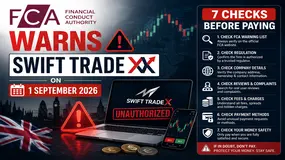
FCA warns Swift TradeX in a notice first published and updated on 1 September 2026. The UK Financial Conduct Authority says the firm may be providing or promoting financial services without permission, is not authorised, and may be targeting people in the UK. The notice names the website swifttradexai.com, a Worcester address and a UK telephone number, but also cautions that unauthorised businesses may use incorrect or borrowed contact details. The confirmed issue is authorisation status—not a court finding about every transaction. Anyone considering a payment should stop, verify the firm independently, and avoid using contact information supplied by the platform itself.
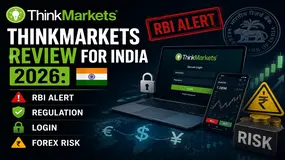
ThinkMarkets review for India: check the RBI Alert List, overseas entities, regulation, login security, forex rules, costs, withdrawals, and leverage risk.
WikiFXWikiFXWikiFXWikiFXWikiFXWikiFXWikiFXWikiFXWikiFXWikiFX