Abstract:In today’s digital age, TikTok, Instagram, and YouTube have overtaken traditional financial journalism as the first port of call for many aspiring investors. Instead of stockbrokers or certified advisers, millions now turn to “finfluencers”—social media personalities dispensing investment tips and money management strategies. While some offer genuine insights, others have exploited their reach to push misleading or outright fraudulent schemes, often leaving followers in financial despair.
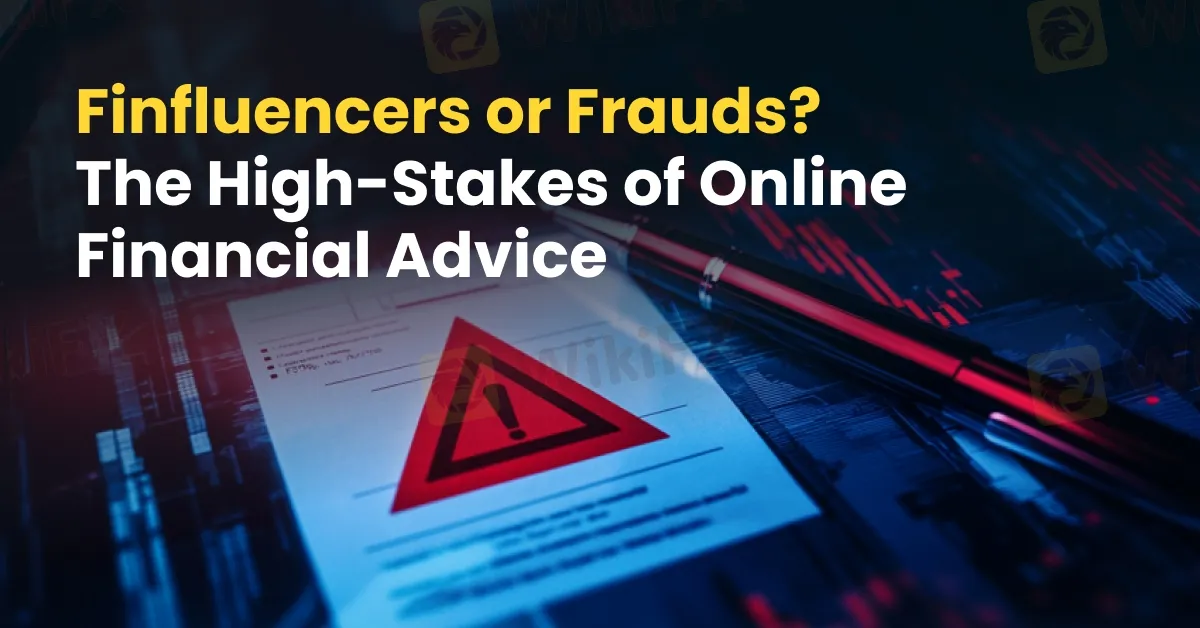
In the age of TikTok, Instagram, and YouTube, the modern investors first point of financial guidance is no longer the Wall Street Journal, but rather the “finfluencers” who are social media personalities who share stock tips, crypto predictions, and financial advice to millions of followers. While some offer genuine insights, others have exploited their reach to push misleading or outright fraudulent schemes, often leaving followers in financial despair.
Globally, personalities like Graham Stephan and Andrei Jikh have attracted millions with their balanced, often cautious take on real estate, index funds, and long-term investing. Their influence has even spawned a cottage industry of “finance content creators” seeking to replicate their success.
Closer to home in Southeast Asia, the finfluencer trend has flourished rapidly. The Woke Salaryman in Singapore, a duo known for their sharp infographics and relatable commentary, has built a loyal following across the region for promoting financial literacy, frugality, and investing for the long term.
In Malaysia, Suraya Zainudin, founder of Ringgit Oh Ringgit, provides grounded advice on personal finance with a distinctly local context. Meanwhile, Indonesian influencers like ZAP Finances Prita Ghozie and Fellexandro Ruby have combined financial expertise with storytelling to connect with a younger, digital-native audience.

While many of these voices contribute positively to financial awareness, not all operate with transparency or responsibility. The low barrier to entry in the world of social media has allowed countless unqualified voices to rise, often delivering overly simplistic or dangerously misleading advice in exchange for ad revenue, paid promotions, or worse with pump-and-dump schemes.
One of the most high-profile cases involved several YouTubers, including Tommy Cooperman and Austin Hankwitz, who were charged by the U.S. Securities and Exchange Commission (SEC) in 2023 for promoting stocks without disclosing payments from issuers. These influencers encouraged their followers to invest in dubious companies while secretly receiving compensation—violating federal securities laws.
Equally notorious is the case of BitBoy Crypto (Ben Armstrong), a self-styled crypto guru who promoted questionable altcoins. Lawsuits allege that Armstrong misled followers with paid endorsements of projects that later collapsed, costing investors millions. Although Armstrong denied wrongdoing, the backlash highlighted the often murky waters of crypto promotion online.
Perhaps most chilling is the Save My Cent scandal, where an anonymous finfluencer convinced thousands of followers to invest in what was ultimately a Ponzi scheme disguised as a “high-yield savings project.” Victims reported losing life savings, underscoring how social media trust can be weaponised for financial exploitation.
Southeast Asia hasnt been immune. In the Philippines, a YouTube creator known as “Coach Karl”, with over 500,000 subscribers, faced backlash after promoting a cryptocurrency project later exposed as a rug pull. While Coach Karl claimed he was also a victim, investigations revealed he had received undisclosed tokens for his endorsement—tokens he reportedly sold just before the project collapsed.
Similarly, in Thailand, Instagram-based finfluencer @MoneyCoachTH came under scrutiny after fans accused the page of hyping dubious trading platforms without sufficient disclaimers. Although no legal action followed, the incident sparked calls for the Thai Securities and Exchange Commission to increase scrutiny over financial content on social media.
The UK‘s Financial Conduct Authority (FCA) and Singapore’s Monetary Authority (MAS) have begun cracking down on unauthorised financial promotions. In Malaysia, the Securities Commission introduced guidelines in 2022 targeting unlicensed digital investment advice, and Indonesias OJK has issued public warnings against fraudulent investment influencers.
Despite these efforts, enforcement struggles to keep pace with the speed and virality of online content.
The core problem lies in trust. Finfluencers build communities through personality and relatability, which can obscure their lack of credentials or hidden motives. Financial literacy is vital, but so is media literacy.
Investors, especially younger ones, must treat online financial advice as a starting point, not a blueprint. Cross-check facts, consult licensed professionals, and be wary of anyone promising quick riches, guaranteed returns, or secret market hacks.