


IG Review for India 2026: RBI Alert List, Regulation, Login, and Forex Risk
IG review for India in 2026: see the RBI Alert List entry, overseas regulation, login checks, forex limits, and a clear broker safety checklist.
Original

简体中文
繁體中文
English
Pусский
日本語
ภาษาไทย
Tiếng Việt
Bahasa Indonesia
Español
हिन्दी
Filippiiniläinen
Français
Deutsch
Português
Türkçe
한국어
العربية
اردو




Abstract:The Malaysian Anti-Corruption Commission (MACC) has officially identified former Prime Minister Datuk Seri Ismail Sabri Yaakob as a suspect in an ongoing graft investigation involving massive sums of money, gold, and luxury assets.
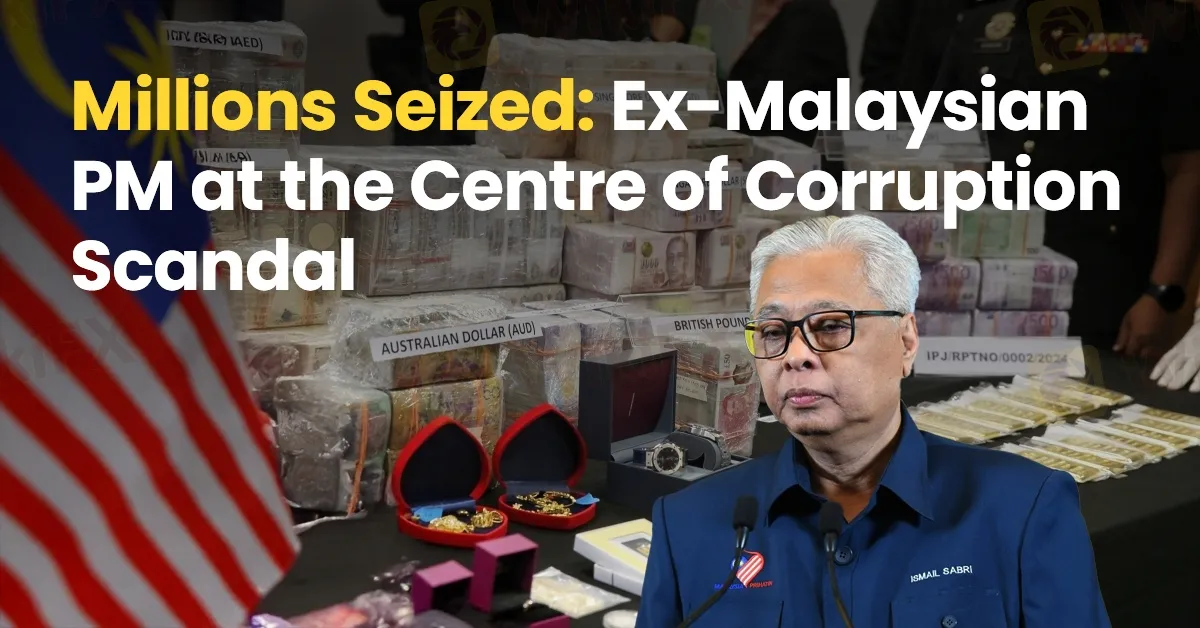
The Malaysian Anti-Corruption Commission (MACC) has officially identified former Prime Minister Datuk Seri Ismail Sabri Yaakob as a suspect in an ongoing graft investigation involving massive sums of money, gold, and luxury assets. MACC Chief Commissioner Tan Sri Azam Baki confirmed at a recent press conference that Ismail Sabri is under investigation due to significant financial discoveries linked to him.
Authorities have invoked Section 36 of the MACC Act, requiring a full asset declaration from the former prime minister. Investigators have frozen 13 bank accounts containing approximately RM2 million and are actively scrutinising his financial records. Additionally, around RM170 million in foreign currency and 16 kilograms of gold worth RM7 million were seized from locations connected to the case. The confiscated funds included a variety of international currencies, such as British pounds, Swiss francs, Saudi riyals, and Chinese yuan.

The investigation escalated following the arrest of four individuals closely associated with Ismail Sabri, including two holding the honorific title “Datuk.” Three of them held senior positions within the Prime Ministers Office during his tenure. The individuals were taken into custody for alleged involvement in money laundering and corruption, with magistrates approving their remand for further questioning. While one of the suspects was released after three days, the remaining three were held for five days to assist in the ongoing probe.
The MACC also displayed some of the seized assets during a press conference, where stacks of cash in different currencies, luxury-brand watches, and gold bars were presented as part of the investigation's evidence. Forensic and intelligence teams are now tracing the origins of these funds to determine their sources and any potential illicit activities.
As the inquiry unfolds, Ismail Sabri has already been summoned by the MACC and questioned for approximately five hours. Officials have indicated that he may be called in again for further statements, depending on his health condition. The 65-year-old was recently hospitalised due to hypertension after fainting at his residence. He remains under medical observation.
Despite the gravity of the allegations, Umno President Datuk Seri Dr Ahmad Zahid Hamidi has expressed confidence that the MACC will conduct a fair and impartial investigation. He emphasised the importance of maintaining credibility throughout the probe and stated that he has yet to visit Ismail Sabri in the hospital but plans to do so upon returning to Kuala Lumpur.
Meanwhile, the MACC has dismissed speculation that the investigation is politically motivated, asserting that their actions are purely based on intelligence and evidence. The agency maintains that the inquiry is being conducted professionally, with no external influence dictating its course.

Disclaimer:
The views in this article only represent the author's personal views, and do not constitute investment advice on this platform. This platform does not guarantee the accuracy, completeness and timeliness of the information in the article, and will not be liable for any loss caused by the use of or reliance on the information in the article.
IG review for India in 2026: see the RBI Alert List entry, overseas regulation, login checks, forex limits, and a clear broker safety checklist.

FCA warns Swift TradeX in a notice first published and updated on 1 September 2026. The UK Financial Conduct Authority says the firm may be providing or promoting financial services without permission, is not authorised, and may be targeting people in the UK. The notice names the website swifttradexai.com, a Worcester address and a UK telephone number, but also cautions that unauthorised businesses may use incorrect or borrowed contact details. The confirmed issue is authorisation status—not a court finding about every transaction. Anyone considering a payment should stop, verify the firm independently, and avoid using contact information supplied by the platform itself.

ThinkMarkets review for India: check the RBI Alert List, overseas entities, regulation, login security, forex rules, costs, withdrawals, and leverage risk.

India's Q1 FY27 GDP grew 7.8%, beating a 7.4% poll and RBI's 7.0% projection. See three conditional scenarios for INR, rates and gold.
WikiFXWikiFXWikiFXWikiFXWikiFXWikiFXWikiFXWikiFXWikiFXWikiFX