Abstract:The risk-sensitive Australian and New Zealand dollars retreated from near two-month highs against the greenback on Monday due to dissappointing data from China, a key trading partner, while the Chinese yuan weakened after a surprise cut in interest rates.
The greenback edged higher as traders continued to weigh data that has raised the possibility that U.S. inflation may be peaking against Federal Reserve policymakers hawkish comments.
The U.S. dollar index, which gauges the currency against six major peers, edged 0.07% higher to 105.77, consolidating near the middle of its range this month.
The onshore yuan eased to a one-week low against the dollar after the PBOC unexpectedly cut key interest rates. It weakened to a low of 6.7620 per dollar, compared with the previous close of 6.7430.
New Zealand‘s kiwi slumped 0.35% to $0.6433, pulling away from Friday’s high at $0.6468, the strongest level since June 8.
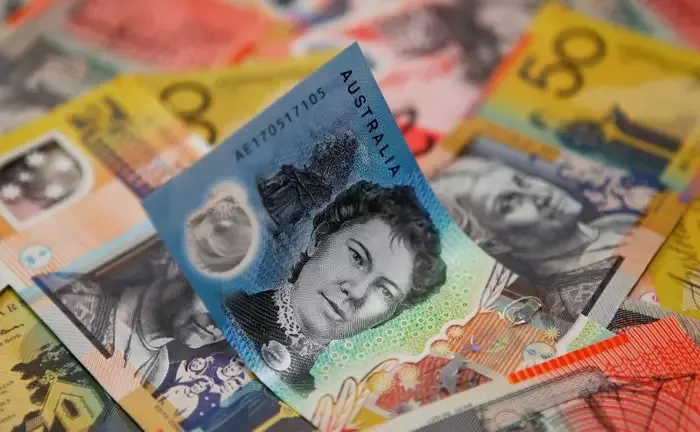
The Australian dollar slid 0.27% to $0.7102, falling further away from the recent peak last Thursday, when it struck it highest level since June 10 at $0.7136.
Chinese industrial output, retail sales and fixed-asset investment all fell short of analyst estimates, as a nascent recovery from COVID-19 lockdowns faltered.
To support the economy, the Peoples target="_blank" kwlink="6378198549770503598996">Bank of China (PBOC) unexpectedly cut a key interest rate for the second time this year and withdrew some cash from the banking system on Monday.
The PBOC said it was lowering the rate on 400 billion yuan ($59.33 billion) of one-year medium-term lending facility (MLF) loans to some financial institutions by 10 basis points (bps) to 2.75%, from 2.85%.
It also injected 2 billion yuan through seven-day reverse repos while cutting the borrowing cost by the same margin of 10 bps to 2.0% from 2.1%, according to an online statement.
“Despite the warning of inflation risk and flush liquidity conditions, the dominant downside risks from the COVID spread and property-sector rout prompted the PBOC to cut rates to stimulate demand,” said Ken Cheung, chief Asian FX strategist at Mizuho Bank.
U.S. data on Friday showing the first decline in import prices for seven months followed statistics earlier in the week that showed consumer and producer prices also cooling.
That has fueled investor hopes for less aggressive Fed tightening, despite a continued chorus of hawkish Fed rhetoric, with Richmond Fed President Thomas Barkin telling CNBC on Friday that he would like to see inflation running at the Fed‘s 2% target for “some time” before stopping rate hikes, adding there’s “still more to come to get into restrictive territory.”
Analysts will scour minutes of the Fed‘s most recent meeting, due to be released on Wednesday, for more clues on policymakers’ thinking, while retail sales data on Friday will give some fresh insight on the economys health.
“A growing narrative of a soft landing has taken hold, gaining traction after some easing in price indicators, with some interpreting that as allowing the Fed to ease up on the pace of hikes,” Tapas Strickland, a markets economist at National Australia Bank, wrote in a client note.
The minutes are a risk though, and “may push back on the notion of a Fed pivot,” Strickland said.
Money markets now price 44.5% odds of another 75 basis-point rate hike by the Federal Open Market Committee in September, versus 55.5% probability of a slowing in the pace of tightening.
The euro eased 0.1% to $1.02455, weighed down by Europes struggles with the war in Ukraine, the hunt for non-Russian energy sources and a hit to the German economy from scant rainfall.
Sterling slipped 0.18% to $1.21135.
Against the yen though, the dollar sank 0.27% to 133.24 amid an easing in U.S. Treasury yields.
Leading cryptocurrencies bitcoin and ether rose back toward more than two-month peaks.
Bitcoin last rose 2% to $24,813, bringing it close to Sundays high of $25,053, a level not seen since June 13.
Smaller rival ether gained 2.94% to $1,993.70, approaching Sundays peak of $2,031.56, the highest since May 23.
Ethereum‘s long-awaited “merge” upgrade appears all but certain to happen in September, promising a 99.95% reduction in the blockchain’s energy consumption and preparing it for faster transactions after years of delays.