Abstract:The DeFi space has grown to become a multi-billion dollar market, offering numerous decentralized services to users within the cryptocurrency space and beyond, and lending protocols are some of the biggest players in this sector.
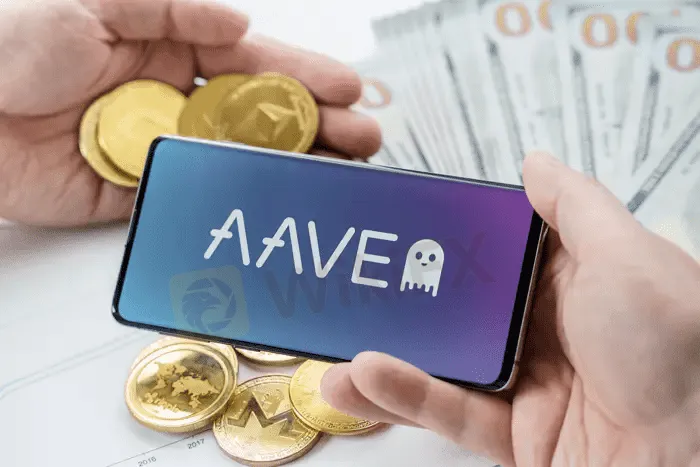
The cryptocurrency space has grown to become a $3 trillion industry. Over the past decade, there have been numerous innovations within the cryptocurrency space. One of the most recent innovations is the decentralized finance (DeFi) space.
DeFi is one of the fastest-growing sectors within the cryptocurrency space. It offers numerous services to cryptocurrency investors and other market players. Due to its importance, this post will touch on an aspect of DeFi, which is lending.
What is DeFi?
DeFi can be defined in simple terms as decentralized finance. This is an ecosystem of financial applications built on top of blockchain technology. Unlike the regular financial ecosystem, the DeFi space operates without any third part of central authority.
Instead, DeFi relies on a peer-to-peer network to establish decentralized applications that would allow people to connect and manage their assets regardless of their location or status. DeFi aims to ensure people gain access to open-source, transparent and permissionless financial services from every part of the world.
The decentralized finance ecosystem is built on smart contracts. Smart contracts are self-executing and dont require a third-party intermediary. DeFi started on the Ethereum network. Hence, it is not a surprise that most of the DeFi protocols are built on the Ethereum blockchain.
Understanding DeFi Lending
DeFi lending occurs thanks to the lending platforms or protocols. These platforms offer cryptocurrency loans in a trustless manner, allowing the holders to stake the coins they have in the DeFi lending platforms for lending purposes.
On the DeFi platform, a borrower can take a loan, allowing the lender to earn interests once the loan is returned. The lending process is executed from the start till the finish without intermediaries.
A coin holder sends the tokens they intend to lend into a pool using a smart contract. Once the coins are sent to a smart contract, they become available to other users to borrow. Afterward, the smart contract issues tokens (usually, the platforms native token) that are doled out automatically to the lender. The tokens can be redeemed at a later stage in addition to the underlying assets that were sent to the smart contract.
Virtually all the loans issued via the native tokens are collateralized. This means that users who wish to borrow funds will need to provide a guarantee. However, unlike the centralized financial system, the guarantee in the DeFi space is in the form of cryptocurrencies that are worth more than the actual loan itself.
On paper, this idea might seem absurd as the borrower could potentially sell their assets in the first place to generate the money. However, there are numerous reasons why DeFi borrowing makes sense.
For starters, the users might require funds to take care of unforeseen expenses they may have incurred and dont intend to sell their holdings as they believe the assets are due to an increase in value in the future. Furthermore, by borrowing money via DeFi protocols, users can avoid or delay paying capital gains taxes on their cryptocurrencies. Also, individuals can use the funds they borrow from the DeFi protocols to increase their leverage on some trading positions.
What are the Popular DeFi Lending and Borrowing Protocols?Maker
Maker is one of the leading and unique DeFi crypto lending platforms. It allows users to borrow money via its DAI tokens. DAI is a stablecoin whose value is pegged to the US Dollar. Using the Maker protocol is available to anyone. Users can open a vault, lock collateral like ETH or other cryptocurrencies and generate DAI as a debt against the locked collateral.
The Maker protocol encourages users to take part in operational earnings via governance fees, acting as interest rates for the platform. MKR is the native token of the Maker protocol, and its holders serve as the last line of defense in the event of a black swan. As soon as the collateral value starts to decrease, MKR is minted and sold in an open market to raise more collateral. Hence, diluting MKR holders.
Aave
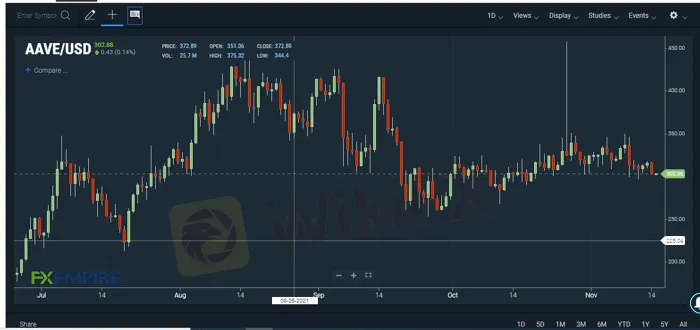
Another leading DeFi lending protocol is Aave. This is an open-source platform and one of the most popular DeFi lending protocols in the crypto space. Aave is a non-custodial liquidity platform for earning interests on deposit and borrowing assets. It allows the lenders to deposit their cryptocurrencies in a pool and receive an equivalent amount of aTokens, its native token. The protocol algorithmically adjusts interest rates based on demand and supply, indicating that the more a user holds aTokens, the higher the interest amount.
Compound
Another popular DeFi lending protocol isCompound. This is an algorithmic and autonomous money market protocol designed to unlock numerous open financial applications. Compound allows users to deposit cryptos, earn interests and borrow other cryptocurrency assets against them. By using smart contracts, Compound automates the management and storage of capital on the protocol.
As a permissionless protocol, anyone with a cryptocurrency wallet and an internet connection can interact with Compound and earn interest. Metamask is one of the wallets that support the Compound DeFi protocol. The Compound protocol supports the lending and borrowing of numerous assets, including DAI, ETH, WBTC, REP, BAT, USDC, USDT and ZRX.