Abstract:As for financial markets, there is a "January Effect" that plays a role of reference for investors to predict market trends in the year. It does make some sense. Fund managers and traders who are optimistic about the year's market trend will pile into investment products in January, especially those in the stock market.

As for financial markets, there is a “January Effect” that plays a role of reference for investors to predict market trends in the year. It does make some sense. Fund managers and traders who are optimistic about the year's market trend will pile into investment products in January, especially those in the stock market.
On the contrary, bearish fund managers and traders in the forex market and commodity market will heavily short their positions. However, history records show that the January Effect was not reliable in the forex market of recent years, and things got even worse in the futures market and oil market. In the past five years, i.e., from 2016 to 2020, it worked only in 2019, indicating its accuracy is 20%, or in other words, its error rate reaches as high as 80%. With this in mind, this year's oil prices have a 20% chance to rise while an 80% chance to dwindle, since last month's (January) WTI chart appeared a short white candlestick.

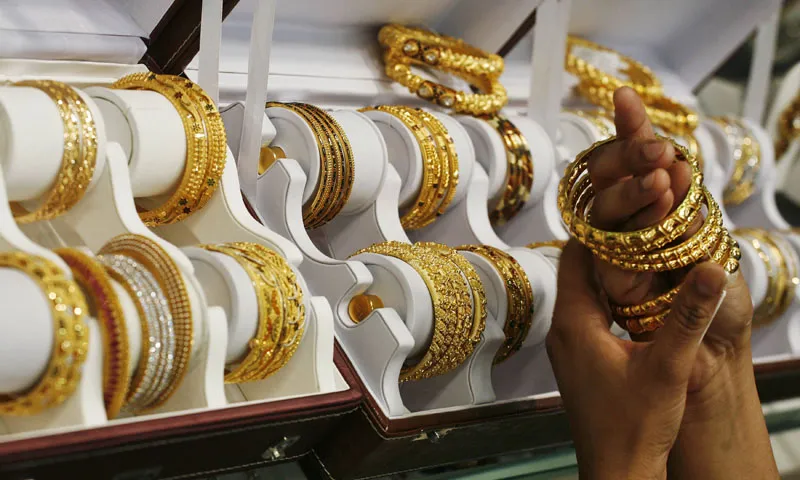
The gold market may evaluate the effect differently. Four of the past five years (except 2018) witnessed how the effect worked, highlighting an 80% accuracy in terms of incidence. As gold prices gave up the early advances in January, its monthly chart appeared a black candlestick. All this points to an 80% chance of downsides in gold in 2021.
Technically speaking, gold prices will have two critical support levels at $1,802.46 and $1,764.10. Among the technical indicators, the 250-day moving average, which is hovering around $1,806.50 at the time of writing, is the most noteworthy. In general, the last support for gold is $1,764.10, where a breach below will open the door to more correction.