


IG Review for India 2026: RBI Alert List, Regulation, Login, and Forex Risk
IG review for India in 2026: see the RBI Alert List entry, overseas regulation, login checks, forex limits, and a clear broker safety checklist.
Original

简体中文
繁體中文
English
Pусский
日本語
ภาษาไทย
Tiếng Việt
Bahasa Indonesia
Español
हिन्दी
Filippiiniläinen
Français
Deutsch
Português
Türkçe
한국어
العربية
اردو




Abstract:As AI coding tools spread, a thought is surfacing in more and more traders’ minds: since writing code is now this easy, can I build a few forex EAs myself and let the program trade and earn money automatically? The idea is not naive - automation is genuinely a real and valuable direction in trading. But before you invest your time, several key questions must be thought through first: what do those "profitable EAs" on the market actually rely on? What does a system that truly survives long-term look like? How much can AI help here, and how much can it not? (An EA, or Expert Advisor, is a program that can automatically execute a trading strategy.)

As AI coding tools spread, a thought is surfacing in more and more traders minds: since writing code is now this easy, can I build a few forex EAs myself and let the program trade and earn money automatically?
The idea is not naive - automation is genuinely a real and valuable direction in trading. But before you invest your time, several key questions must be thought through first: what do those “profitable EAs” on the market actually rely on? What does a system that truly survives long-term look like? How much can AI help here, and how much can it not?
(An EA, or Expert Advisor, is a program that can automatically execute a trading strategy.)
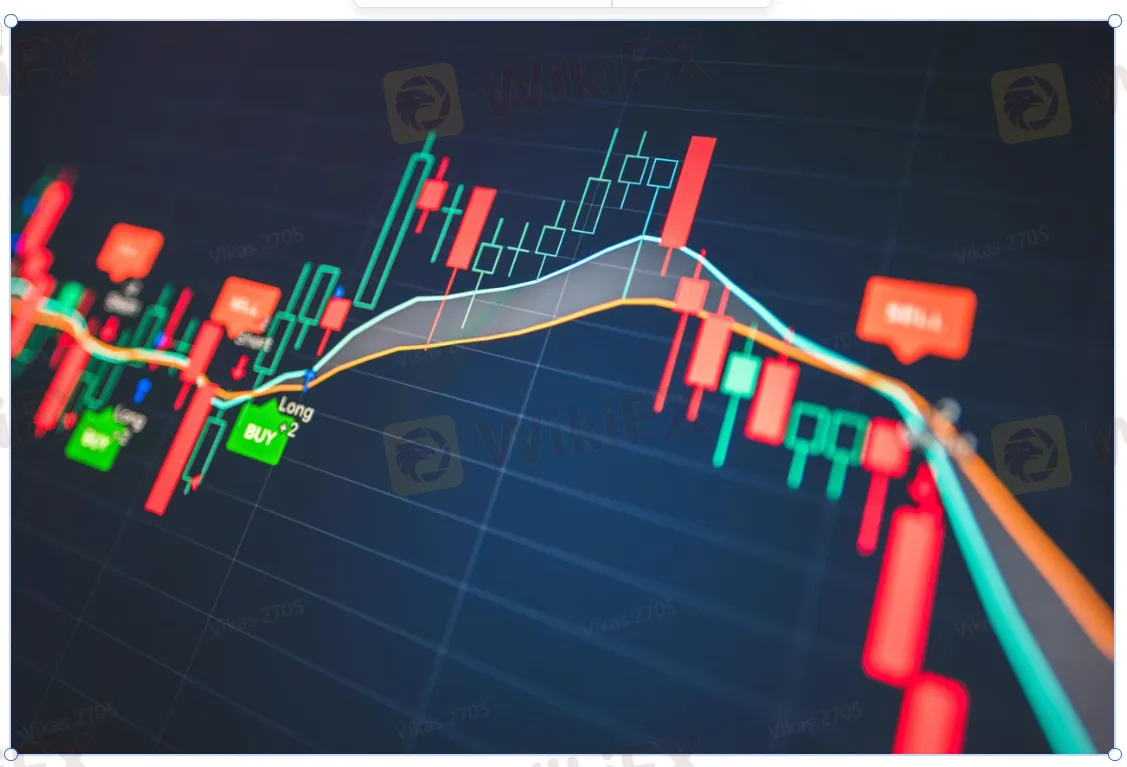
If you search for ready-made retail EAs, you will find one type of product especially common: extremely beautiful backtest curves, almost only rising, with marketing copy full of words like “stable profit” and “easy money.”
A highly consistent judgment in the trader community is that most of these most eye-catching EAs are essentially grid or martingale systems.
Understanding why these two strategy types are dangerous is the key to seeing through the entire EA market.
Simply put, the martingale logic is to double the bet after a loss, hoping one rebound recovers all prior losses; the grid places dense orders at different price levels, profiting from price oscillating back and forth. Their common trait: for most of the time, performance is extremely smooth, almost never losing, with backtest curves as beautiful as artwork.
But they hide the risk in the tail - as long as a sufficiently extreme one-directional move occurs, all the accumulated “small wins” are swallowed in one go, and the account blows up instantly.
So the “beauty” of these EAs is precisely their most dangerous aspect: it is not that there is no risk, but that the risk has been compressed into a low-probability event that is devastating once it happens. A piece of advice that recurs in the trader community: stay highly wary of any EA relying on the martingale or grid “hold-and-recover” logic.
So what does an EA that can truly run long-term look like? The answer in the discussions is surprisingly consistent, and almost completely opposite to those “glittering products” - they tend to be boring.
When experienced traders describe systems they have tested with better results, the words they use are: fixed small risk, clear stop-loss logic, explicit entry reasons, many months of forward testing (forward testing means validating performance with new data that did not participate in designing the strategy). Some also mention their running systems combine trend/momentum logic, volatility filtering, trading-session filtering, and adaptive position management - note, there is no “magic entry point” in any of this, it is all about risk control and environment filtering.
This leads to an important shift in mindset: people who truly earn money long-term with EAs treat the EA as a strict risk-management system, not a “money-printing machine.”
An EA itself is just “automation” - it turns a persons trading decisions into a program that executes automatically. If what you automate is a trading logic with an edge, it can be profitable; if what you automate is a losing logic, the program will only make you lose faster and more steadily. An EA does not create an edge out of nothing - it merely amplifies what you already have.
Many peoples optimism about home-made EAs is built on “now we have AI.” That judgment is half right.
AI can genuinely help: it can speed up writing code, help you quickly build a testing framework, and assist with parameter optimization and pattern recognition. Someone in the discussion mentioned that, knowing only a little programming originally, with the help of tools, they rebuilt a system smoother than before within two weeks. For lowering the technical barrier to automation, AI is genuinely useful.
But the part AI cannot help with is precisely the hardest part. AI will not make the market itself less noisy, less random.
The real difficulty of a home-made EA was never “turning a strategy into code,” but rather:
In other words, AI solved the “hands-on” problem, but the “brain-work” part - avoiding overfitting, testing robustness, being honest about costs - still depends on the trader.
If you plan to buy a ready-made EA, there is a simple but powerful piece of logic worth thinking through first.
Suppose an EA truly can be profitable steadily over the long term. Then for its owner, this is an “asset” that continuously produces cash flow - its value depends not on how well the code is written, but on how much return it can generate in the future. A strategy that can be steadily profitable long-term is closer to “intellectual property” than to a retail commodity.
Following this logic: if an EA really can steadily make money, the owner could perfectly well use it themselves, compound with it, or use it to apply for more trading capital - all far more worthwhile than “selling software and dealing with a crowd of customers.”
So a sharp but realistic view in the discussion: for those EAs being peddled everywhere at a hefty price, the very fact that “it is being sold publicly” is itself a signal worth wariness. Add some common tricks - producing beautiful results on a demo account rather than a real one, showing only short-term performance - and the retail EA market runs very deep. This does not mean every paid EA is a scam, but it means you need to examine every piece of marketing with extreme skepticism.
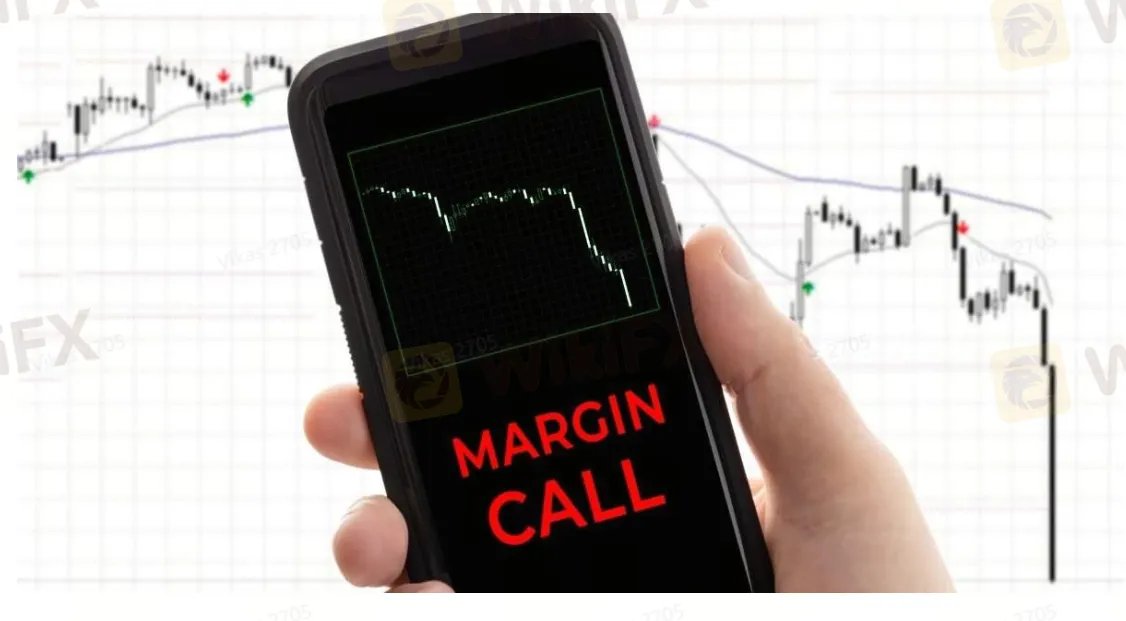
An automated strategy, however robust its logic and however strict its risk control, ultimately depends on one premise: the broker executing it is reliable.
If the platform has questionable regulatory credentials, withdrawal difficulties, or abnormal quotes, then your EA runs in an untrustworthy environment, and even the best backtest is meaningless. Especially since an EA executes automatically 24/7, once the platform has a problem, you may not even get a chance to react in time.
So before investing time in researching EAs, first confirm your funds are held with a broker effectively regulated by a credible authority, and check its license and track record. This piece of homework can be done efficiently with a broker-lookup tool like WikiFX - checking a brokers regulatory licenses, ratings, and user complaints in one place, compressing what would be tedious due diligence into minutes. The tool puts the information in front of you; the final judgment is still yours to make. This is the true starting point of automated trading.
Margin forex trading and automated trading carry high leverage and extremely high risk, and may result in the total loss of your capital. It is not suitable for all investors. The descriptions of EAs, grid, martingale and other strategies, and the related returns and risks in this article, are experiential discussions and general knowledge from the trader community, do not represent any typical result, and do not constitute any investment or trading advice or any recommendation of a specific product. Before making any decision, readers should fully assess their own risk tolerance, stay wary of any marketing that exaggerates returns, and as a priority verify the regulatory credentials of their chosen broker.
Download the WikiFX App for the latest forex updates

Some More Insightful Articles for You
Disclaimer:
The views in this article only represent the author's personal views, and do not constitute investment advice on this platform. This platform does not guarantee the accuracy, completeness and timeliness of the information in the article, and will not be liable for any loss caused by the use of or reliance on the information in the article.

IG review for India in 2026: see the RBI Alert List entry, overseas regulation, login checks, forex limits, and a clear broker safety checklist.
Orbex, a Cyprus-based brokerage entity, has recorded 30 exposure complaints on WikiFX, a leading forex broker regulation inquiry tool, so far. Other review websites have also recorded a healthy number of complaints against the brokerage firm. These complaints largely talk about the alleged profit confiscations by the broker in the name of trading violations, difficulty in accessing fund withdrawals, capital losses due to artificial slippage, etc. In this Orbex review, we have investigated user complaints and provided a regulatory overview of the broker.
FCA warns Swift TradeX in a notice first published and updated on 1 September 2026. The UK Financial Conduct Authority says the firm may be providing or promoting financial services without permission, is not authorised, and may be targeting people in the UK. The notice names the website swifttradexai.com, a Worcester address and a UK telephone number, but also cautions that unauthorised businesses may use incorrect or borrowed contact details. The confirmed issue is authorisation status—not a court finding about every transaction. Anyone considering a payment should stop, verify the firm independently, and avoid using contact information supplied by the platform itself.
ThinkMarkets review for India: check the RBI Alert List, overseas entities, regulation, login security, forex rules, costs, withdrawals, and leverage risk.
WikiFXWikiFXWikiFXWikiFXWikiFXWikiFXWikiFXWikiFXWikiFXWikiFX