

Global Broker Regulation Inquiry App
About WikiFX
English
简体中文
繁體中文
English
Pусский
日本語
ภาษาไทย
Tiếng Việt
Bahasa Indonesia
Español
हिन्दी
Filippiiniläinen
Français
Deutsch
Português
Türkçe
한국어
العربية
اردو


RM90,380 Lost Over Three Months to Social Media Investment Scam

WikiFX
|


Abstract:A 53-year-old housewife in Pahang lost RM90,380 after being drawn into a prolonged online investment scam over three months.
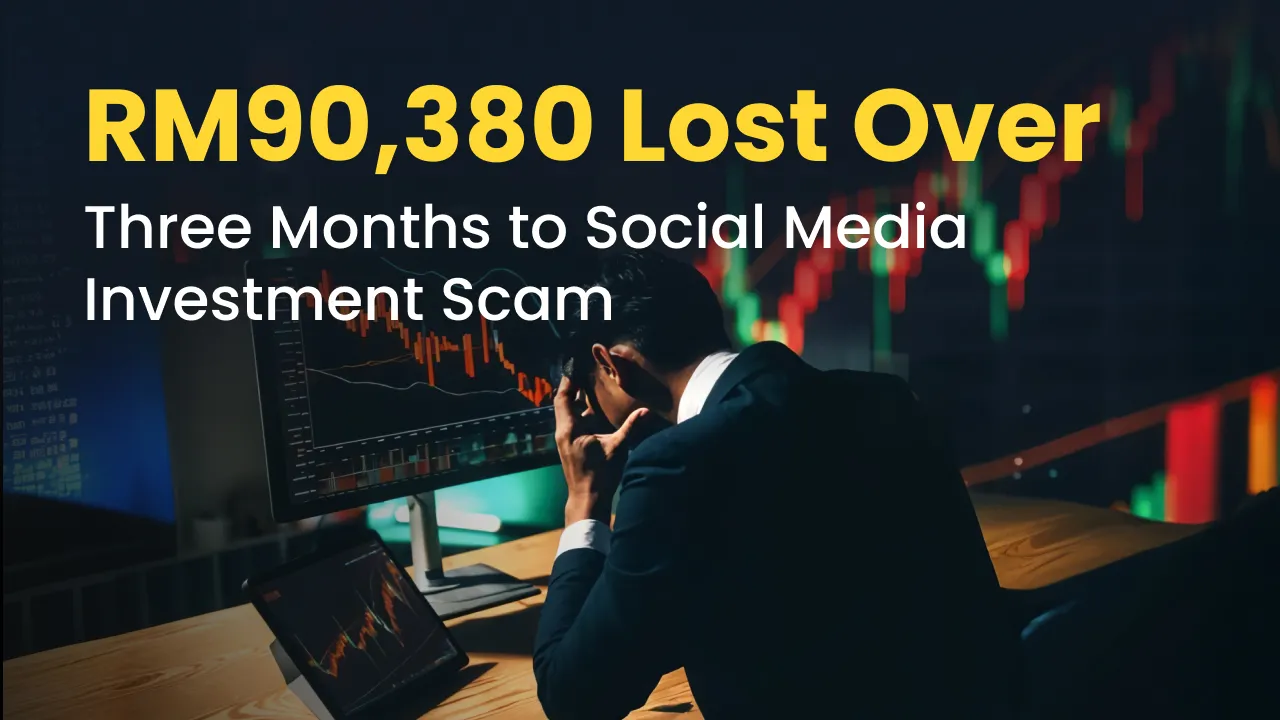
A 53-year-old housewife in Pahang lost RM90,380 after being drawn into a prolonged online investment scam over three months.
The scam began on 5 August last year when the woman, a single mother, came across an investment advertisement on social media. The offer promised high returns within just a few hours. Such claims are a common warning sign, yet they continue to lure victims amid rising financial pressure and online exposure.
After clicking the advertisement, she was contacted by an individual claiming to represent the investment scheme. The plan was described as capable of generating profits within two to three hours. Encouraged by the promise of fast gains, the woman agreed to participate.
She was asked to complete an online form and provide sensitive personal information, including her identity card and bank details. This step gave the scammers direct access to her financial profile and allowed the operation to continue unchecked.
Over nearly three months, the woman was instructed to make repeated payments. From 9 August to 27 October, she carried out 27 separate transfers to multiple bank accounts. In total, RM90,380 was sent. Authorities believe the use of different accounts was deliberate, making it harder to track the money once suspicion arose.
Despite the steady flow of payments, no profits were ever received. Each transfer was followed by new demands, a pattern often used to keep victims engaged while draining remaining funds. The scam only became clear when the woman ran out of money and could no longer reach the people behind the scheme.
With communication abruptly cut off, she reported the case to the Pekan district police headquarters. The matter is now being investigated under Section 420 of the Penal Code, which covers cheating and dishonest inducement.
This case highlights a dangerous shift in online investment fraud. Many scams no longer rely on a single payment. Instead, they unfold over weeks or months, slowly eroding savings while maintaining the illusion of legitimacy. Social media platforms have become a key entry point, allowing scammers to reach victims quickly and repeatedly.
Financial crime specialists warn that any investment offer promising high returns in a short time should be treated as an immediate threat. Requests for personal details or early payments are clear red flags. Once funds are transferred, recovery is rare.
Authorities continue to urge the public to act quickly at the first sign of fraud. Delays can be costly. In todays digital landscape, hesitation can protect savings, while haste can wipe them out.
Disclaimer:
The views in this article only represent the author's personal views, and do not constitute investment advice on this platform. This platform does not guarantee the accuracy, completeness and timeliness of the information in the article, and will not be liable for any loss caused by the use of or reliance on the information in the article.
WikiFX Broker
Latest News
Malaysia Police Busted a Scam Call Centre & Arrested 3 Chinese Nationals
WikiFXIf You Still Struggle To Make Money After Passing a Prop Firm Challenge
WikiFXFirst Light News: BoE Decision in Focus
WikiFXU.S. Dollar Pulls Back As Traders Take Profits After Rally: Analysis For EUR/USD, GBP/USD, USD/CAD, USD/JPY
WikiFXRockGlobal Review for India: Which Licence Was Cancelled on 19 July 2024?
WikiFXSBCFX review: What Does the 28 August SFC Warning Mean?
WikiFXRoboForex Faces Fresh Scrutiny Over Withdrawals and Regulation
WikiFXIndia Just Bought a Record $15.2B of US Treasures in July — What It Means for INR and FII Flows
WikiFXINFINOX Review of the GBP 99200 FCA Fine for India
WikiFXLeading the Transparency Movement, The Trust Dialogue with AUS GLOBAL
WikiFX