Abstract:US equities touched fresh record highs on Christmas Eve, driven by a resilient "Santa Rally" narrative, yet digging beneath the surface reveals a stark divergence between asset prices and the real economy. While the S&P 500 breached the 6,900 resistance level, fresh data indicates US consumer confidence has crumbled to a five-month low, complicating the Federal Reserve’s policy path heading into 2026.
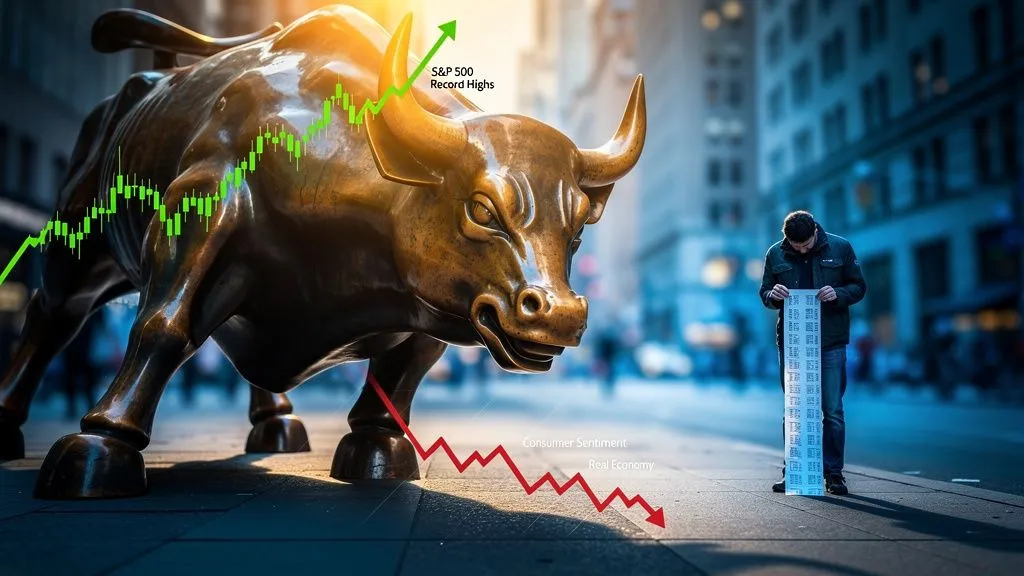
US equities touched fresh record highs on Christmas Eve, driven by a resilient “Santa Rally” narrative, yet digging beneath the surface reveals a stark divergence between asset prices and the real economy. While the S&P 500 breached the 6,900 resistance level, fresh data indicates US consumer confidence has crumbled to a five-month low, complicating the Federal Reserves policy path heading into 2026.
The Macro Divergence
The S&P 500 closed at 6,932.05, securing a technical breakout above the 6,911 pivotal level. This price action suggests institutional investors are positioning for a continued “Goldilocks” scenario—where inflation cools without a recession. However, the Conference Boards Consumer Confidence Index paints a grimmer picture, sliding to 89.1 in December, down from 92.9.
Crucially, the “expectations” component of the confidence data has lingered below 80 for 11 consecutive months—a threshold historically correlated with impending recessions. For Forex traders, this divergence creates a volatile backdrop for the USD. If the “soft landing” narrative championed by equity markets holds, risk currencies (AUD, CAD) may outperform. Conversely, if consumer retrenchment hits hard data (Retail Sales, GDP), the Greenback could see renewed safe-haven flows or sharp repricing if the Fed is forced to cut more aggressively.
Labor Market Tightness Persists
Contradicting the gloom in consumer sentiment, the latest labor market data shows surprising resilience. Initial jobless claims dropped unexpectedly to 214,000, defying forecasts of 224,000. This data point suggests that while consumers feel poorer due to cumulative inflation, employers are hoarding labor, keeping the “recession” at bay for now.
2026 Fed Outlook
Market consensus is coalescing around a “dovish but measured” Fed for 2026. Futures markets are pricing in at least two rate cuts of 25 basis points next year. Major institutions like Morgan Stanley and Deutsche Bank cite AI productivity gains and falling inflation as justification for a continued bull market, targeting the S&P 500 as high as 8,000 by year-end 2026. For the US Dollar Index (DXY), this suggests a gradual structural softening, provided the US economy avoids a hard landing.