


India Q1 FY27 GDP Growth Hits 7.8%: 3 Scenarios for INR and Gold
India's Q1 FY27 GDP grew 7.8%, beating a 7.4% poll and RBI's 7.0% projection. See three conditional scenarios for INR, rates and gold.
Original

简体中文
繁體中文
English
Pусский
日本語
ภาษาไทย
Tiếng Việt
Bahasa Indonesia
Español
हिन्दी
Filippiiniläinen
Français
Deutsch
Português
Türkçe
한국어
العربية
اردو




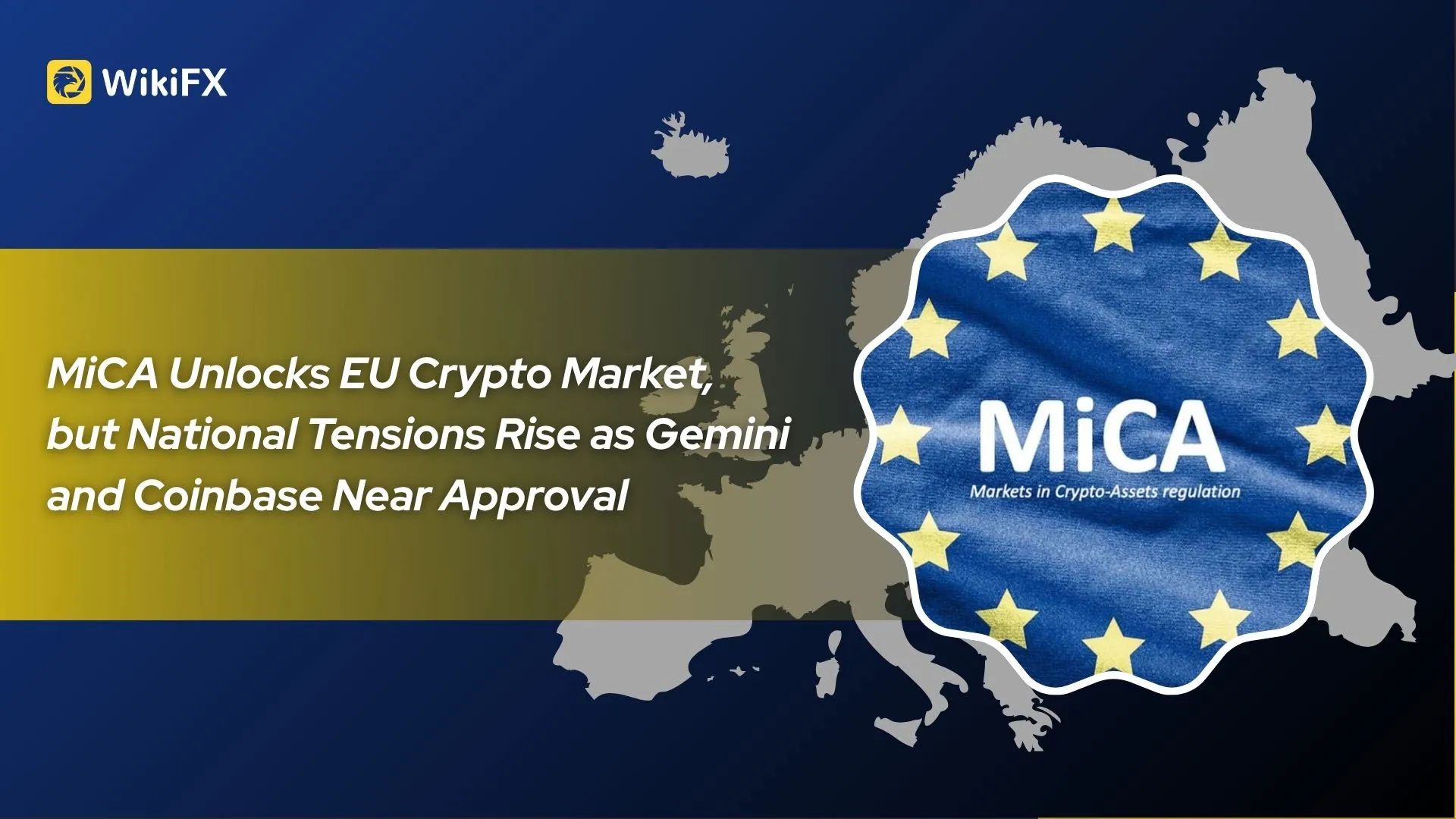
Abstract:Gemini and Coinbase are poised to become the first major crypto firms licensed under the EU’s MiCA regulation, opening the door to 27-country access. But the fast pace of approvals in some countries—like Malta and Luxembourg—has triggered concerns among regulators about uneven oversight and the risk of regulatory arbitrage.
 Contents
Europes sweeping Markets in Crypto-Assets (MiCA) regulation, which took effect earlier this year, promises to bring order to the crypto industry by creating a single licensing framework across all EU member states. Under MiCA, once a crypto firm secures approval in any EU country, it can operate across the bloc.
That ambition is now being tested.
Two U.S. exchanges—Gemini and Coinbase—are reportedly close to receiving their MiCA licenses, from Malta and Luxembourg respectively. Their approvals would mark a milestone for Europes bid to become a global crypto hub. But the speed of the licensing process has sparked quiet tensions among national regulators and raised questions about how consistently MiCA will be enforced.
Malta‘s Financial Services Authority (MFSA) has already licensed four crypto firms since MiCA went into force, including OKX and Crypto.com. Gemini is now expected to join the list, benefiting from Malta’s years of experience in supervising digital asset businesses. MFSA insists that rigorous anti-money laundering checks are in place.
However, sources say that the European Securities and Markets Authority (ESMA) has already reviewed Maltas approval process and is preparing an internal report. ESMA declined to comment, but the scrutiny signals a broader concern: Are some countries moving too fast to attract crypto business?
Frances financial regulator, the AMF, has openly warned that the current setup—where ESMA creates rules but national agencies issue licenses—could lead to a “race to the bottom.” Without stronger central oversight, they argue, some jurisdictions may loosen standards to gain a competitive edge.
Coinbase, meanwhile, is eyeing a license from Luxembourg. The U.S.-listed exchange already employs 200 staff across Europe and plans to expand its Luxembourg office. Officials in the country reject claims that their process is lax, suggesting that criticism may stem more from rivalry than from actual shortcomings.
While MiCA has been praised for aligning crypto oversight with traditional finance, its success depends heavily on consistent implementation. ESMA has limited authority to directly approve or reject license applications, which leaves national regulators with considerable discretion.
That decentralization may invite regulatory gaps—especially in an industry still grappling with the fallout from events like the FTX collapse.
With more firms preparing MiCA applications, how Gemini and Coinbase are approved—and under what scrutiny—could set the tone for the future. Will MiCA usher in a unified crypto regime? Or will fragmented enforcement undermine its promise?
For now, Europes crypto ambitions are advancing, but not without growing pains.
Disclaimer:
The views in this article only represent the author's personal views, and do not constitute investment advice on this platform. This platform does not guarantee the accuracy, completeness and timeliness of the information in the article, and will not be liable for any loss caused by the use of or reliance on the information in the article.

India's Q1 FY27 GDP grew 7.8%, beating a 7.4% poll and RBI's 7.0% projection. See three conditional scenarios for INR, rates and gold.

Choosing a forex liquidity provider is not a search for the lowest displayed spread or the longest provider list. It is a broker decision about pricing integrity, depth, routing, credit, reporting, incident response, and client communication. This 2026 guide explains how a forex LP, FX liquidity provider, or liquidity provider forex arrangement fits into a broker’s execution chain; what to test before onboarding; why a “best forex liquidity provider” claim cannot replace due diligence; and how to compare cost beyond commission. Use the execution-quality scorecard, provider questions, routing scenarios, and 90-day onboarding plan to assess whether a liquidity relationship can support your actual client mix, instruments, risk model, and jurisdiction. The goal is not to make a universal ranking. It is to build evidence that your broker can explain, supervise, reconcile, and recover its execution service when market conditions are difficult.
Crypto trading revenue weakened across major platforms in Q2 2026 as market activity slowed, while another crypto-focused platform expanded into forex and CFD products, highlighting a broader shift toward multi-asset trading.

We all love trading geniuses and their strategies that earn them profits season after season. And we also love following them to make our investment journey seamless. Copy trading is one such tactic that beginners employ to enter the forex market. What do most of them usually do? They pick an experienced investor from the list and let the platform replicate every trade automatically. The fact that experienced traders continually earn profits, the feeling of copying their trades remains intense. However, the uncertain forex landscape can bite you hard by simply copying trades and not focusing on technical analysis and the charts during the day. Beginners can have a set of preconceived notions that can potentially open the gate for losses. In this article, we have highlighted such mistakes traders should avoid.
WikiFXWikiFXWikiFXWikiFXWikiFXWikiFXWikiFXWikiFXWikiFXWikiFX