


IG Review for India 2026: RBI Alert List, Regulation, Login, and Forex Risk
IG review for India in 2026: see the RBI Alert List entry, overseas regulation, login checks, forex limits, and a clear broker safety checklist.
Original

简体中文
繁體中文
English
Pусский
日本語
ภาษาไทย
Tiếng Việt
Bahasa Indonesia
Español
हिन्दी
Filippiiniläinen
Français
Deutsch
Português
Türkçe
한국어
العربية
اردو




Abstract:Crypto exchanges are expanding into traditional asset classes like forex and commodities, blurring the lines with traditional brokers. Meanwhile, few brokers, like eToro, have successfully integrated crypto into their platforms, revealing both the opportunities and the challenges ahead.
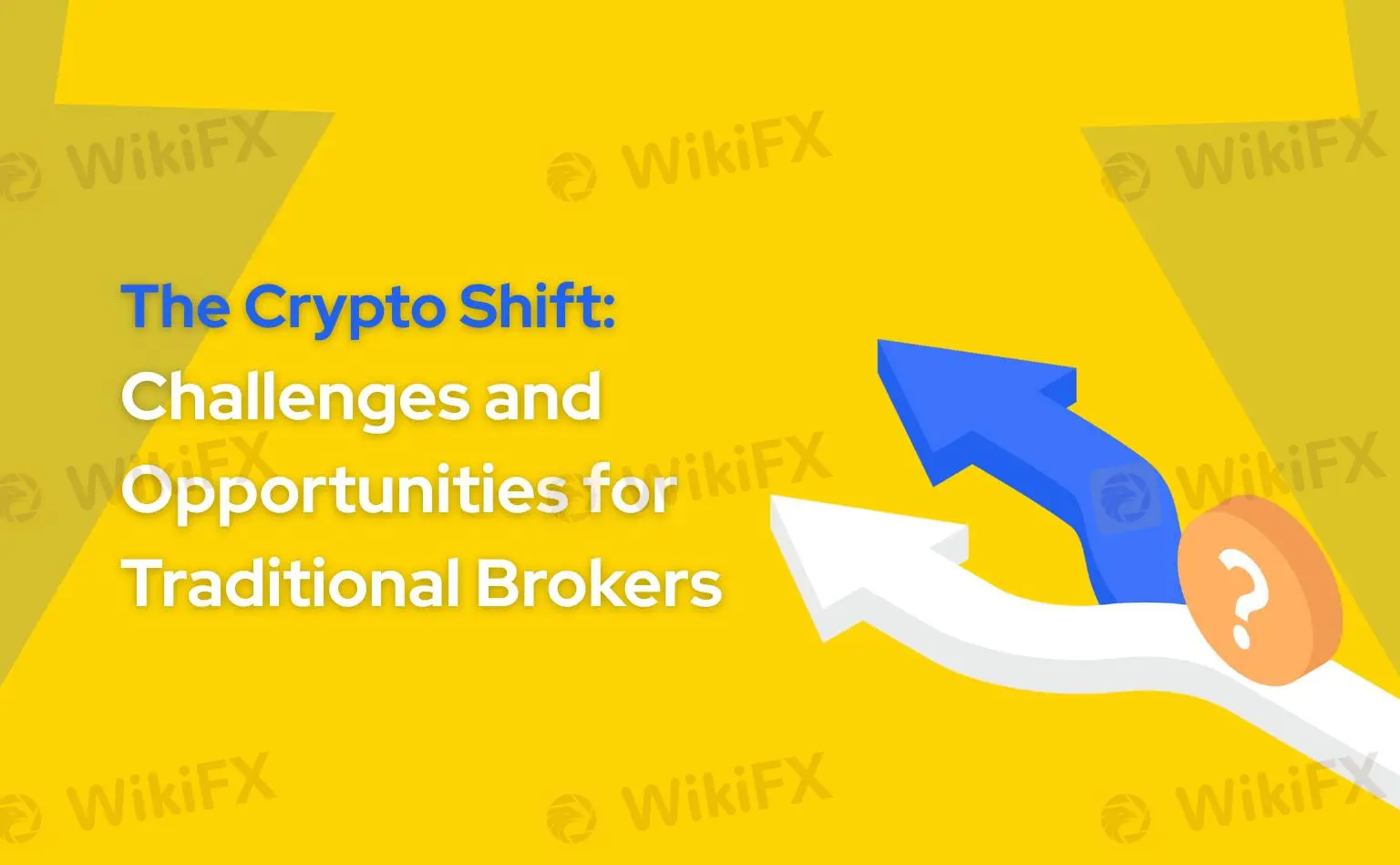
The boundary between cryptocurrency exchanges and traditional financial brokers is becoming increasingly blurred. As major exchanges expand into offering forex, commodities, and derivatives, and traditional brokers begin incorporating cryptocurrencies into their product suites, a convergence in trading services is underway. This evolving landscape is reshaping competition, forcing both sides to adapt their strategies in a rapidly digitalizing financial market.
 Contents
Cryptocurrency exchanges have moved decisively beyond their original focus on Bitcoin and altcoins. Platforms such as Coinbase, Kraken, and OKX have secured MiFID II licenses, enabling them to operate within traditional financial frameworks across Europe. Their ambitions extend far beyond crypto spot trading. By offering futures, options, and central limit order book (CLOB) services, exchanges are positioning themselves as full-spectrum financial hubs. Their unified wallets are designed to support multi-asset trading—spanning crypto, FX, equities, and commodities—offering users a seamless, borderless experience. With a strong foundation in technology, massive user bases, and an aggressive approach to regulatory compliance, these exchanges are setting a fast pace that traditional brokers may find difficult to match.
In contrast, traditional FX and CFD brokers have shown a more cautious approach. Many still perceive crypto as volatile or speculative, integrating it only as an auxiliary offering rather than a core service. However, one exception stands out: eToro. Unlike its peers, eToro treated crypto as an essential part of its platform early on. As of 2024, it supports over 100 cryptocurrencies, seamlessly integrated alongside stocks, ETFs, and commodities. This strategic move paid off handsomely—eToro reported $931 million in total commissions in 2024, with crypto accounting for approximately 38% ($354 million) of that figure. Its net profit surged to $192 million, a significant increase compared to the previous year. eToro‘s success demonstrates that embracing crypto is not merely about adding new assets; it requires genuine integration into the platform’s DNA to meet the evolving demands of modern traders.
Despite growing interest, the road to meaningful crypto adoption remains steep for most traditional brokers. A significant barrier lies in outdated technology infrastructures. Many brokers still rely heavily on MetaTrader 4 and 5, platforms built for forex and CFDs but ill-suited for blockchain-based assets. These systems lack native wallet integration, blockchain connectivity, and Web3 compatibility. Adapting to crypto markets is not just about offering Bitcoin trading; it demands reengineering trading platforms, upgrading compliance frameworks, and developing new customer engagement models that resonate with the crypto-native community. Furthermore, entering the crypto space requires a mindset shift—embracing transparency, decentralization, and continuous innovation. For brokers deeply entrenched in traditional finance models, overcoming both technological and cultural hurdles will be the true test of survival in a financial world increasingly shaped by the crypto revolution.
Disclaimer:
The views in this article only represent the author's personal views, and do not constitute investment advice on this platform. This platform does not guarantee the accuracy, completeness and timeliness of the information in the article, and will not be liable for any loss caused by the use of or reliance on the information in the article.

IG review for India in 2026: see the RBI Alert List entry, overseas regulation, login checks, forex limits, and a clear broker safety checklist.

Orbex, a Cyprus-based brokerage entity, has recorded 30 exposure complaints on WikiFX, a leading forex broker regulation inquiry tool, so far. Other review websites have also recorded a healthy number of complaints against the brokerage firm. These complaints largely talk about the alleged profit confiscations by the broker in the name of trading violations, difficulty in accessing fund withdrawals, capital losses due to artificial slippage, etc. In this Orbex review, we have investigated user complaints and provided a regulatory overview of the broker.
FCA warns Swift TradeX in a notice first published and updated on 1 September 2026. The UK Financial Conduct Authority says the firm may be providing or promoting financial services without permission, is not authorised, and may be targeting people in the UK. The notice names the website swifttradexai.com, a Worcester address and a UK telephone number, but also cautions that unauthorised businesses may use incorrect or borrowed contact details. The confirmed issue is authorisation status—not a court finding about every transaction. Anyone considering a payment should stop, verify the firm independently, and avoid using contact information supplied by the platform itself.
ThinkMarkets review for India: check the RBI Alert List, overseas entities, regulation, login security, forex rules, costs, withdrawals, and leverage risk.
WikiFXWikiFXWikiFXWikiFXWikiFXWikiFXWikiFXWikiFXWikiFXWikiFX