ASIC Review Leads to Millions in Refunds After Widespread CFD Rule Breaches
After detecting major compliance failures, ASIC secures refunds for thousands of CFD traders and forces changes across the brokerage industry.
简体中文
繁體中文
English
Pусский
日本語
ภาษาไทย
Tiếng Việt
Bahasa Indonesia
Español
हिन्दी
Filippiiniläinen
Français
Deutsch
Português
Türkçe
한국어
العربية
Abstract:The U.S. March ISM Manufacturing PMI data shows that manufacturing has contracted for the first time, and investors should pay attention to future changes and impacts on the sector.
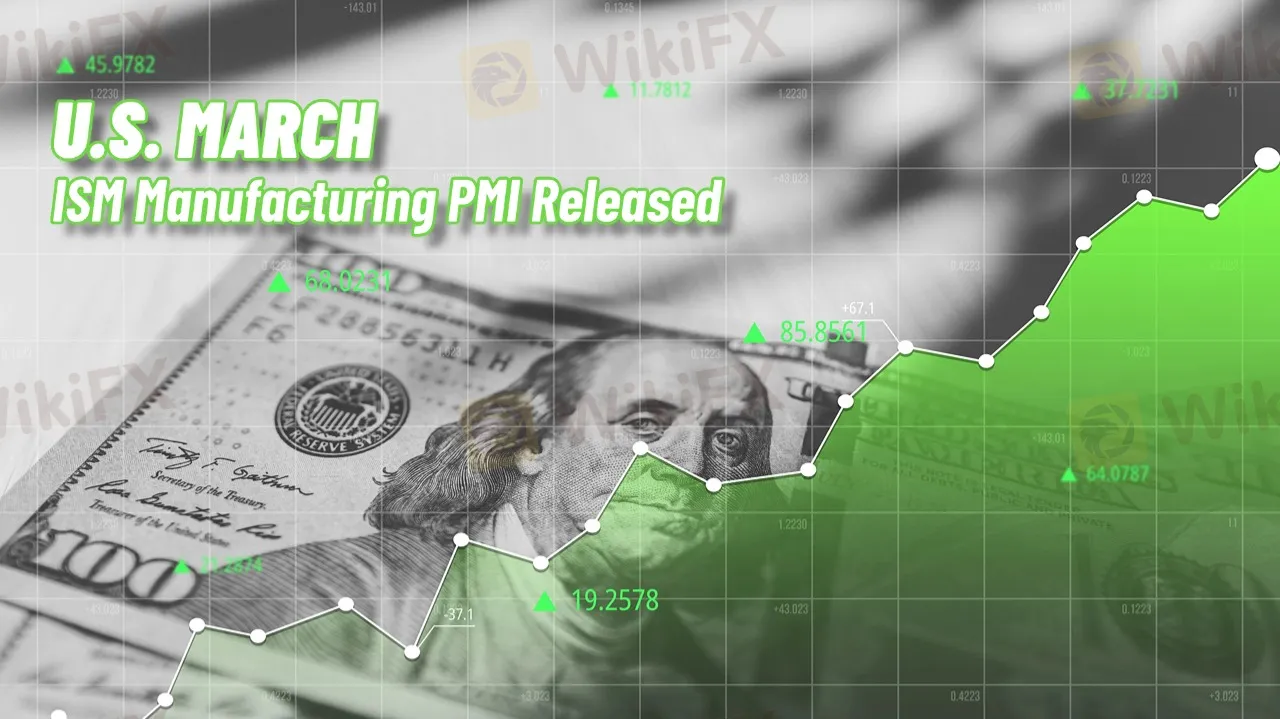
According to the ISM manufacturing PMI data released on April 1, the U.S. manufacturing sector has contracted for the first time, with the price index surging, indicating the risk of an economic slowdown. Investors should closely monitor future developments and impacts on manufacturing.
The March ISM manufacturing PMI dropped to 49, lower than the expected 49.5 and down from 50.3 in February. A reading of 50 is considered the dividing line between expansion and contraction, meaning U.S. manufacturing is experiencing a downturn. At the same time, the price index rose sharply by 7 points to 69.4, reaching its highest level since June 2022. This increase highlights growing production cost pressures, especially from rising raw material prices.
The weakness in factory orders and employment indicators further emphasizes the impact of insufficient demand on the manufacturing sector, with the factory orders index falling to 45.2, the lowest level since May 2023.
These data suggest that the challenges facing U.S. manufacturing are intensifying, particularly due to the dual effects of tariff policies and weak demand. While certain industries are still showing growth, the overall signs of economic slowdown are becoming more pronounced, and the outlook for manufacturing is not optimistic.
For investors, the current market is filled with uncertainty, and it is essential to adjust investment strategies prudently. Focus on defensive sectors, such as utilities and consumer staples, which may offer more stable returns.
Meanwhile, the commodity market, especially metals and energy commodities, may be impacted by price fluctuations, and investors should assess risks and consider appropriate investment opportunities. Future economic data will be key to assessing the direction of the economy.


Disclaimer:
The views in this article only represent the author's personal views, and do not constitute investment advice on this platform. This platform does not guarantee the accuracy, completeness and timeliness of the information in the article, and will not be liable for any loss caused by the use of or reliance on the information in the article.

After detecting major compliance failures, ASIC secures refunds for thousands of CFD traders and forces changes across the brokerage industry.

The Australian Dollar (AUD) advanced against the US Dollar on Thursday after stronger-than-expected employment data reinforced expectations that the Reserve Bank of Australia (RBA) may maintain a tighter monetary policy stance for longer. Meanwhile, the US Dollar remained steady as easing trade tensions offset reduced expectations for near-term Federal Reserve rate cuts.

WikiFX has launched the “Inside the Elite” Interview Series, featuring outstanding members of the newly formed Elite Committee. During the committee’s first offline gathering in Dubai, we conducted exclusive interviews and gained deeper insights into regional market dynamics and industry developments. Through this series, WikiFX aims to highlight the voices of professionals who are shaping the future of forex trading — from education and compliance to risk control, technology, and trader empowerment.

Summary: A real post from a member of the Bitcoin Thai Community struck a chord this December — a crypto trader shared that he lost nearly 10 million Thai baht (about $270,000) trading futures. What began as quick gains spiraled into a complete account wipeout due to high leverage, frequent trading, and repeated top-ups fueled by overconfidence. This painful experience illustrates a timeless trading lesson: markets don’t ruin people — emotions and lack of discipline do.