


FCA Warning Capital Zodiac 7 September 2026 and Seven Checks Before Paying
The FCA named Capital Zodiac as an unauthorised clone on 7 September 2026. Check capitalzodiac.com, capitalzodiac.net and FRN 806702 before paying.
Original

简体中文
繁體中文
English
Pусский
日本語
ภาษาไทย
Tiếng Việt
Bahasa Indonesia
Español
हिन्दी
Filippiiniläinen
Français
Deutsch
Português
Türkçe
한국어
العربية
اردو




Abstract:Amidst a legal tussle, a US court's recent ruling granted the release of the bulk of My Forex Funds Founder's assets, marking a pivotal moment in a contentious legal battle.

My Forex Funds (MFF), a proprietary trading firm, was the centre of a recent legal battle that unfolded in a New Jersey court amidst a lawsuit filed by the US Commodity Futures Trading Commission (CFTC). The court's recent decision marked a partial victory for MFF as it granted the release of most assets belonging to Founder and CEO Murtuza Kazmi, valuing around $100 million. However, the court upheld the freeze on $12.08 million of these assets. Simultaneously, the court discharged the existing temporary receiver and dismissed the idea of appointing a new one.
The legal clash stemmed from the CFTC's complaint against My Forex Funds, its CEO, and associated entities, alleging fraudulent activities surpassing $300 million, particularly focusing on deceptive practices in leveraged retail foreign exchange and commodity transactions. Ian McGinley, Director of Enforcement at the CFTC, highlighted the agency's commitment to stamping out retail fraud in financial markets, emphasizing that engaging in leveraged retail forex or commodity contracts off-exchange without proper registration is a clear violation of the law.
However, amidst these allegations, My Forex Fund's defence team contested the CFTC's narrative of transfers, citing significant tax payments and raising fundamental questions about the lawsuit, leading to a clash with the commodities watchdog over the alleged fraudulent activities. Additionally, the firm challenged the CFTC's jurisdiction over its transactions, refuting the accusations and stating that My Forex Funds had never solicited or accepted customer investments, as reported by Finance Magnates.

The CFTC's complaint exposed a series of deceitful practices, including terminating customer accounts under false pretexts, misleading commission assessments, and executing customer orders at unfavourable prices using specialized software. Legal actions expanded beyond US borders, with the Ontario Securities Commission issuing a temporary cease trade order against Traders Global Group Inc. and Kazmi.
Crucial to the firm's defence strategy was the revelation that customers didn't invest funds; instead, the company's capital funded all accounts. Customers acted as independent contractors, engaging in trading services, a significant portion of which occurred on simulated accounts.
Further, My Forex Funds' defence argued that the CFTC misrepresented substantial pre-authorized payments as transfers to the CEO, asserting that these funds were directed to Canadian tax authorities. The defence also questioned the unprecedented nature of the statutory restraining order, deeming it an extreme measure to shut down a business and freeze personal assets.
The My Forex Funds scandal raises several critical concerns within the online trading industry:
Lack of Transparency: The firm's opaque business model reflects industry-wide challenges with hidden costs and undisclosed trading conditions.
Misleading Marketing: Predatory marketing tactics targeting inexperienced investors by promising unrealistic returns are prevalent in the industry.
Inadequate Regulation: The scandal questions the effectiveness of regulatory oversight in an industry evolving faster than regulatory mechanisms can adapt.
Investor Education: The prevalence of scams highlights the necessity for financial literacy to safeguard against fraudulent schemes.
The lessons from the My Forex Funds saga underscore the importance of due diligence, understanding fees, assessing trading conditions, demanding transparency, and consulting independent sources before engaging with any trading firm, aiming to minimize risks in the online trading landscape.

Disclaimer:
The views in this article only represent the author's personal views, and do not constitute investment advice on this platform. This platform does not guarantee the accuracy, completeness and timeliness of the information in the article, and will not be liable for any loss caused by the use of or reliance on the information in the article.
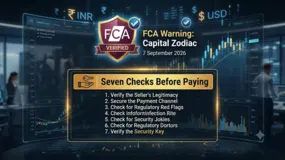
The FCA named Capital Zodiac as an unauthorised clone on 7 September 2026. Check capitalzodiac.com, capitalzodiac.net and FRN 806702 before paying.
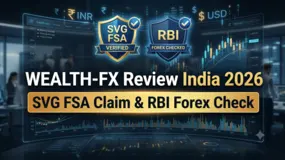
This WEALTH-FX review starts with a licensing statement that needs verification. The client agreement on wealth-fx.com says the company is incorporated in St. Vincent and the Grenadines as 88102 LLC 2021 and is authorised and regulated by the SVG FSA. An official SVG FSA notice, however, says forex trading brokerage activities are not licensed in that jurisdiction. The same agreement separately names WealthFX Liquidity Limited, company 180782, and describes a Mauritius International License. For an India-based reader, those website claims do not replace RBI rules for permitted forex transactions or an independently confirmed licence record.

Did ePlanet, a Comoros-based brokerage, allegedly withhold your dollars on the platform? Did the broker prevent you from accessing the ePlanet login dashboard upon a withdrawal request? Did the broker platform execute trade orders slowly? Have you faced losses due to slippage? This ePlanet review 2026 evaluates user claims while also providing a regulatory overview of the broker.

FCA warns EXOTICINVEST in a notice first published and updated on 3 September 2026. The UK regulator identifies EXOTICINVEST TRADING AND INVESTMENT FIRM and the website www.exoticinvest.ltd, stating that the firm is not authorised and may be targeting people in the UK. This is a dated regulatory warning, not a customer review or a confirmed loss report. Anyone approached through the named website should stop before paying, avoid sharing login credentials and verify the exact business independently through the FCA Firm Checker.
WikiFXWikiFXWikiFXWikiFXWikiFXWikiFXWikiFXWikiFXWikiFXWikiFX