World Cup Fever Is Here! Choose your broker like you choose your team
Join WikiFX and investors worldwide in celebrating the excitement of the 2026 FIFA World Cup!
简体中文
繁體中文
English
Pусский
日本語
ภาษาไทย
Tiếng Việt
Bahasa Indonesia
Español
हिन्दी
Filippiiniläinen
Français
Deutsch
Português
Türkçe
한국어
العربية
اردو
Abstract:The Swiss National Bank spent 5.74 billion Swiss francs ($6.01 billion) on foreign currencies during the first quarter of 2022, it said on Thursday, scaling back its operations to curb the safe-haven franc’s strength versus the last quarter of 2021.
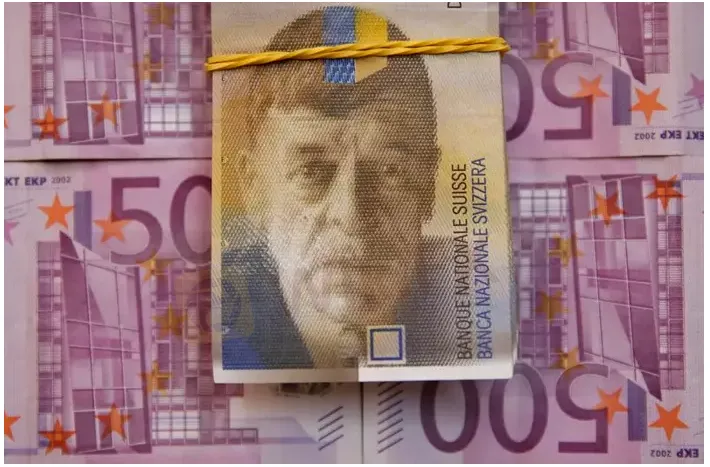
The figure was less than the 12.63 billion francs the SNB spent between October and December but more than the 296 million francs it spent during the first quarter of 2021.
The Swiss franc briefly rose above parity versus the euro at the start of 2022 as the reemergence of COVID-19 in China and the war in Ukraine sent investors looking for safe havens.
Foreign currency purchases have been a cornerstone of SNB policy for years to slow the appreciation of the franc, whose high value made life difficult for Swiss exporters by making their products more expensive abroad.
But the SNB this month said the franc, despite its high nominal valuation, was no longer highly valued due to higher inflation in other countries.
The SNB has switched its focus to increasing interest rates, raising its policy rate for the first time in 15 years to fight rising inflation in Switzerland.
On Thursday the euro was trading at around 0.9970 francs.
Analysts have said the SNB seemed to be accepting the francs higher value and was holding off from interventions at present.
Still the SNB has warned it could be active in the currency market, saying this month it would intervene to check an “excessive appreciation” of the franc and also consider selling foreign currency if the franc were to weaken.
($1 = 0.9557 Swiss francs)


Disclaimer:
The views in this article only represent the author's personal views, and do not constitute investment advice on this platform. This platform does not guarantee the accuracy, completeness and timeliness of the information in the article, and will not be liable for any loss caused by the use of or reliance on the information in the article.

Join WikiFX and investors worldwide in celebrating the excitement of the 2026 FIFA World Cup!

Whenever a major football event like the FIFA World Cup approaches, one question inevitably dominates conversations around the world: “Which team are you supporting?” The countdown to the 2026 FIFA World Cup is officially underway. As the first World Cup in history to be jointly hosted by the United States, Mexico, and Canada, the tournament will take place across 16 cities from June 11 to July 19, featuring a total of 104 matches. With the number of participating teams expanded from 32 to 48, this edition will be the largest World Cup ever held. It also provides more emerging football nations with the opportunity to compete on the world stage. A longer schedule, more matchups, and greater uncertainty mean a higher chance of surprise results. For football fans, supporting a team is rarely an impulsive decision. Recent form, squad depth, tactical approach, coaching strategy, historical tournament performance, and even injury updates all play a role in the decision-making process. At

Have you experienced issues with Pepperstone deposit & withdrawal processing? From your experience, do you feel that the Australia-based forex broker causes losses to its clients? Did the brokerage entity freeze your account and give you a margin call? All these trading allegations have been rampant on broker review platforms such as WikiFX. This Pepperstone review article takes a close look at the user complaints, especially in 2026. Additionally, we have given an overview of the regulatory framework under which the brokerage entity operates.

Some broker comparisons end with a confident "go with this one." This is not one of them — and that honesty is exactly what makes it worth reading. Wundersys and tradgrip are two young, offshore-registered brokers that keep popping up in front of beginner traders, often through aggressive online marketing. Both promise the usual buffet: tight spreads, generous leverage, multiple account tiers. And both, according to WikiFX, sit near the very bottom of the safety scale. So instead of crowning a champion, this comparison is really about something more useful: learning to read the warning signs, understanding the small differences that still matter, and knowing why "the better of two risky options" is still a conversation about risk.