


IG Review for India 2026: RBI Alert List, Regulation, Login, and Forex Risk
IG review for India in 2026: see the RBI Alert List entry, overseas regulation, login checks, forex limits, and a clear broker safety checklist.
Original

简体中文
繁體中文
English
Pусский
日本語
ภาษาไทย
Tiếng Việt
Bahasa Indonesia
Español
हिन्दी
Filippiiniläinen
Français
Deutsch
Português
Türkçe
한국어
العربية
اردو




Abstract:Bitcoin miners have been forced to tap into their cryptocurrency stashes as a plunge in prices, rising energy costs and increased competition bite into profitability.
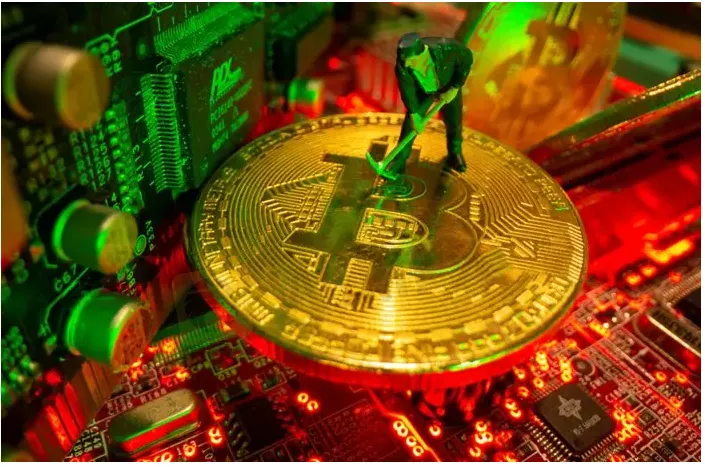
The number of coins miners are sending to crypto exchanges has been steadily climbing since June 7, researchers at MacroHive noted, in a sign that “miners have been increasingly liquidating their coins on exchanges.”
Several publicly listed bitcoin miners collectively sold more than 100% of their entire output in May as the value of bitcoin tumbled 45%, an analysis by Arcane Research https://tmsnrt.rs/3nhYdHA found.
“The plummeting profitability of mining forced these miners to increase their selling rate to more than 100% of their output in May. The conditions have worsened in June, meaning they are likely selling even more,” said Arcane analyst Jaran Mellerud.
Bitcoin sales by public miners https://fingfx.thomsonreuters.com/gfx/mkt/gkplgejyyvb/bitcoin%20mining.JPG
Bitcoin miners, who run networks of computers to earn tokens by validating transactions on the blockchain, are typically staunch crypto “HODLers” and collectively own around 800,000 bitcoins, according to CoinMetrics data.
The crypto mining space rapidly expanded in 2021 as bitcoin more than quadrupled in value, but this growth has further pressured margins as the process is designed to grow more difficult as the number of miners increases.
“Over the past six months, hash rate and mining difficulty have increased while the price of bitcoin has dropped. These are both negatives for existing miners as both work to compress margins,” said Joe Burnett, analyst at bitcoin mining firm Blockware Solutions.
High energy prices are also hitting miners, which by some estimates use more electricity than the Philippines, according to the Cambridge Bitcoin Electricity Consumption Index.
“If you‘re not at a very low-cost electricity area at this point, you’ve got to shut down,” noted Chris Brendler, senior research analyst at D.A. Davidson.
Bitfarms, Riot Blockchain and Core Scientific are among companies that announced sales, with Bitfarms chief executive officer saying the company is “no longer HODLing daily bitcoin production.”
Shares of publicly listed miners have been battered even more than bitcoin, with the Valkyrie Bitcoin Miners ETF falling 59% this quarter compared to 53% drop for bitcoin.
Some miners, including Bitfarms, are using proceeds to negotiate financing agreements to fund operations and make payments on expensive mining equipment.
If miners have already paid two-thirds or even 70% of the price of these millions of dollars in machines, they wouldnt want to miss the final installments, which makes them desperate for financing, Brendler said.
Given their significant bitcoin holdings https://tmsnrt.rs/3xUJesg, some analysts point to miner sales as another factor weighing on bitcoin prices.
Valuations and holdings of public bitcoin miners https://fingfx.thomsonreuters.com/gfx/mkt/lbvgnxmrqpq/Pasted%20image%201656347748285.png
Light at the end of the tunnel?
Miners using older and more energy-intensive machines, and without the balance sheet and access to financing of publicly listed players are already struggling.
Bitcoins mining difficulty decreased 2.35% this week, Glassnode data showed, indicating the network had adjusted after some miners turned off their rigs.
This takes some pressure off those that have not given up.
“Bitcoin mining is a zero-sum game. If you can continue running when others cannot that means you have a larger share of the pie,” said Charlie Schumacher, spokesperson for the largest publicly listed miner Marathon Digital Holdings Inc.
Marathon has not sold bitcoin since October 2020, he added.
“Bitcoin bottoms have been marked at the end of miner capitulation, that could be a sign that the miners that can survive this capitulation have a light at the end of the tunnel,” Burnett said.

Disclaimer:
The views in this article only represent the author's personal views, and do not constitute investment advice on this platform. This platform does not guarantee the accuracy, completeness and timeliness of the information in the article, and will not be liable for any loss caused by the use of or reliance on the information in the article.
IG review for India in 2026: see the RBI Alert List entry, overseas regulation, login checks, forex limits, and a clear broker safety checklist.

Orbex, a Cyprus-based brokerage entity, has recorded 30 exposure complaints on WikiFX, a leading forex broker regulation inquiry tool, so far. Other review websites have also recorded a healthy number of complaints against the brokerage firm. These complaints largely talk about the alleged profit confiscations by the broker in the name of trading violations, difficulty in accessing fund withdrawals, capital losses due to artificial slippage, etc. In this Orbex review, we have investigated user complaints and provided a regulatory overview of the broker.
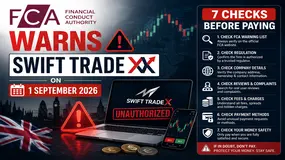
FCA warns Swift TradeX in a notice first published and updated on 1 September 2026. The UK Financial Conduct Authority says the firm may be providing or promoting financial services without permission, is not authorised, and may be targeting people in the UK. The notice names the website swifttradexai.com, a Worcester address and a UK telephone number, but also cautions that unauthorised businesses may use incorrect or borrowed contact details. The confirmed issue is authorisation status—not a court finding about every transaction. Anyone considering a payment should stop, verify the firm independently, and avoid using contact information supplied by the platform itself.
ThinkMarkets review for India: check the RBI Alert List, overseas entities, regulation, login security, forex rules, costs, withdrawals, and leverage risk.
WikiFXWikiFXWikiFXWikiFXWikiFXWikiFXWikiFXWikiFXWikiFXWikiFX