World Cup Fever Is Here! Choose your broker like you choose your team
Join WikiFX and investors worldwide in celebrating the excitement of the 2026 FIFA World Cup!
简体中文
繁體中文
English
Pусский
日本語
ภาษาไทย
Tiếng Việt
Bahasa Indonesia
Español
हिन्दी
Filippiiniläinen
Français
Deutsch
Português
Türkçe
한국어
العربية
اردو
Abstract:SCHLOSS Group of Seven leaders met in Elmau, Germany, on Sunday, June 26. They promised to raise US$600 billion in private and public funds over the next five years to pay for infrastructure in developing countries that needs it and to compete with China's Belt and Road project, which has already cost many trillions of dollars.
Click Here: After you read it, Daily Routine with WikiFX
G7 leaders relaunched the “Partnership for Global Infrastructure and Investment” at their annual meeting in southern Germany.
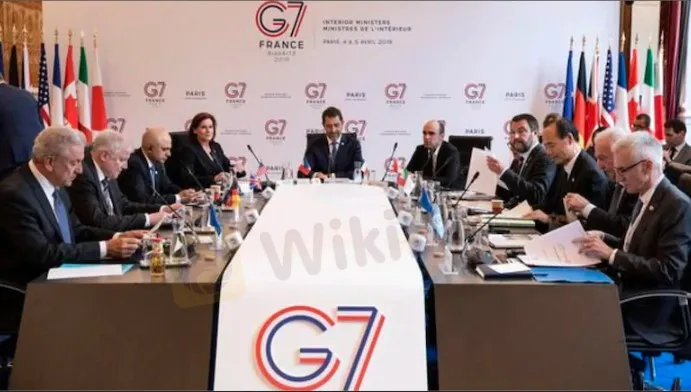
Biden said the US would mobilize $200 billion in grants, federal cash, and private investment over five years to assist projects in low- and middle-income nations that combat climate change, promote global health, gender equity, and digital infrastructure.
“Clarify. This isn't charity. It will help countries to ”understand the tangible benefits of collaborating with democracies,“ Biden stated ”less
Biden said multilateral development banks, development finance organizations, sovereign wealth funds, and others might contribute billions more.
Europe will mobilize €300 billion over the same period to develop a sustainable alternative to China's Belt and Road Initiative, launched by President Xi Jinping in 2013.
Italy, Canada, and Japan also declared their plans. Emmanuel Macron and Boris Johnson weren't there, but their countries are participating.
China is investing in over 100 countries to create a contemporary Silk Road trade corridor from Asia to Europe.
White House officials say the initiative has benefited few poor nations.
G7 leaders attack Russian gold, oil pricing; Biden urges unity
Russia escalates missile attacks on Ukraine as G7 leaders meet.
Biden highlighted a $2 billion solar development project in Angola with funding from the Commerce Department, the US Export-Import Bank, US firm AfricaGlobal Schaffer, and US project developer Sun Africa.
Washington will pay US$3.3 million in technical assistance to Institut Pasteur de Dakar in Senegal as it constructs an industrial-scale adaptable multi-vaccine manufacturing facility that can produce COVID-19 and other vaccines.
USAID will donate $50 million over five years to the World Bank's Childcare Incentive Fund.
Friederike Roder, vice president of the non-profit Global Citizen, said the funding pledges might be “a promising start” toward greater G7 engagement in developing nations and support better global growth.
G7 countries give less than half of the 0.7% promised in development funding, she said.
Without developing countries, the international economy won't revive, she warned.
Disclaimer:
The views in this article only represent the author's personal views, and do not constitute investment advice on this platform. This platform does not guarantee the accuracy, completeness and timeliness of the information in the article, and will not be liable for any loss caused by the use of or reliance on the information in the article.

Join WikiFX and investors worldwide in celebrating the excitement of the 2026 FIFA World Cup!

Have you experienced issues with Pepperstone deposit & withdrawal processing? From your experience, do you feel that the Australia-based forex broker causes losses to its clients? Did the brokerage entity freeze your account and give you a margin call? All these trading allegations have been rampant on broker review platforms such as WikiFX. This Pepperstone review article takes a close look at the user complaints, especially in 2026. Additionally, we have given an overview of the regulatory framework under which the brokerage entity operates.

Some broker comparisons end with a confident "go with this one." This is not one of them — and that honesty is exactly what makes it worth reading. Wundersys and tradgrip are two young, offshore-registered brokers that keep popping up in front of beginner traders, often through aggressive online marketing. Both promise the usual buffet: tight spreads, generous leverage, multiple account tiers. And both, according to WikiFX, sit near the very bottom of the safety scale. So instead of crowning a champion, this comparison is really about something more useful: learning to read the warning signs, understanding the small differences that still matter, and knowing why "the better of two risky options" is still a conversation about risk.

If you trade forex from India, Pakistan, Bangladesh, Sri Lanka, or Nepal, you already know the quiet truth that eats into every trader's results: it is not just the market that decides whether you profit — it is the cost of getting in and out of each trade. Shave a couple of dollars off your commission on every lot, multiply it across hundreds of trades a year, and you are looking at the difference between a strategy that works and one that bleeds out slowly. South Asian traders are some of the most cost-conscious in the world, and rightly so. So we pulled the data on the brokers most often recommended for the region, cross-checked every name on WikiFX, and ranked them by the one number that matters most here: what they actually charge you to trade. Before the list, one quick lesson that will make this whole ranking click.