


IG Review for India 2026: RBI Alert List, Regulation, Login, and Forex Risk
IG review for India in 2026: see the RBI Alert List entry, overseas regulation, login checks, forex limits, and a clear broker safety checklist.
Original

简体中文
繁體中文
English
Pусский
日本語
ภาษาไทย
Tiếng Việt
Bahasa Indonesia
Español
हिन्दी
Filippiiniläinen
Français
Deutsch
Português
Türkçe
한국어
العربية
اردو




Abstract:Investing in the stock market is one of the finest methods to build money around the globe. One of the stock market's key advantages is that there are several methods to benefit from it.

Investing in the stock market is one of the finest methods to build money around the globe. One of the stock market's key advantages is that there are several methods to benefit from it.
However, with huge potential profit comes considerable danger, particularly if you want to become wealthy fast. If you want to experiment with short-term or aggressive market techniques, keep in mind that you may lose part or all of your investable cash.
The majority of the techniques outlined here will eventually prove unprofitable for the ordinary investor, and you should always consult with a financial counselor before embarking on any new, aggressive stock market plan. However, if you wish to try these approaches with a modest portion of your portfolio, you may be able to earn outsized results.
 Contents
If you're a quick and skilled trader, being a day trader is perhaps the “easiest” method to earn quick money in the stock market. A day trader enters and exits a stock quickly over a single day, often making numerous trades in the same investment on the same day.
Day trading may be profitable for investors who have a thorough awareness of market patterns and the ability to predict or comprehend the financial performance of certain firms.
The ordinary day trader, on the other hand, usually loses money. Anecdotal evidence suggests that up to 95% of day traders lose money – and, worse, they continue to day trade. There is money to be earned as a day trader, but it is better left to the specialists in most cases.
Merrill Edge
Fidelity
TD Ameritrade
E*Trade
Interactive Brokers
Webull
Ally Invest
TradeStation
ZacksTrade
Firstrade
Charles Schwab
A short seller is simply betting that the price of a stock will decline. In theory, a short seller borrows stock, sells it, then buys it back and returns it to the lender. If the stock price falls between these two transactions, the short seller profits. If, on the other hand, the stock increases, the short seller loses.
Short selling is similar to day trading in many aspects, which means it's a risky technique. Because the market's long-term trend is significantly upward, a short seller must have a convincing reason to believe that a given stock or index will decline. Macroeconomic conditions, an overpriced stock price, or a declining company are all potential causes for stock to decrease, but none are certain.
Even companies that are “overvalued” or unproductive may continue to grow in a flourishing market. Short selling, like day trading, may be successful, but it requires a highly intelligent or skilled trader to do it.
Although names like Apple and Microsoft dominate the financial headlines, there are a plethora of equities that the ordinary investor is unlikely to have heard of that provide much bigger chances for profit — and loss.
Over-the-counter stocks, for example, are not traded on a public exchange and often trade for pennies a share. While many of these enterprises fail, they do provide speculators with the opportunity to quadruple their money in a short period based on rumor and speculation. However, be careful that there is a lot of hype and plain fraud on the OTC markets, as they are full of touts who will inflate the price of a stock so they can sell out before the prices drop.
The so-called “meme stocks” that have risen to popularity in recent years, such as GameStop and AMC Entertainment, have delivered fanciful returns for some shareholders while causing equally terrible losses for others. For example, GameStop increased 400 percent in a single week in January 2021, but AMC Entertainment increased 1,183 percent for the whole year.
However, they both crashed back down to Earth, only to recover lately in 2022 and enjoy another rise.
Investing in these firms isn't a good long-term investment strategy, and you shouldn't dedicate a large amount of your portfolio to them. However, if you're seeking companies that may make big changes in a short amount of time, here are some sectors to check into.
The power of compound interest is the primary reason why the stock market has been such a fantastic wealth creator. While the stock market might provide short-term gains, it is a safer idea to keep your money in the market for the long term and allow compound interest to work its magic.
To begin with, the longer you keep your money in the market, the lower the risk you assume. While no one can forecast what the market will perform from year to year, the S& P 500 index has never lost money during 20 years. When you consider how unpredictable the market can be in the near term, that's an incredible number.
If you can keep your money in the market for 10, 20, or even 30 years, you have a fantastic opportunity to develop wealth. Consider this: If you put $10,000 in the market and make 10% each year after deducting your earnings, you'll have a net profit of $30,000 after 30 years, or three times your money. If you instead let that money compound at a rate of 10% each year, you'll finish up with just under $200,000, or 20 times your original investment.
This may not be the answer that people searching for a fast buck want to hear, but staying in the stock market is the greatest, safest method to develop genuine wealth.

Disclaimer:
The views in this article only represent the author's personal views, and do not constitute investment advice on this platform. This platform does not guarantee the accuracy, completeness and timeliness of the information in the article, and will not be liable for any loss caused by the use of or reliance on the information in the article.
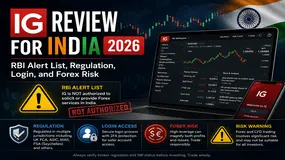
IG review for India in 2026: see the RBI Alert List entry, overseas regulation, login checks, forex limits, and a clear broker safety checklist.

Orbex, a Cyprus-based brokerage entity, has recorded 30 exposure complaints on WikiFX, a leading forex broker regulation inquiry tool, so far. Other review websites have also recorded a healthy number of complaints against the brokerage firm. These complaints largely talk about the alleged profit confiscations by the broker in the name of trading violations, difficulty in accessing fund withdrawals, capital losses due to artificial slippage, etc. In this Orbex review, we have investigated user complaints and provided a regulatory overview of the broker.
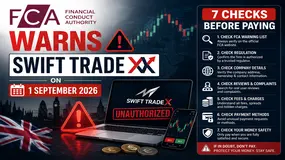
FCA warns Swift TradeX in a notice first published and updated on 1 September 2026. The UK Financial Conduct Authority says the firm may be providing or promoting financial services without permission, is not authorised, and may be targeting people in the UK. The notice names the website swifttradexai.com, a Worcester address and a UK telephone number, but also cautions that unauthorised businesses may use incorrect or borrowed contact details. The confirmed issue is authorisation status—not a court finding about every transaction. Anyone considering a payment should stop, verify the firm independently, and avoid using contact information supplied by the platform itself.
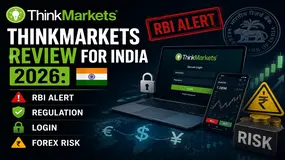
ThinkMarkets review for India: check the RBI Alert List, overseas entities, regulation, login security, forex rules, costs, withdrawals, and leverage risk.
WikiFXWikiFXWikiFXWikiFXWikiFXWikiFXWikiFXWikiFXWikiFXWikiFX